A Munich Worker in Sensor Gloves, and a Camera That Never Blinks
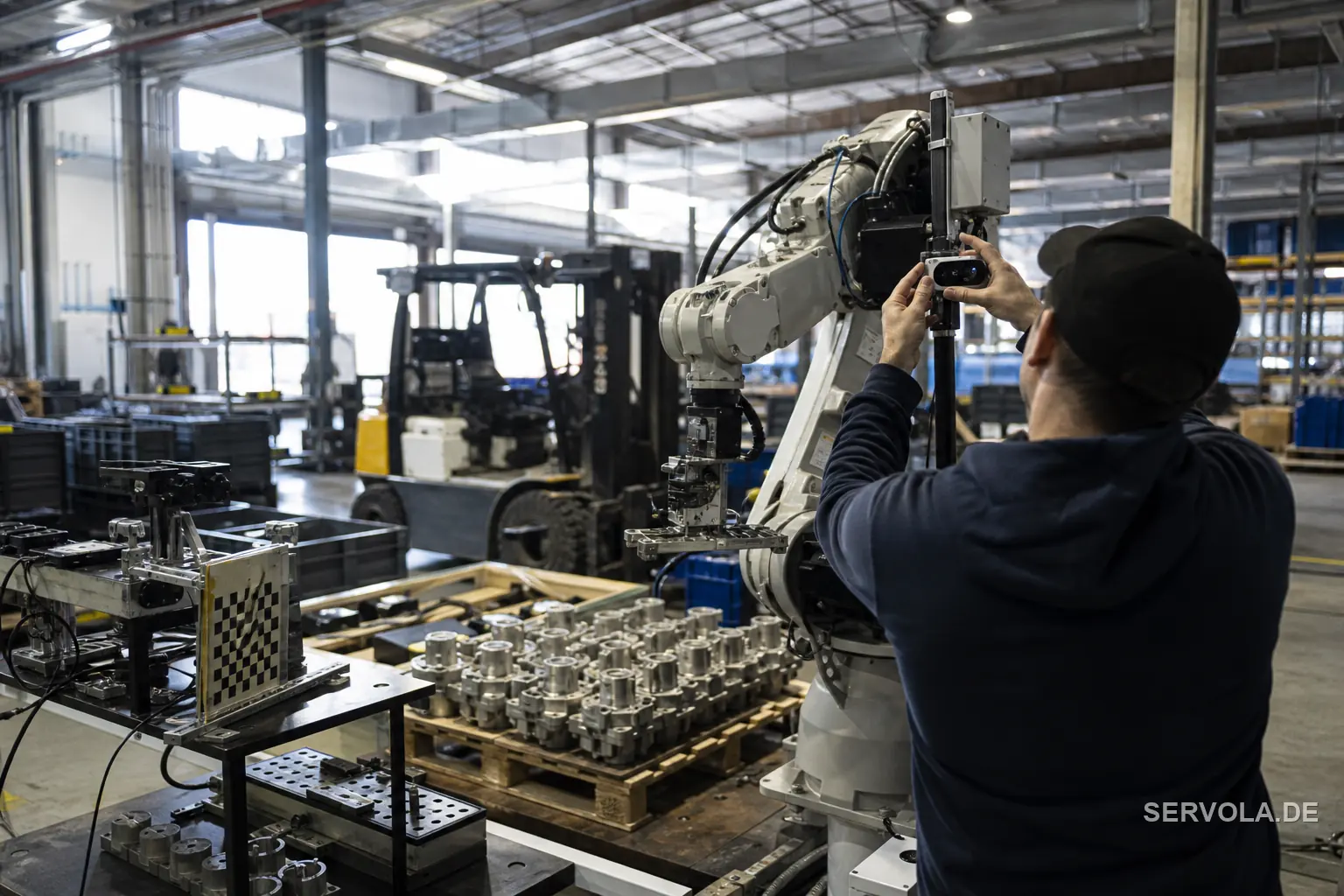
The core of Microagi's product is a factory worker wearing sensor-equipped gloves while cameras record every motion of the job. The hands move through a task the worker has done ten thousand times. The gloves and the cameras capture it. That recording is then used to fine-tune a robot model built for that specific plant, on that specific line, rather than a general-purpose model dropped in from outside. It is a genuinely clever premise, and it is the reason the company can argue that its robots will work where others have not.
Microagi announced a $55m seed round on 16 July 2026, roughly ten months after it was founded around September 2025. Hummingbird led. Northzone, LocalGlobe, Village Global and Redalpine participated. The founder and chief executive is Bercan Kilic, previously an aerodynamicist at Red Bull Racing, which is a background that maps well onto the problem: someone who spent his career squeezing performance out of physical systems under measurement now points the same instinct at factory floors. The company also runs a consumer arm called shift, which it says has been paid for by more than 20,000 people across 15 countries.
None of that is a criticism. A ten-month-old company with a large round and no production deployments is entirely normal, and it is what venture capital is for. The question this article answers is not whether Microagi deserves the money. It is how an owner sitting across the table should read what that money actually signals, because the standard reading is wrong in a way that will cost someone a bad contract.
The Word 'Seed' Has Come Unstuck From the Company Behind It
A $55m seed round tells you about investor conviction and tells you nothing about whether the product works on a factory floor. These two things used to travel together. A seed round meant a small cheque, a small team and an early product, and a buyer could read the round name as a rough proxy for maturity without thinking about it. That proxy has quietly stopped working. The label now describes the financing market rather than the company, and a buyer who reads the label is reading the wrong document.
Here is the sharp version of the problem. A $55m seed breaks a standard vendor screen in both directions at the same time. A procurement gate that says 'no vendors under two years old' auto-rejects Microagi, and would have rejected it regardless of how good the technology is. A gate that says 'vendor must be well capitalised' auto-passes Microagi on the strength of a dollar figure, and would have passed it regardless of whether a single robot has ever run a shift. Both gates are looking at the same company. Both return the wrong answer. Both are reading a name instead of a business.
The fix is not a better funding threshold. It is to screen on two things that cannot be inflated by a press release. First, deployed-line count: how many production lines are running this vendor's robots today, in what plants, and will those references take your call. Five clients collecting data and one preparing to deploy is a number you can act on, and Microagi's own disclosure to TheNextWeb gives you that number honestly. Second, source-code escrow: if the vendor is acquired, pivots or fails, do you retain the ability to keep the line running. A well-funded young company can disappear as an operating counterparty without ever running out of money, simply by being bought.
Five Collecting, One Preparing, Zero Running
TheNextWeb reports that five Microagi clients are currently collecting data and one customer is preparing to deploy robots on a line, which means no robots are in production today. That is the single most useful sentence written about this company anywhere, and it is worth more to a buyer than the round size, the investor list and the record claim combined. It is also, to the company's credit, a number it disclosed rather than buried.
Set that against the industry context TheNextWeb confirms. China installed 295,000 factory robots in 2024, about 54 percent of the global total. The United States installed 34,200. Those numbers describe an installed base measured in hundreds of thousands of working units, against which a European entrant with one line approaching deployment is at the very beginning of a long road. That is not a knock on Microagi. It is the scale of the thing it is attempting, and an owner should size the risk accordingly rather than assume that a large round has already bought a shortcut through it.
The company says the $55m round is Germany's largest ever seed round. Semafor attributes that claim directly to the company. Sifted repeated it without attribution and without checking it against a funding database, and no outlet has verified it against Dealroom or Crunchbase. So it stands as a company claim, not an established fact, and it is worth naming plainly what an unverified superlative does: it performs promotional work. It moves a reader from 'this company raised money' to 'this company is historic' without any evidence crossing the gap. A buyer who notices which claims carry attribution and which do not has already built half a diligence process.
Read the Contract for Who the Customer Is
Semafor reports that Microagi licenses the data it collects to AI labs, which means an EU manufacturer signing up today may be an input to the business rather than its customer. The manufacturer believes it is buying a deployment product: robots, on lines, doing work. Meanwhile five clients are collecting data and one is near deploying, so the centre of gravity in the business right now sits with the data channel, not with the robots. Investors underwriting this round are underwriting what exists, and what exists is data collection plus a licensing route to AI labs.
Roadmap priority follows revenue. That is not an accusation of bad faith, and it should not be read as one. Microagi has been open about its client numbers and open about its licensing. It is simply a statement about where a company's incentives point, and incentives are among the few things a buyer can actually price. If the licensing channel is where the margin lives, then engineering hours, executive attention and product decisions will be pulled toward capturing more and better data, and the deployment work that a manufacturer signed up for competes for whatever is left.
So the contract questions become concrete. Who owns the recordings of your workers and your processes. Can that footage be licensed onward, and to whom, and can you veto it. Does your process knowledge, refined over years, become training material for a model that a competitor down the road can also license. What happens to the data if you terminate. These are answerable questions and a serious vendor will answer them. The failure mode is not signing with Microagi, it is signing without ever asking which side of the business you are on.
The Money Is European, Which Breaks the Usual Story
Hummingbird, Northzone, LocalGlobe and Redalpine are European funds, and they wrote the overwhelming majority of this round. The familiar complaint is that Europe builds the technology and America funds it, then owns the upside and eventually the company. This round does not fit that story. A Munich robotics company raised at this scale from European capital, and the observation is checkable against the investor list rather than being a matter of sentiment.
For an owner, this matters in one specific and unglamorous way. If your procurement policy contains an unwritten preference for vendors backed by large American funds, on the theory that such vendors are more durable or better capitalised, that theory needs retiring. It was always a proxy for something else, and the something else is what you should have been measuring in the first place: does this vendor have the balance sheet and the governance to still be standing in five years, and can you verify it directly.
Note also that the figure is dollar-denominated. It is reported as $55m, and any euro number you see attached to it is an approximate conversion at some unstated rate on some unstated date. That is a small point, and it is the kind of small point that tells you whether a source is being careful. Carry the figure as it was reported and let the person who wants to convert it show their working.
Read next: Cohere's Next Round May Have Two Governments in It | One Playbook Now Owns German Notaries and Tax Firms