A 470 percent day, on 6.73 percent of the shares
ChangXin Memory Technologies priced its shares at 8.66 yuan around 15 July. When the Hefei company opened on the Shanghai STAR Market on 27 July, the first trade printed at 49.50 yuan. The stock finished the session up about 470 percent, and at roughly 52 yuan the company carried a market value near 3.3 trillion yuan, or about 487 billion dollars, which on day one placed it among the most valuable companies listed in China.
Why it matters: the headline number is the least useful fact in the story. CXMT sold 6.73 percent of its enlarged share capital. Retail demand was oversubscribed more than 200 times and the allocation rate came out near 0.47 percent, meaning fewer than one applicant in two hundred received stock. A valuation discovered by a float that thin tells you how scarce the paper was, not what the business is worth. HSBC Qianhai Securities warned before the listing that the offering could drain liquidity from the wider Chinese market around its debut.
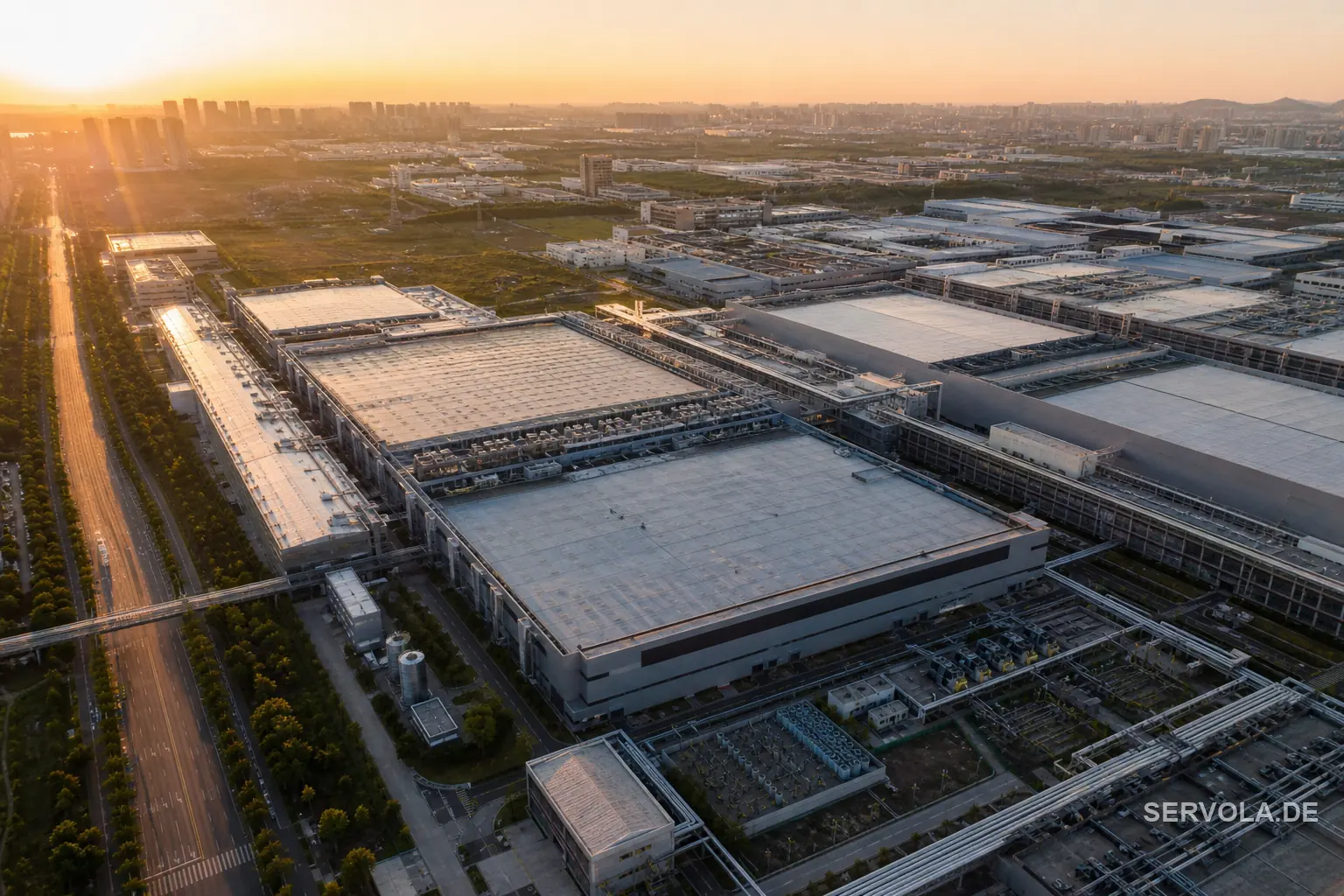
The company itself is a real industrial business rather than a story stock. CXMT reported 61.8 billion yuan of revenue for 2025 and 1.87 billion yuan of attributable profit, its first profit after losses in 2023 and 2024. It makes DRAM, the commodity memory in servers, laptops and phones, and it held somewhere around 7.7 to 8 percent of the global DRAM market through 2025 and into early 2026.
The signal is 57.92 billion yuan, not 470 percent
Strip out the first day's trading and one number survives: CXMT raised 57.92 billion yuan, about 8.6 billion dollars, with an over-allotment option that could take the total to 66.61 billion yuan. That was the largest initial public offering anywhere in Asia this year.
Memory is a capacity business. Prices are set by how many wafers are running against how much demand exists, and the only way a supplier changes that equation is by building fabs, which costs more than almost any other industrial project a company can undertake. Until this week CXMT was funding that expansion from state-linked balance sheets and private rounds. It now has 8.6 billion dollars of listed equity and a public currency it can issue against again.
The bottom line: a European buyer has spent the last two years negotiating memory with three suppliers who between them control the price of a component that sits in every device that firm ships. This listing does not end that. It funds the first credible challenge to it in a decade, and it does so at a moment when AI demand has pulled so much capacity toward high-bandwidth memory that ordinary DRAM has become the part that is hard to get.
Nothing here reaches a 2027 budget
The temptation is to treat a funded fourth supplier as near-term relief. It is not, for three reasons that are worth stating plainly.
First, capital is not capacity. A DRAM fab takes years from funded to qualified, and the parts have to pass the customer's own qualification before they enter a product. Money raised in July 2026 shows up as wafers in 2028 at the earliest.
Second, CXMT makes DRAM, and the shortage that is currently repricing European hardware is concentrated in high-bandwidth memory, where the technical gap between CXMT and the incumbents is widest. A fourth DRAM supplier does not loosen the HBM allocation that AI servers are consuming.
Yes, but: the third reason is the one most owners underrate. Availability in the EU and the UK is a separate question from production. Whether a Chinese memory maker's parts can be quoted, imported, warrantied and supported by your existing distributor is decided by trade policy and by your distributor's own risk position, not by how much silicon exists in Hefei. Firms that assumed the supply was fungible found out otherwise with other component categories.
Three things to do before your next memory quote
Ask the availability question in writing. Send your distributor one line: can you quote and support CXMT DRAM for delivery into our EU and UK sites, yes or no. A verbal maybe is not an answer you can build a second source on, and the reply tells you more about your 2028 options than any market-share chart will.
Leave the 2027 line where it is. If you have already been quoted for next year, that allocation was decided before this listing and will not be revisited because of it. Re-forecasting a memory budget on a share price is how a finance function loses credibility with procurement.
Write down what would actually change your plan. Name the trigger in advance: a qualified CXMT part offered by your own distributor, at a landed price you can compare, with a warranty you would accept. Until those three conditions are met together, treat this as a supply story that has not arrived yet. Deciding the trigger now is what stops the next headline from restarting the same internal debate.
Read next: Unitree's $30B Crash Was The IPO, Not The Firm | Unitree's $9 Billion IPO Proves China Can Fund Robots