The Extension, And Who Is In It
PLD Space, the Elche-based Spanish rocket manufacturer, announced on September 1, 2026 that it added EUR 108 million to its Series C round, according to the company's own announcement corroborated by AeroTime and EU-Startups. The extension takes the round total to EUR 288 million, up from the EUR 180 million closed in March 2026, and brings PLD Space's cumulative funding to EUR 488 million. Mitsubishi Electric Corporation led the extension again, joined by Spanish state-backed investor COFIDES, Endeavor Catalyst, and the Spain-Oman Private Equity Fund managed by MCH Private Equity.
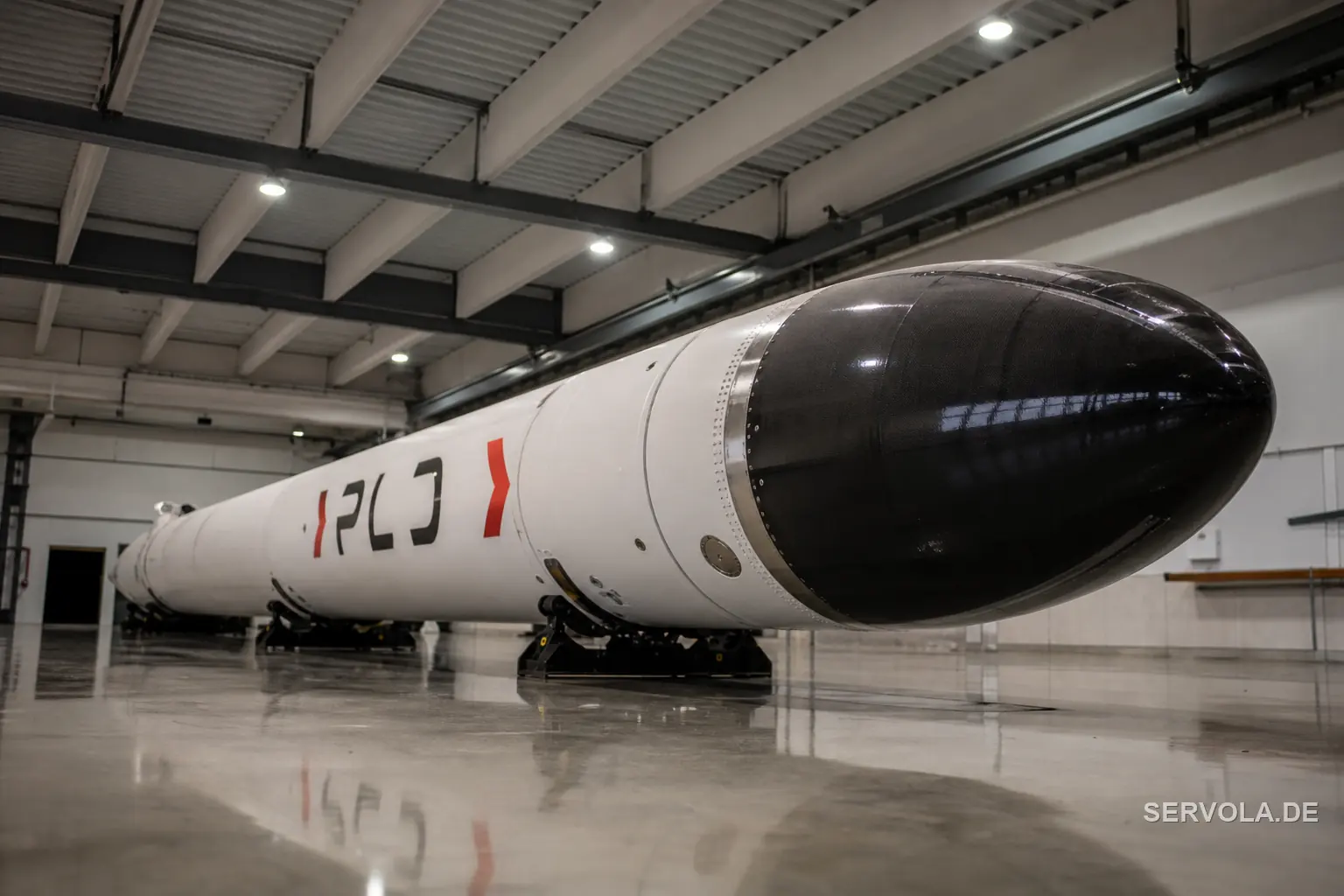
PLD Space says the new capital goes toward industrializing the MIURA 5 rocket: expanding production capacity, building out launch infrastructure, and moving the company toward sustained commercial operations. Executive chairman Ezequiel Sanchez called the backing confirmation that the company's growth strategy is on track to make PLD Space, in his words, a global provider of commercial launch services. The first MIURA 5 launch is planned before the end of 2026 from Europe's Spaceport in Kourou, French Guiana.
A Second Bet From The Same Buyer
This is not Mitsubishi Electric's first check to PLD Space. The Japanese industrial conglomerate invested EUR 50 million in the original Series C round in March 2026, and said at the time the goal was to secure launch capacity for its own small-satellite constellations, built for satellite data services and for national-security and disaster-prevention applications in Japan. In return, Mitsubishi Electric said it gained priority access to launch services on the MIURA 5 rocket, ahead of the vehicle's first flight.
Returning as lead investor in the September extension, months before MIURA 5 has flown a single orbital mission, reads as Mitsubishi Electric doubling down on a launch-capacity bet rather than a financial one. A conglomerate that already holds a priority-access clause has every incentive to keep the company it depends on well capitalized, and every incentive to make sure that capacity keeps growing in step with its own satellite program.
The Public Money Sits Right Next To It
Nine days before the extension, the European Space Agency awarded PLD Space EUR 158.9 million under the European Launcher Challenge, an ESA program built explicitly to give Europe autonomous, competitive and resilient access to space, independent of SpaceX and other non-European providers. The award, funded by Spain with a contribution from Germany, pays for upgrading MIURA 5's payload capacity and for developing propulsive-landing technology aimed at reusability. PLD Space was one of three companies, alongside Isar Aerospace and Rocket Factory Augsburg, to land a contract in the ELC's first funding round.
Laid out together, PLD Space's 2026 has stacked four distinct kinds of capital on the same rocket: a EUR 30 million EIB venture-debt facility in April, a EUR 35 million investment in its Guiana Space Centre launch complex in June, the EUR 158.9 million ESA sovereignty award in August, and now the EUR 108 million private extension in September.
| Month (2026) | Source | Amount | Type |
|---|---|---|---|
| March | Series C (lead: Mitsubishi Electric) | EUR 180 million | Private equity |
| April | European Investment Bank | EUR 30 million | Venture debt |
| June | Guiana Space Centre launch complex | EUR 35 million | Infrastructure investment |
| August | ESA European Launcher Challenge | EUR 158.9 million | Public grant |
| September | Series C extension (lead: Mitsubishi Electric) | EUR 108 million | Private equity |
The Servola Read: Sovereignty Funding Does Not Buy You The Launch Slot
None of this makes PLD Space's numbers any less real, and a company juggling an EU grant, a state-backed export-credit investor, venture debt and a strategic industrial backer in the same year is, on its own terms, a genuine European success story. But the ESA award's own language, autonomous and resilient access to space for Europe, sits awkwardly next to a lead private investor that has now backed the company twice, first to secure priority launch access in March and again to lead this week's extension, for satellites that serve Japan's national-security and disaster-prevention needs, not Europe's.
For European satellite operators, insurers, and public agencies weighing MIURA 5 as an alternative to SpaceX or Ariane, the practical question is not whether the rocket flies, it is who is first in the queue once it does. A launch slot is a scarce, sequential resource in a way that funding is not, and a priority-access clause negotiated in March 2026 does not become less binding because a government grant arrived in August. Anyone counting on MIURA 5 for sovereign capacity should ask PLD Space directly where they sit behind Mitsubishi Electric's satellites, before assuming EU money bought them a place in line.
Read next: Europe's SpaceX Alternative Raises $450 Million | Salesforce Backs the $5B Rival to Its Own AI Tools