A car that met a scene it had never seen
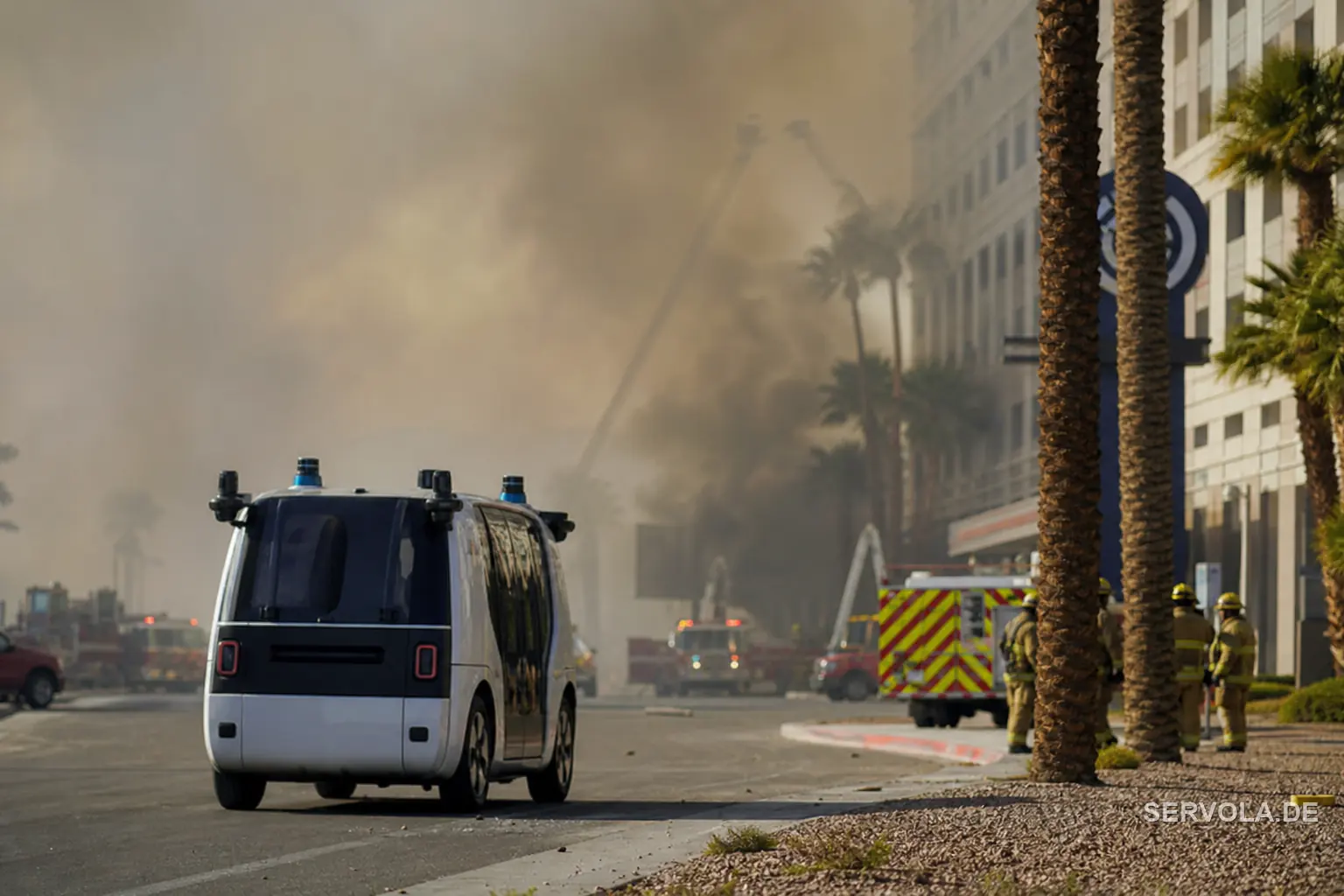
On 20 June 2026, an empty Zoox robotaxi in Las Vegas rolled toward an active fire that no one had yet blocked off with cones. The scene was thick with smoke, and the car, built by Amazon's autonomous-vehicle unit, did not read it as a reason to stop. It drove into the smoke, braked hard, tried to steer away, and came to a halt. A remote Zoox operator then told the vehicle to reverse, and first responders placed cones to close the scene.
No one was hurt, and the car was carrying no passengers. But the moment exposed a gap that no demonstration had surfaced: the system had learned to treat a cordoned emergency scene as off limits, and here was an emergency scene that had not yet been cordoned. The tidy version it was trained on and the messy version it met were not the same thing.
Why one confused car became a fleet-wide recall
The fix was not to repair one vehicle, it was to update all of them. Zoox notified the US road-safety regulator on 8 July and announced on 17 July that it had shipped a software update to its entire fleet of 105 cars, adding the ability to detect and respond to heavy smoke at emergency scenes. In an autonomous fleet every car runs the same model, so every car shares the same blind spot until the blind spot is patched.
That is the part owners of any AI system should sit with. When your logic lives in one shared model rather than in the judgment of many separate humans, a single missed case is not an isolated mistake. It is a defect present in every copy, waiting for the same trigger. The upside is that one update fixes them all; the downside is that one flaw was in all of them to begin with.
The decision trap: mistaking the demo for the world
The failure here was not bad engineering, it was a training set that was cleaner than reality. A model shown thousands of well-marked emergency scenes will look flawless right up to the day it meets an unmarked one. The rare, awkward case sits outside the data, so it sits outside the system's competence, and confidence on the common case tells you nothing about the rare one.
Owners fall into the same trap when they judge an AI tool by a polished vendor demo or a pilot run on tidy data. The demo is the cordoned scene. The question that matters is what the system does at the uncordoned one: the malformed invoice, the customer who phrases it wrong, the smoke it was never shown. Base your decision on that edge, because that edge is where the cost lands.
What to do before you trust an autonomous system
Treat every AI deployment as a fleet, even when it is one process. Write down the real-world situations it will not encounter in testing, and go looking for them on purpose before launch rather than waiting for them to arrive. Keep a human in a position to intervene, as Zoox's remote operator did, and design the intervention path before you need it, not during the incident.
Then plan for the recall you hope never to run. Decide in advance how a fix reaches every instance, how fast, and who signs it off, because in a shared-model system the update mechanism is the safety mechanism. The companies that survive their first bad edge case are the ones that built the response before the smoke, not the ones that improvised in it.
Read next: Eight Rules Waived, And NHTSA Kept The Off Switch | Tesla's Cybercab Draws a Federal Probe on Day One