The audit that happens whether you commission it or not
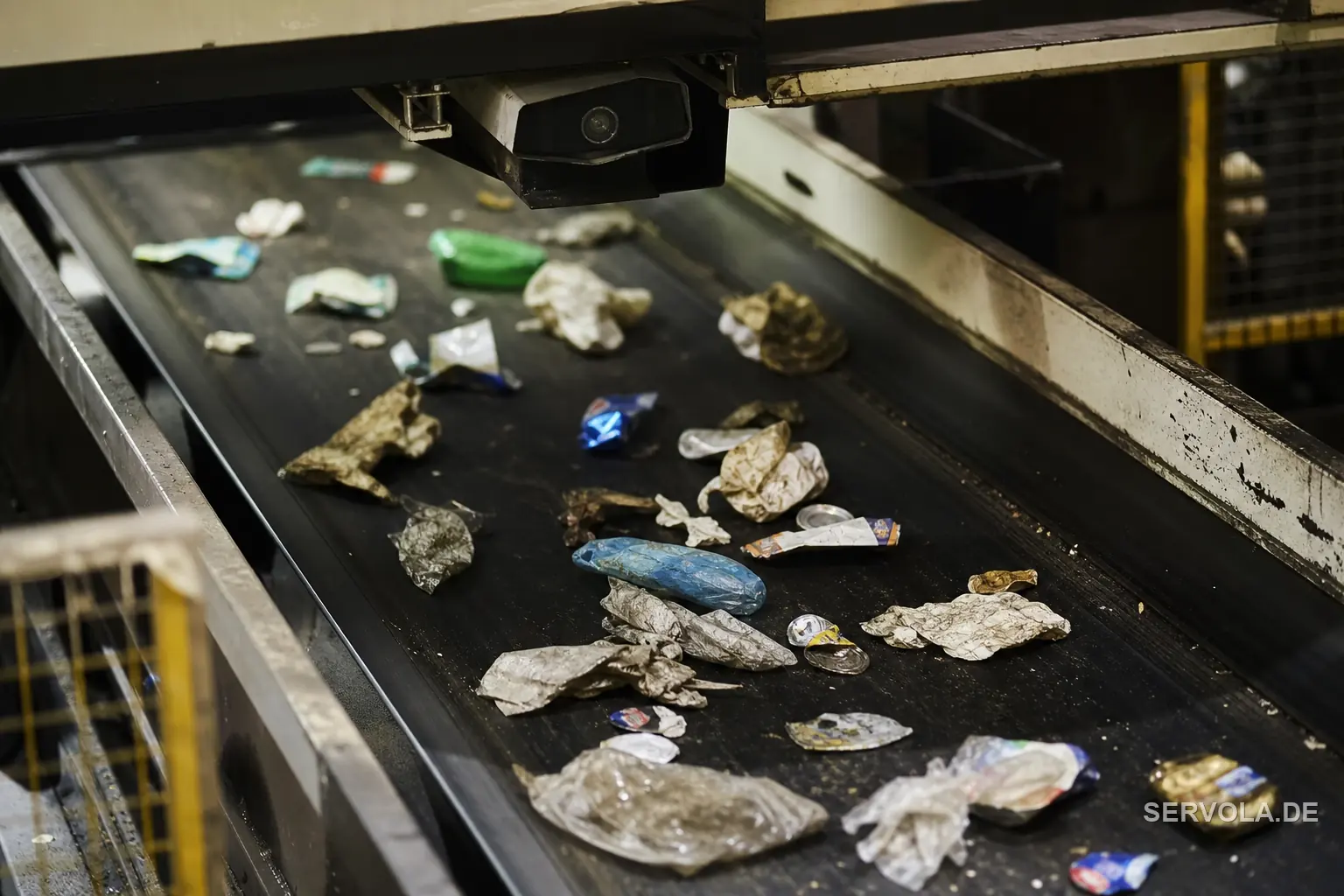
Above a moving conveyor at a materials recovery facility in England, a camera looks down at a stream of mixed household packaging and names what it sees: the material, the product, and the brand printed on the label. The belt does not slow down for it. Greyparrot, the London company that builds these units, said on 28 July that its systems have now passed one trillion object detections and that it has raised 27 million dollars, or 20 million pounds and 23 million euros, in a Series B led by the technology investor Omar Mir. That takes total funding to 60 million dollars. The cameras sit in more than 20 countries, over the belts of operators including WM, Veolia, Biffa, FCC and Circular Services.
The round is the smaller half of the announcement. In the same page is a sentence that changes the standing of everything those cameras record. Greyparrot says that in the first quarter of 2026 it became the first company whose AI-generated waste composition data the UK Environment Agency accepted for statutory compliance reporting, using data produced at Biffa and FCC sites. A tool that recycling operators bought to run their own plants better has been read by a regulator as a return.
What the regulator accepted, and what it did not
Statutory composition reporting has always rested on sampling. Someone pulls a defined quantity off the line at a defined interval, sorts it by hand into material fractions, weighs each one and extrapolates. It is slow, it is expensive, and because it is expensive it is infrequent, which means a facility's official picture of what passes through it is built from a few hours a year. A camera over the belt inverts that ratio. It does not sample; it counts what goes past, continuously, and it records brand and product alongside material.
It is worth being exact about what changed, because the announcement is easy to over-read. The acceptance covers composition data generated at two named operators' sites, submitted by those operators for their own statutory reporting. It does not appoint Greyparrot as anyone's auditor, it does not create a new obligation for producers, and it does not by itself set a single company's fee. Nobody has been invoiced on the strength of a camera.
What it establishes is the class of evidence. Until this year, machine-generated composition data was commercial intelligence: useful for tuning a sorting line, and not something a regulator would take in place of a physical sample. Once a national environmental regulator accepts it once, from a named operator, for a statutory return, the question stops being whether the method is admissible and becomes how widely it gets used. That is a much shorter argument.
Two fee regimes land inside two months of each other
The timing is what gives this weight. On 12 August 2026, the EU Packaging and Packaging Waste Regulation, Regulation (EU) 2025/40, starts to apply. It entered into force on 11 February 2025 and, being a regulation rather than a directive, it applies directly in all 27 member states without a national transposition step. Its rules on recyclability, recycled content, labelling, material efficiency and extended producer responsibility reach every operator that places packaging or packaged goods on the EU market, wherever that operator is based.
Seven weeks later, the United Kingdom starts pricing the same property. From October 2026, packaging disposal fees under the UK scheme are modulated by the Recyclability Assessment Methodology, which grades each material as Red, Amber or Green. PackUK, the scheme administrator, has published the scale: Red-rated packaging pays 1.2 times the base fee in 2026/27, 1.6 times in 2027/28 and 2.0 times in 2028/29, with the base fee itself set to reflect an Amber rating. A producer selling into both markets therefore has design decisions graded twice, on two calendars, in the same quarter.
Both regimes assess recyclability as a property of the design: what the packaging is made of, whether the layers separate, whether the label and the body are compatible polymers. That is a claim made on paper, before anything is sold. The sorting line is the only place where that claim meets the physical outcome, and it is now the place where the outcome is written down.
Who holds the measurement when the invoice is disputed
Consider where the instrument sits. The camera belongs to a recycling operator, and in the fee system that operator is not your supplier but your counterparty: its costs are what your fees are meant to cover. It now holds a continuous, timestamped, brand-level record of how your packaging behaved on a real line, and a regulator has accepted that category of record for a statutory return. If your declared recyclability rating and the observed outcome ever diverge, the party with the evidence is the party you are paying. Producers have spent three decades declaring what they put on the market. The disposal end was always the estimate. That is the half that has just been instrumented.
The practical response is unglamorous and cheap. Find out whether the facilities that handle your volume run automated composition analysis, and ask to see your own brand's line in the output before someone else quotes it to you. Greyparrot already sells that view to brands through a platform it calls Deepnest, and Unilever, L'Oreal and Kenvue are on it. Being a customer of the measurement is a materially different position from being a subject of it, and the difference costs a subscription rather than a dispute.
Read next: Wispr Tripled Its Price Tag In Nine Months | Four Hundred Million Bought A Fortune 500 Client List