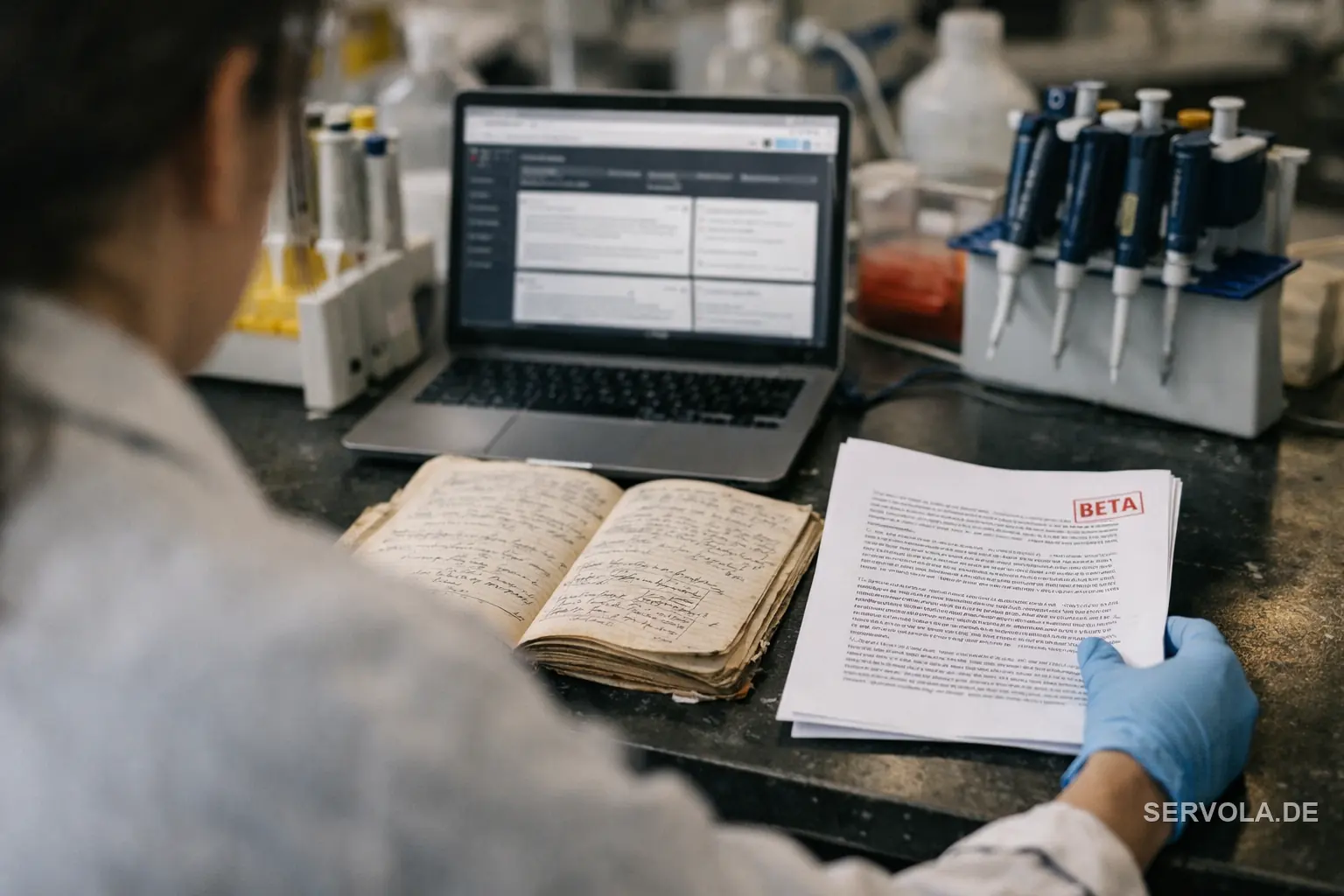
What Anthropic actually launched
On 30 June 2026 Anthropic released Claude Science, described as an AI workbench for scientists, in beta for users on its Pro, Max, Team and Enterprise plans. It is not a new model. By Anthropic's own account it runs the same Claude models already available to everyone, including Opus 4.8, with no special access. The new part is the workflow built around them: a coordinating agent with access to more than 60 curated skills and connectors pre-configured for fields such as genomics, proteomics, structural biology and cheminformatics.
The positioning is deliberate. Rather than promise a smarter brain, Anthropic is selling a better bench. The system can analyse literature, run multi-step analysis, and render scientific artifacts such as 3D protein structures and chemical diagrams. For owners, the headline is simple. The tools your research teams already reach for are being wired into one environment, and the bet is that this changes the pace of real discovery more than another model release would.
Why the audit trail matters more than the speed
The feature most relevant to anyone backing or running research is not speed. It is the record. Anthropic says every output carries an auditable history of how it was made: the exact code, the computing environment that produced it, a plain-language description, and the full message history. A separate reviewer agent checks citations and calculations before anything goes toward publication, flagging untraceable numbers and figures that do not match their underlying code. The stated aim is to catch the fabricated citations and unverifiable stats that have been slipping into AI-assisted work.
That reframes the diligence question. As AI writes more of the research, the real risk shifts from whether a result is impressive to whether it can be reproduced. A logged, reproducible result is one you can re-run; an unlogged one is a claim you have to trust. For a family office or fund assessing a deep-tech portfolio company, that distinction is the difference between evidence and assertion.
What this changes for owners and the funds behind them
If your business is R&D-heavy, or you back companies that are, the bar for what serious research looks like has just moved. Tools that produce a verifiable trail will increasingly be the expectation, not the exception, and that affects how you scope diligence on a target, how you brief your own teams, and what you ask to see when someone presents a finding. Anthropic is also funding the rollout, offering support for up to 50 research projects with up to 30,000 US dollars in credits each, with applications open through 15 July 2026, which signals how seriously it intends to push into this space.
None of this is investment, legal or scientific advice, and the product is in beta, so capabilities will change. The practical move is to check, not to act blindly. Ask whether your research can be reproduced from its record, where sensitive data would sit if you adopted such a tool, and how a portfolio company would prove its claims if you asked tomorrow. The owners who treat the audit trail as a standard, not a nice-to-have, will be the ones who can tell real progress from a confident slide.
Read next: Claude Now Leads 26 Percent of Its Own Research | An AI Formalized Fermat's Last Theorem in 11 Days