One announcement, one already-stacked region
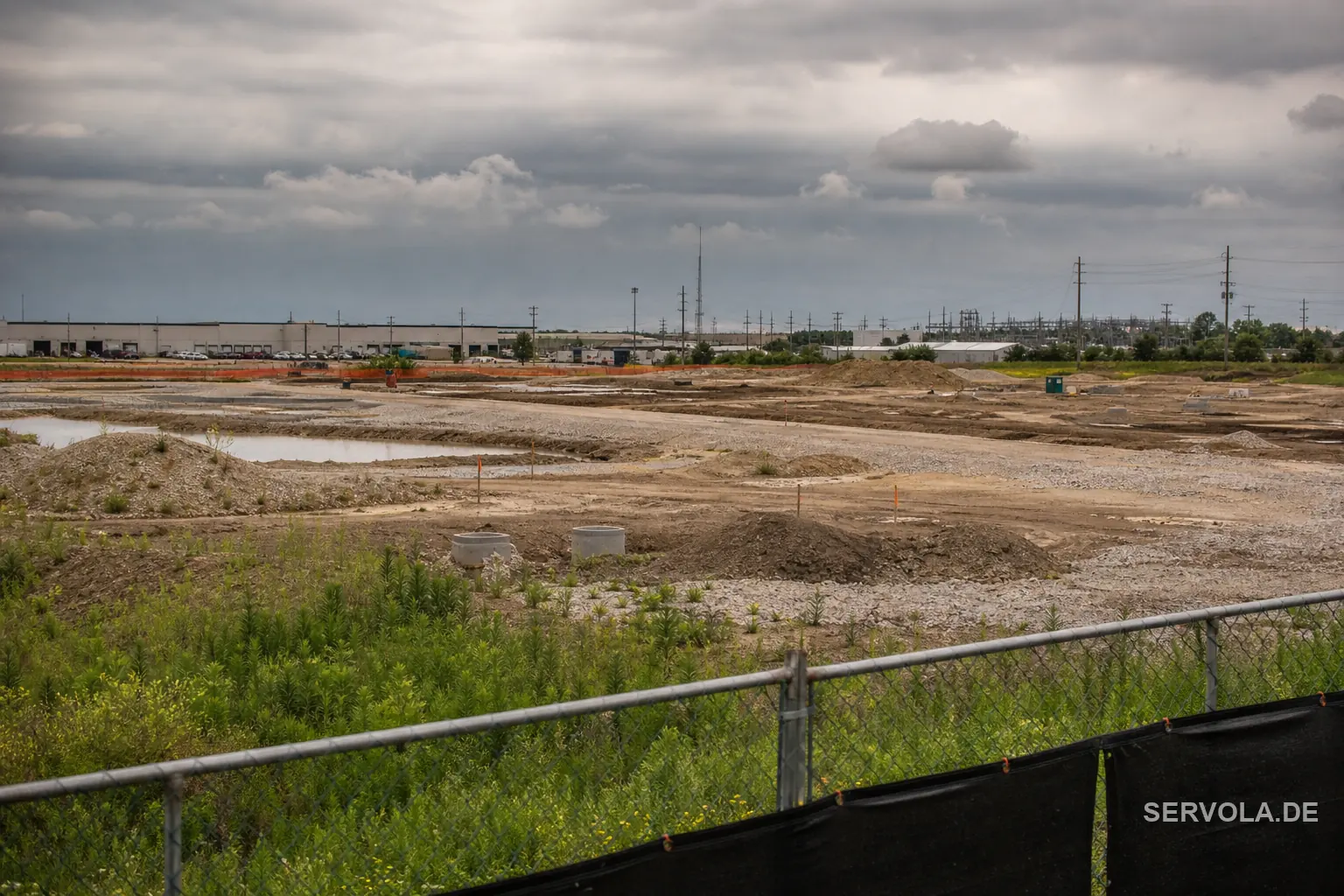
On August 18, 2026, Amazon announced via aboutamazon.com that it will build a third data center campus in northwest Louisiana, a 6 billion dollar project called Resilient Technology Park at 7340 Greenwood Road in west Shreveport's Caddo Parish. The announcement raises Amazon's total committed investment in the region from 12 billion dollars, announced in February 2026, to 18 billion dollars. Construction partner STACK Infrastructure is building the site, with a first building targeted for mid-2027 and the full five-building campus complete by 2028.
What makes this different from a single new project is where it lands. Amazon already has two campuses under construction nearby: one in Bossier Parish near Benton and one in Caddo Parish near Blanchard. All three now sit inside the same Shreveport-Bossier City metro area, inside two adjoining parishes, served by the same regional grid operator, Southwestern Electric Power Company, an AEP subsidiary known as SWEPCO. A third campus is not simply more of the same investment; it is the same regional infrastructure being asked to absorb three hyperscale interconnection requests at once.
Grid, water and labor compound instead of spreading out
Amazon says it has coordinated with SWEPCO to ensure the grid can accommodate the new demand, and that it will cover the costs of new transmission infrastructure and upgrades itself so they are not passed on to other ratepayers. Separately, the company has committed to invest up to 400 million dollars in public water infrastructure to support all three campuses combined. Both commitments are real and specific, but both also describe the same finite regional systems, one power grid and one water utility, being asked to serve three concurrent hyperscale builds rather than one.
Labor tells the same story. The new campus alone is expected to bring about 210 direct jobs; combined, the three campuses are expected to bring up to 750 direct full-time jobs, paying around 90,000 dollars a year, alongside 2,250 construction and contractor jobs across the build. Those construction jobs land on the same regional trades pool, electricians, pipefitters, heavy-equipment operators, at the same time, because all three campuses are under construction simultaneously through 2028 rather than staggered across separate build cycles.
Why this reads differently than a single-project headline
The same 18 billion dollars, spread as three separate projects across three different states, would still be a large capital commitment, but it would queue into three different grid interconnection processes and draw from three different regional labor markets, each absorbing a fraction of the pressure on its own timeline. Single-project announcements elsewhere, a new campus in Ohio or a new campus in Texas, read as significant local news precisely because they are isolated: one grid operator, one labor market, one water utility, absorbing one project.
Stacking a third campus onto two already under construction in the same two adjoining parishes is a different risk profile than the same dollar total spread across a diversified footprint. It compounds interconnection-queue pressure, water demand and skilled-labor competition into one regional grid operator and one regional labor market simultaneously, faster than a geographically spread buildout would, regardless of how carefully any single company manages its own costs.
The lesson for businesses outside the utility sector
The relevant audience for this is not only SWEPCO or Louisiana water regulators. Any business operating in or near a region that lands a hyperscale cluster, contractors, commercial landlords, staffing agencies, even unrelated employers competing for the same electricians and engineers, will feel concentrated demand on a compressed timeline: tighter skilled-labor availability, upward pressure on construction costs, and eventually questions about industrial and office real estate absorption as three campuses draw workers and contractors into one metro area at once.
Shreveport-Bossier is now a live example of what a hyperscale cluster does to a mid-sized regional economy once the third project lands rather than the first. Business owners in any region currently courting a single data center announcement have reason to ask what their own grid operator's interconnection queue and regional labor market would look like if that announcement became the first of three.
Read next: AWS's Next 2 Million GPUs Skip Naming Europe | The EU Team Behind DuckDB Just Joined AWS