Anthropic Hires the Architect of Google's TPU Program
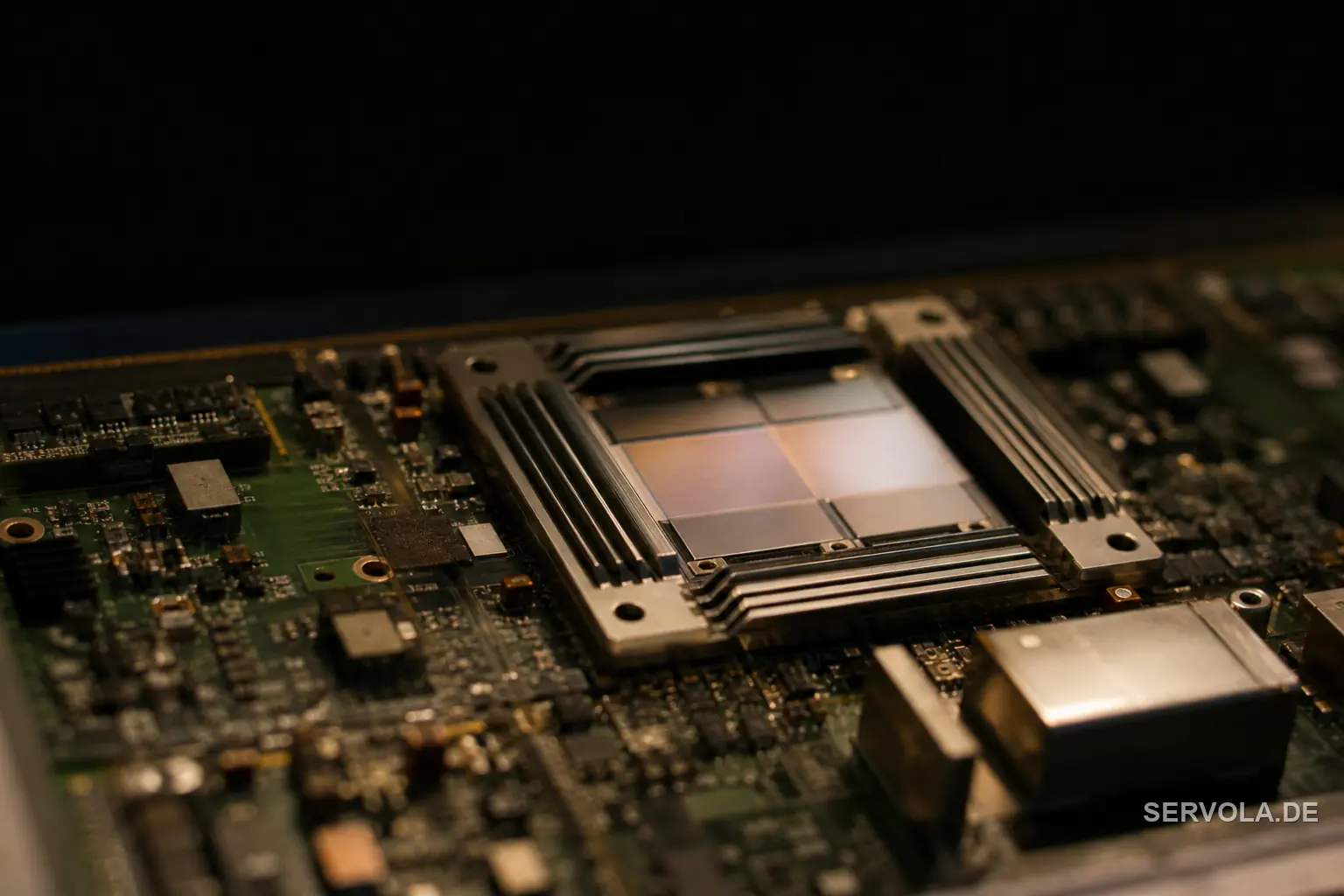
Anthropic has hired Amir Salek, the founder and former head of Google's Tensor Processing Unit program, to join its compute team, Bloomberg reported on August 21, 2026, citing people familiar with the matter. Salek led seven generations of TPU chip development at Google, the custom silicon that has powered Google's own AI training and inference workloads since 2015 and now underpins a growing share of Google Cloud's external AI business. Business Standard and Seeking Alpha corroborated the Bloomberg report the same day, adding that Salek most recently worked at Cerberus Capital, a private equity firm, before Anthropic recruited him.
At Anthropic, Salek reports to James Bradbury on the company's compute team, according to the reporting. Bradbury has been a central figure in Anthropic's infrastructure strategy, and placing Salek under his reporting line signals the hire is meant to feed directly into Anthropic's hardware roadmap rather than sit in a research or advisory capacity. Neither Anthropic nor Google has issued its own statement on the move beyond what Bloomberg's sources described.
Why Seven TPU Generations Is the Detail That Matters
Salek does not bring generic chip-industry experience to Anthropic - he built the exact program that freed Google's AI infrastructure from full dependence on Nvidia GPUs. Leading seven generations of TPU development means Salek carried Google's custom silicon from an internal experiment into the chip family now training Gemini models and renting out to external Google Cloud customers, a decade-long arc that very few engineers anywhere have run start to finish. That is a materially different hire than recruiting a chip-industry generalist or a fabrication-process specialist.
For Anthropic, the value is not just Salek's engineering judgment but his firsthand knowledge of what it actually took Google to get from a first-generation TPU to a production fleet serving billions of inference requests: the design trade-offs, the fabrication partnerships, and the software stack changes needed to make custom silicon usable at scale. That is precisely the playbook Anthropic needs if its own in-house chip effort is going to move faster than a from-scratch attempt would.
This Confirms a Shift From Renting Compute to Owning It
Anthropic recruiting the person who built Google's chip program marks a concrete step in a shift from renting AI compute to owning the silicon roadmap outright. Servola reported on August 7, 2026, that Anthropic had confirmed it was assembling an in-house chip team; that story described an ambition in general terms, with no named hire attached. The Salek hire is the first specific, dated data point that turns that confirmed ambition into an active program with a named leader and a reporting line.
Anthropic's compute today runs on a mix of Google TPUs, Amazon Web Services Trainium chips, and Nvidia GPUs, secured through multi-year commercial deals with each of those providers. None of the current reporting sets a timeline for Anthropic reducing its reliance on any of those three, and Salek's hire alone does not change existing contracts. What it does change is the credibility of Anthropic's long-term intention to design its own chips rather than remain a permanent customer of Google, Amazon, or Nvidia silicon.
The Procurement Question This Raises for EU and UK Buyers
Enterprises signing multi-year Anthropic API or infrastructure commitments now have a concrete reason to ask what happens to pricing and availability once Anthropic controls more of its own chip supply. Most EU and UK organizations buying Anthropic capacity today do so through Google Cloud, AWS, or Microsoft Azure marketplace agreements layered with the same multi-year terms that make switching providers costly - exactly the terms procurement teams should be re-reading now, not when a chip transition is already underway. A lab that designs its own silicon has a different cost structure and a different incentive to keep favorable terms with today's cloud partners than one that permanently rents capacity from them.
None of this means current Anthropic pricing or availability will change in the next year; nothing in the Bloomberg, Business Standard, or Seeking Alpha reporting sets that timeline. It does mean that renewal terms, exit clauses, and multi-sourcing strategy deserve a fresh look before Anthropic's silicon roadmap - not just its model roadmap - starts showing up in contract negotiations two to three years from now.
Read next: Nvidia's $250bn OpenAI Guarantee Fell To $120bn | Nvidia Hired the Founder, Then Groq's Value Was Halved