A Twentieth Birthday Present That Never Shipped
The anniversary was supposed to be the whole pitch. Apple let a rumor run uncorrected for more than a year: a 20th-anniversary iPhone built from curved glass wrapping the front and back in one seamless shell, with no visible ports or cutouts in the classic sense, under-display Face ID, and solid-state buttons replacing the phone's last moving parts. It was the kind of design Apple usually reserves for a symbolic year, and 2027, twenty years after the original iPhone, was the symbolic year on the calendar.
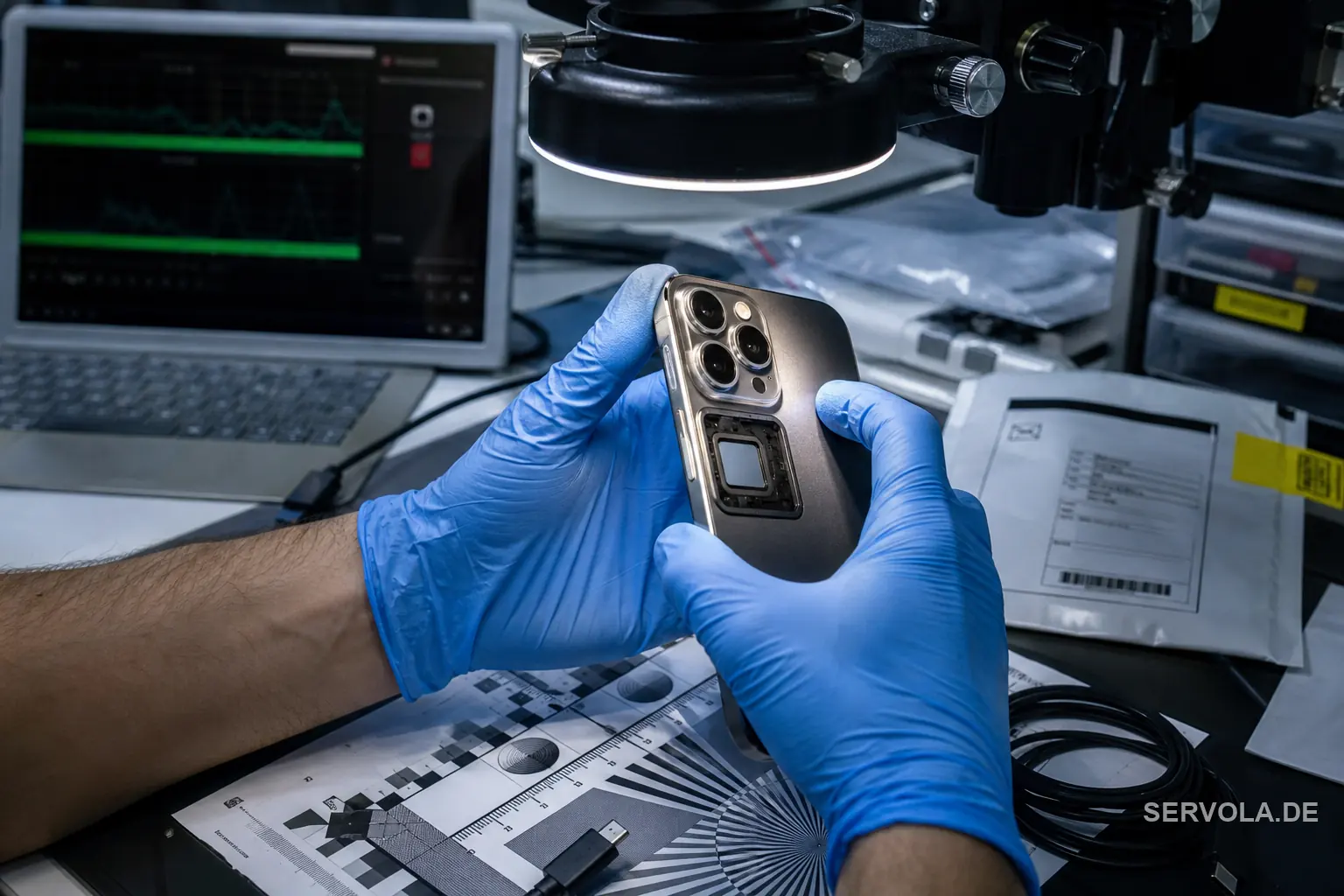
On August 10, 2026, that pitch ended, and not with an Apple keynote. Jefferies analyst Edison Lee told clients his firm's supply-chain checks point to the project being scrapped: manufacturing partners could not produce enough defect-free curved-glass units to make mass production viable. Apple has not confirmed the cancellation. Lee's note was, at the time, the only public account of it, and it was specific enough, and consequential enough to the people trading the stock, that Jefferies staked a rating change on it the same day. A second account arrived the next morning, and it tells a different story.
Bloomberg: The Redesign Is Not Dead
Bloomberg's Mark Gurman disputes the scope of that account. On August 11, 2026, citing Apple supply-chain sources, Gurman reported that the glass-centric redesign remains on track for the 2027 anniversary cycle: iPhone Pro and Pro Max models, internally codenamed V73 and V74, will carry glass on the front and back curving into the sides, wrapped around a metal band in the middle. That is the mainstream anniversary design, and according to Gurman it is still moving forward.
What did get cut, per Gurman, was a separate, more aspirational version championed inside Apple's design studio: one that pushed even further, replacing the metal band with more glass. That concept ran into problems joining the glass panels together at production scale and was scrapped early in development, well before Jefferies published its note. Gurman's account leaves open whether Edison Lee's supply-chain checks picked up signal from that already-shelved concept, or something else - either way, the anniversary redesign itself is not the casualty Jefferies described.
The Kill Number Was Yield, Not Cost
Yield is a pass rate, not a budget line, and it is reported to have cast the deciding vote. The projected blended retail price for the all-glass model ran to roughly $2,060 by Lee's estimate, above any iPhone Apple has sold, which means price was never the constraint. Apple has shipped expensive hardware before and found buyers for it. What its manufacturing partners apparently could not do is produce curved, seamless glass panels at a defect-free rate high enough to fill a global launch quarter without a supply crisis on day one.
That distinction matters for anyone who has sat in a roadmap review. A cost overrun gets negotiated: a supplier discount, a spec trim, a price increase passed to the customer. A yield failure does not negotiate. It says a fixed fraction of every unit coming off the line is unsellable, and no marketing budget changes that fraction. Apple has shipped through problems that were merely expensive before; this is being reported as one it would not ship through defective.
Killing It Before the Date Owned the Decision
The discipline on display, if Lee's account holds, is timing. Twenty years is a marketing number, not an engineering deadline, and every additional month a flawed design stays alive under a symbolic launch date is a month where the calendar, not the yield report, starts making the call. A defect-tolerant compromise, a Pro-only limited run, a delayed but still branded anniversary launch a year late: all of those are available exits that let a company ship something under a milestone name instead of admitting the milestone will pass without it.
Apple, according to Jefferies, took none of them. Lee wrote that the cancellation is "a big setback to raising iPhone's ASP and margin in the medium term" precisely because the all-glass treatment was meant to migrate into future iPhone Pro and Pro Max models afterward, lifting their prices too. Killing the flagship version reportedly kills the pipeline behind it, and Apple accepted that cost rather than force a yield problem into a keynote.
Name Your Kill Metric Before You Are Attached to the Date
The forwardable instruction is to write the failure threshold down before the project has a launch date attached to it, not after. A defect-free yield rate, a unit cost ceiling, a churn number, a false-positive rate: whatever the metric is that would make your own signature project not worth shipping, name it and set the number while the project is still just a project, before a keynote slot, a press date, or an anniversary branding decision creates a second incentive to keep going regardless of what the metric says.
Most organizations do the opposite, and Jefferies' own downgrade shows what the market rewards when a company gets this right instead: Edison Lee cut Apple to Underperform and its price target to $263.66 from $285.56, and Apple shares fell more than 2% the same day. Killing a project on data still costs something in the short term. The alternative, shipping a flawed anniversary phone into a market that eventually finds out why the glass was flawed, costs more later, and Apple is reported to have taken the smaller loss first.
Read next: Meta Dodged the Memory Hike That Just Cost Apple $200 | Apple's 2011 CEO Shock Cost 12 Times More Than 2026's