A delay that is really a design argument
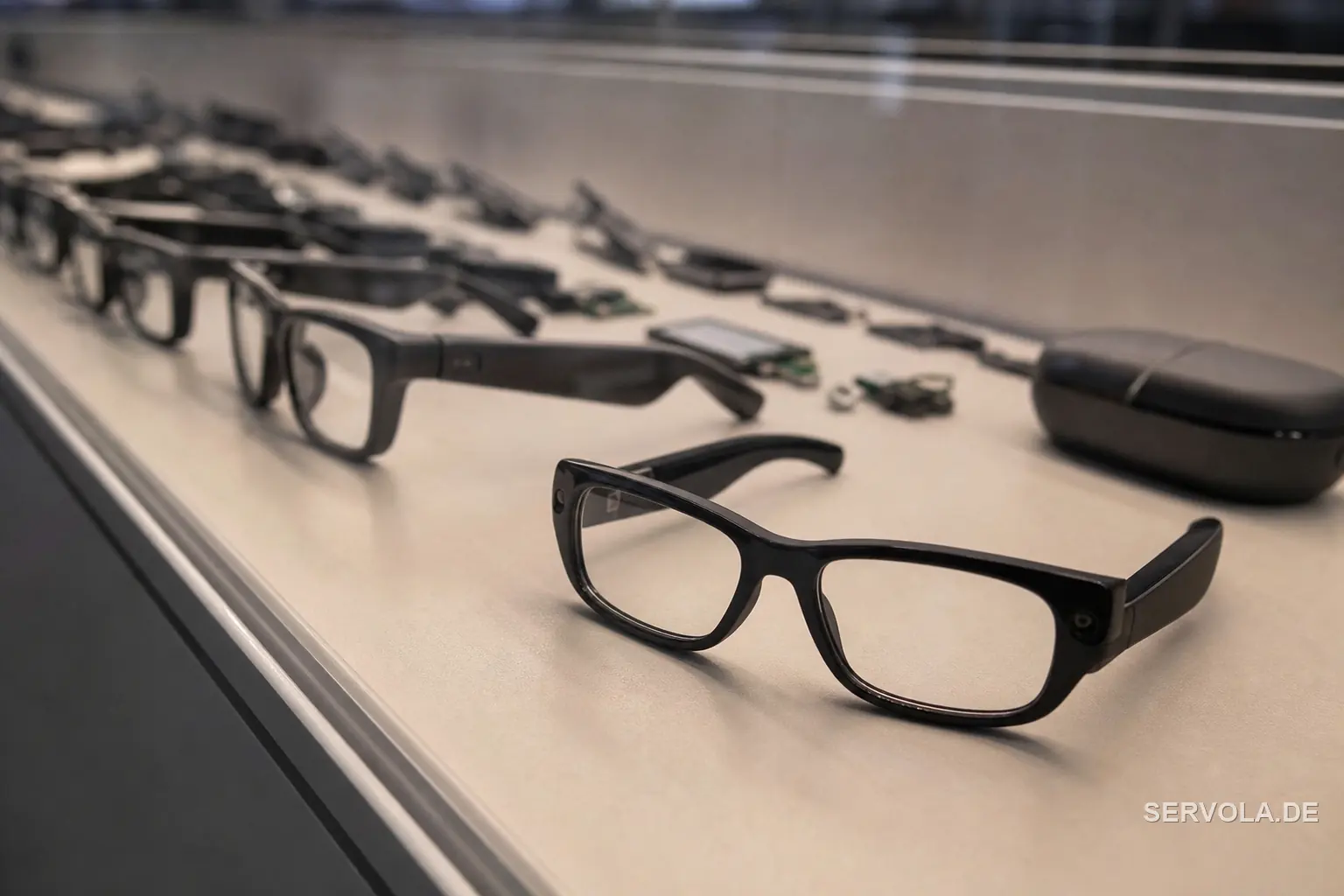
Apple's first smart glasses, developed under the internal name N50, were expected to be shown late in 2026 and to reach buyers early in 2027. Bloomberg reported on 26 July that the unveiling has moved to the company's developer conference in June 2027, with retail availability later that year, in a band reported at roughly 200 to 500 dollars. The reason given is not manufacturing or optics. It is that the privacy approach is still being settled.
Why it matters: two options are said to be on the table. Remove the cameras altogether, or keep them but prevent the wearer from taking photos or video with them, so the lens only ever serves as the eyes of an on-device assistant. Both are unusual choices for a company that sells cameras as a headline feature on every other product it makes.
The surrounding measures reported alongside it point the same way: processing on the device, no facial recognition, a commitment not to train models on user data, and tamper-evident indicator lights. That is not a feature list. It is a description of what a camera has to carry before it can be sold to the public in this form factor.
In Europe, the wearer becomes the problem
The reason this lands differently in the EU and the UK is that data protection law does not stop at the manufacturer. When a person records identifiable third parties outside a purely personal context, that person can become a controller with their own obligations. A consumer cannot meaningfully discharge those obligations, and an employer who hands the device to staff cannot pretend the recording is personal.
The bottom line: a camera that only feeds an assistant, and never produces a file the wearer keeps, is a materially smaller legal object than a camera that captures on command. The first is closer to a sensor. The second creates a recording, a retention question, a subject access question and a disclosure question, every time it is used.
This is also why a European startup shipping deliberately camera-free glasses was not a compromise product. It was a firm reading the same regulatory surface Apple is now reading, and choosing the version that does not need the argument.
What to settle before a wearable reaches your staff
Decide the controller question in writing. If an employee wearing a company device records a customer, a supplier or a colleague, your organisation is almost certainly the controller of that recording. Put that conclusion in the device policy before the first unit arrives, not after the first complaint.
Prefer the model that cannot capture. Where a camera-free or capture-disabled variant does the job, it removes the impact assessment, the retention schedule and the signage question in one purchase decision. That is worth more than the feature you are giving up, and it is a rare case where the cheaper compliance path and the cheaper device are the same option.
Talk to the works council early. In several European jurisdictions a wearable that can record colleagues is a co-determination matter, and agreement is slower to obtain than hardware is to procure. Firms that ordered first and consulted second have ended up with devices sitting in a cupboard until the agreement caught up.
Read next: Your Watch Neighbor Never Agreed to This | One Missed Deadline Broke Two of Apple's Promises