Two Quiet Steps, Not One Sticker-Shock Headline
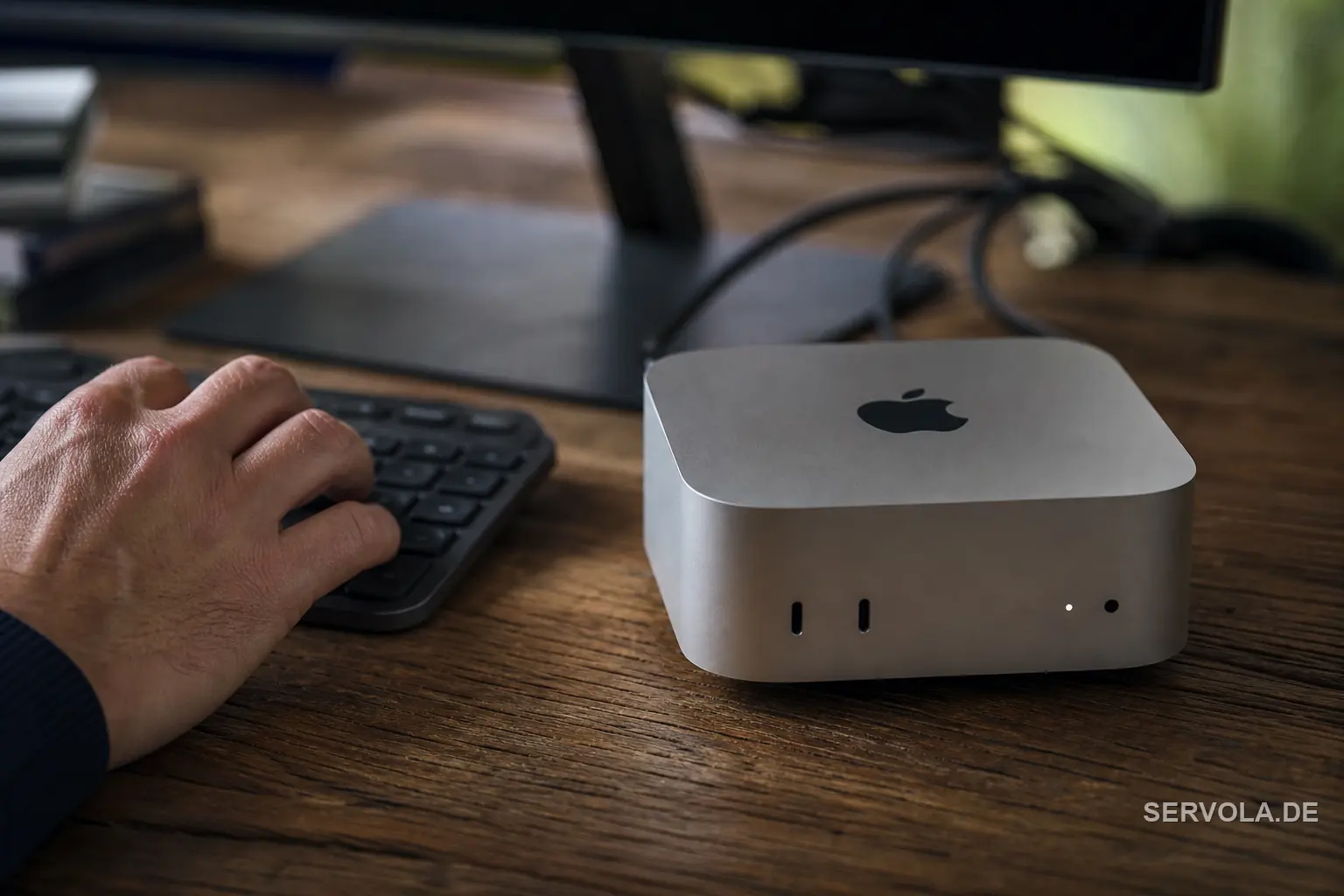
Apple's newsroom announcement on August 25, 2026 introduced M6, the company's first chip built on a 2nm process, inside a redesigned Mac mini, alongside an M5 Ultra chip inside a refreshed Mac Studio. The headline spec numbers were the intended story. The more interesting number sat one line down: the base Mac mini configuration, 16GB of unified memory and 256GB of storage, now starts at $899, up from $599 when the line launched in October 2024. Macworld's own writeup called it plainly: 'This is no longer a budget Mac.'
That $300 increase did not arrive in one visible jump. Apple quietly discontinued the original $599 configuration earlier this year, brought a pricier version of it back over the summer, and only now, with the M6 launch, landed on $899, a 50 percent rise on the identical spec sheet spread across two separate moves rather than one sticker-shock headline.
Why It Rose: A Different Buyer at the Register
Why it rose is more interesting than what rose. Bloomberg's Mark Gurman, cited in Macworld's coverage of the launch, reported that the Mac mini had become increasingly popular for running AI applications locally, and that Apple was struggling to meet demand. That is a demand-side explanation, not the generic "component costs" line some coverage offered. Apple was not forced to raise the price by suppliers. It raised the price because more people wanted the exact machine it was already selling.
The M6 chip backs that story up on paper: a dual 16-core Neural Engine, twice the peak neural compute of the outgoing chip, a 12-core GPU with Neural Accelerators, and 30 percent more GPU AI throughput than M5. None of that helps someone who wants a Mac mini to browse and answer email. All of it helps someone who wants to run a language model on their desk instead of in someone else's data center.
The Same Machine, Three Prices
The identical entry configuration, 16GB of memory and 256GB of storage, costs a different amount depending on which market hands you the receipt, and none of the three current figures match a straight currency conversion from the others.
| Market | Base Mac mini price, August 2026 |
|---|---|
| United States | USD 899 |
| United Kingdom | GBP 899 |
| Germany / EU | EUR 1,049 |
A straight dollar-to-euro conversion of $899 in August 2026 lands well under EUR 1,049. The gap is VAT plus Apple's usual EU list-price margin, the same pattern that has applied to every Mac price since the line existed, and one more reason the sticker a European buyer sees is not simply Silicon Valley arithmetic translated into a second currency.
The Honest Price of Local AI Is Not the Sticker
The honest starting price for local AI is not the number on the box. Sixteen gigabytes of unified memory covers the operating system, background processes, and a small language model with little room left over. Anyone actually trying to run a model worth using typically needs to step up to a 32GB or 64GB configuration, which on Apple's own configurator adds hundreds of dollars or more to the price above.
That matters most for the European development shops and consultancies currently weighing whether to self-host inference on owned hardware instead of renting it from a US cloud API, an argument that usually starts with "at least the hardware is cheap." After August 25, 2026, it is not the cheap option it looked like a week earlier, and the real entry price for a Mac mini that can do useful local AI work sits well above the EUR 1,049 sticker.
Read next: Apple Called Vision Pro a Long Journey the Week Its Sequel Stalled | Apple's New Mac Costs More If You're Not American