What Apple Has Actually Confirmed
Apple confirmed on August 26, 2026, that it will hold a product event on September 9 at 10am Pacific time, under the tagline 'Surprise and shine'. That confirmation covers only the date, the time and the tagline, according to Apple's own invitation. Every claim about which products will appear, including the long-rumored foldable iPhone, is press reporting citing supply-chain sources; Apple itself has said nothing about the lineup.
9to5Mac and Forbes both frame the event as the debut of Apple's first foldable phone, and Fortune and Sammy Fans independently corroborated the September date and the foldable's presence over the preceding two days of reporting. The device is expected to appear alongside a refreshed iPhone 18 Pro and iPhone 18 Pro Max, with the standard iPhone 18, iPhone 18e and iPhone Air 2 reportedly pushed to spring 2027.
A Book-Style Fold, According To The Leaks
The rumored device, widely reported as the iPhone Ultra though Apple has not confirmed a name, is expected to use a book-style fold: a smaller outer display for one-handed use and a larger inner display that opens like a small tablet. Neither figure comes from Apple; both are drawn from supply-chain reporting that 9to5Mac, Forbes and Fortune each cite independently, which is the kind of multi-outlet corroboration that separates a credible leak from a single-source rumor.
| Reported detail | Figure |
|---|---|
| Event date and time | September 9, 2026, 10am PT (Apple-confirmed) |
| Outer display | 5.3 to 5.5 inches (reported) |
| Inner display, unfolded | 7.6 to 7.8 inches (reported) |
| Starting price | around $1,999 (reported) |
| Top price, higher storage | up to $2,500 (reported) |
| Store availability | around September 18, 2026 (reported) |
The Dollar Figure Will Not Be The Euro Figure
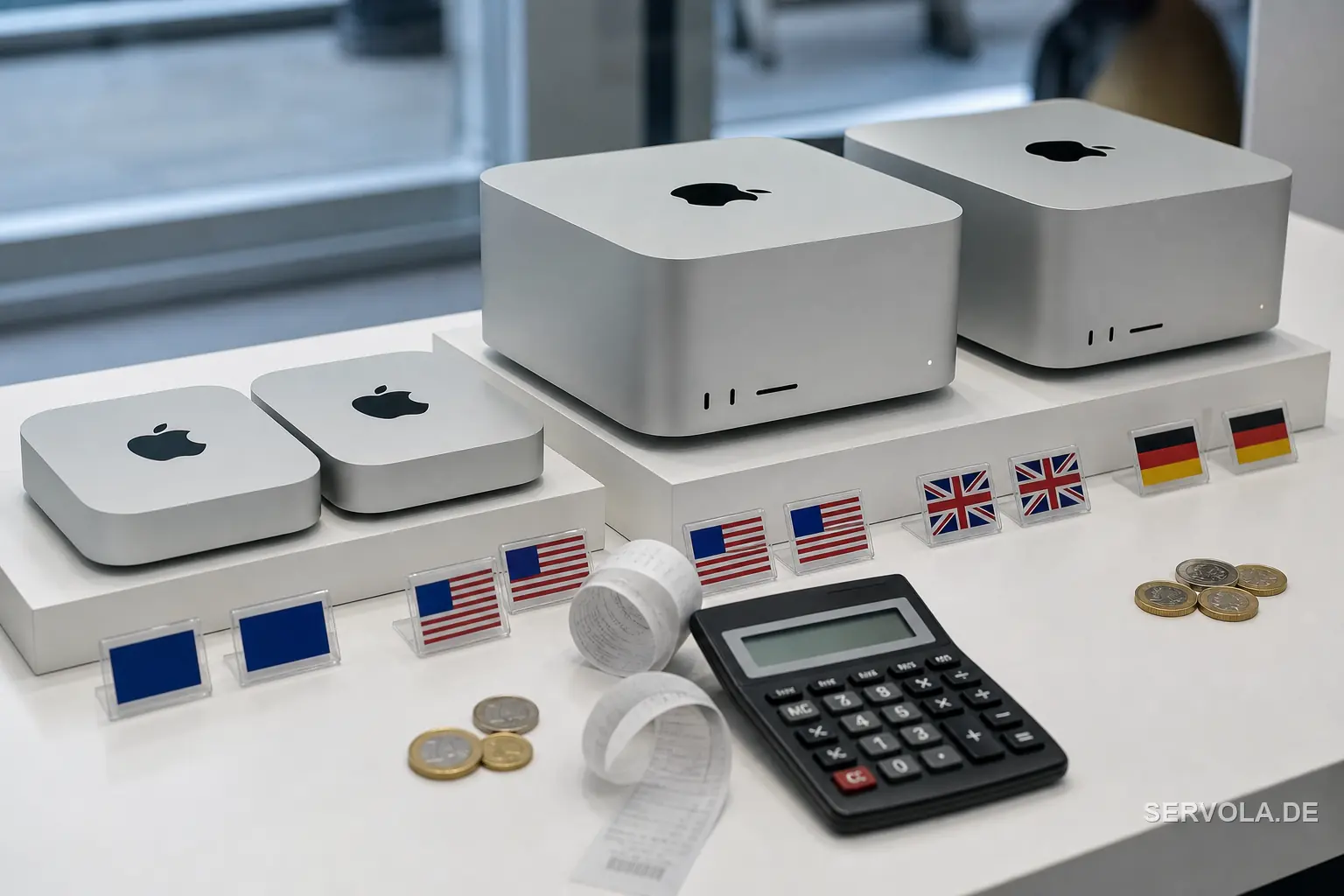
A $1,999 headline in US reporting has never meant EUR 1,999 at a European Apple Store, and Apple's own recent pricing makes the gap concrete. The iPhone 17 Pro Max launched at $1,199 for the 256GB tier in the US; the same tier lists at EUR 1,449 in Germany, and the premium is even larger at the top of the range: 2TB runs $1,999 in the US against EUR 2,449 in Germany. Value-added tax explains part of the difference, at around 19 percent in Germany, but the euro figure still comes in well above a straight tax-plus-conversion calculation, a pattern Apple has repeated across recent launches.
| Storage tier | iPhone 17 Pro Max, US (USD) | iPhone 17 Pro Max, Germany (EUR) |
|---|---|---|
| 256GB | 1,199 | 1,449 |
| 512GB | 1,399 | 1,699 |
| 1TB | 1,599 | 1,949 |
| 2TB | 1,999 | 2,449 |
UK pricing follows a similar shape: the iPhone 17 Pro Max 256GB carries the same headline number, 1,199, but in pounds instead of dollars, a currency worth more than the dollar at current exchange rates, which is itself a form of increase before VAT is even counted. Applied to a reported $1,999 to $2,500 range for the first foldable iPhone, the same pattern points toward a European starting price closer to EUR 2,300 to 2,400, well past the headline dollar number, though Apple has not listed a euro price for a device it has not confirmed exists.
A Tariff Risk Sitting On Top Of The List Price
Washington's semiconductor tariffs add a live cost risk that a display-size rumor does not carry. A 25 percent Section 232 tariff on advanced computing chips took effect in the US in January 2026, though the proclamation explicitly exempted chips built into non-data-center consumer devices, a carve-out that currently keeps a finished iPhone outside the tariff's direct reach. The administration has kept expanding Section 232 actions since then, adding a 15 percent tariff on polysilicon and related semiconductor supply-chain inputs in August 2026, and has not said the consumer-device exemption is permanent. A first-generation foldable, built on a more complex and expensive component stack than a standard iPhone, has more list price for a future tariff change to move, and no pricing history of its own to show how Apple would absorb it versus pass it on.
The Hinge Is Also A Repairability Question In The EU
EU Ecodesign rules that took effect on June 20, 2025, require every smartphone sold in the bloc to carry a repairability score from A to E, covering how easily a battery and screen can be replaced, and require the battery itself to retain at least 80 percent of its capacity after 800 charge cycles. Apple has not said how a book-style folding hinge changes where the battery sits inside the case or how a repair technician would reach it, and no first-generation foldable phone from any manufacturer has yet published an EU repairability score to compare against. That is a genuinely open question rather than a settled compliance risk: the rule does not ban complex hinge designs, it scores how repairable the result is, and a low score on a EUR 2,000-plus device would sit in public view on every EU product page from day one.
Read next: Europe Pays More for the New iPhone and Gets Less AI | Apple Called Vision Pro a Long Journey the Week Its Sequel Stalled