Apple's Priciest Mac Mini Yet
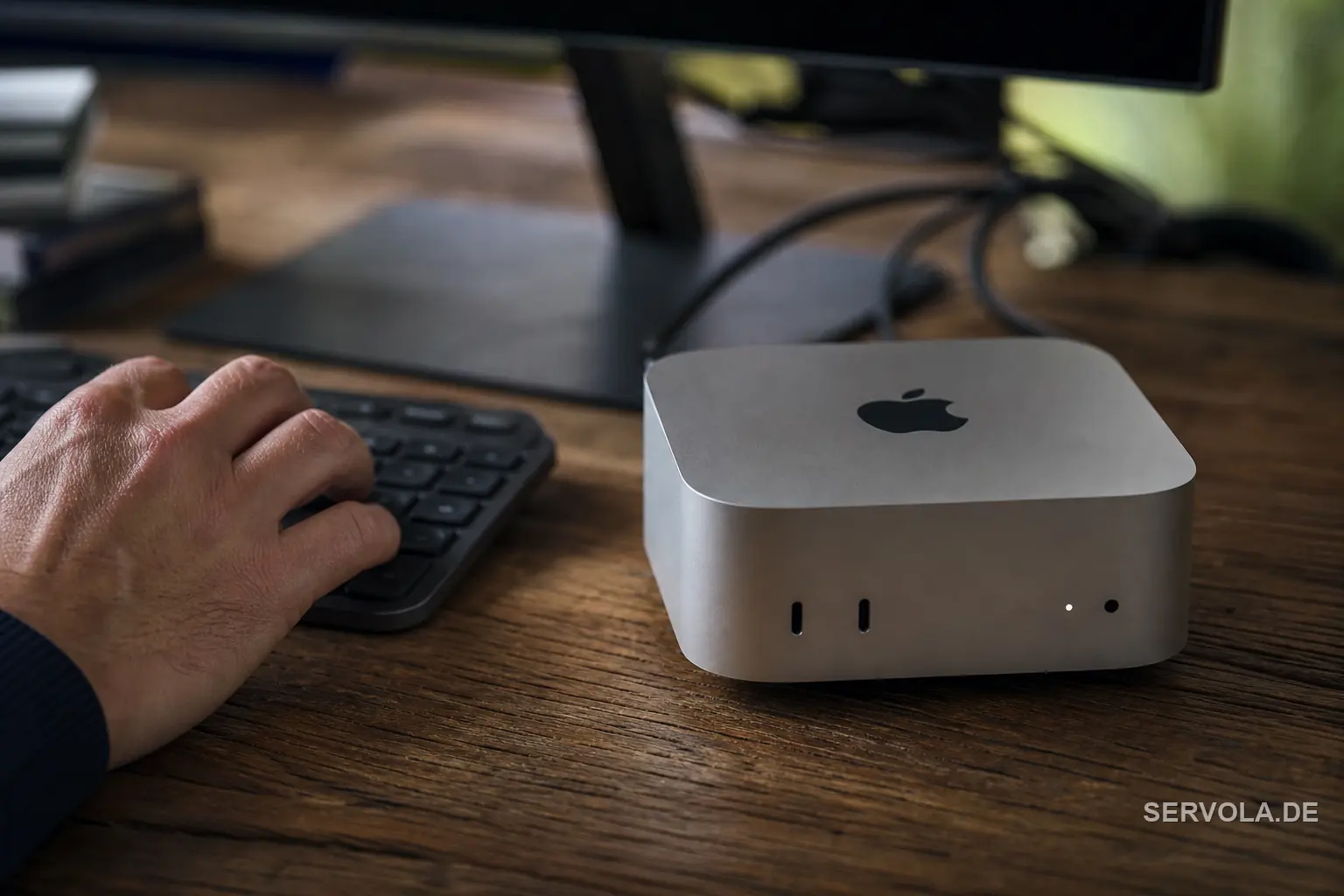
Apple unveiled a new Mac mini built on its first 2 nanometre chip, the M6, on August 25 2026, alongside a Mac Studio refreshed with M5 Max and M5 Ultra. Both ship September 22, with pre-orders open now. The base Mac mini, 16GB memory and 256GB storage, starts at 899 dollars in the US and 1,049 euros in France; the M5 Pro tier starts at 1,699 dollars and 1,999 euros. Mac Studio starts at 2,499 dollars (2,999 euros) for M5 Max and 5,499 dollars (6,599 euros) for M5 Ultra.
| Model | Price (USD) | Price (EUR, France) |
|---|---|---|
| Mac mini M6, base | 899 | 1,049 |
| Mac mini M5 Pro | 1,699 | 1,999 |
| Mac Studio M5 Max | 2,499 | 2,999 |
| Mac Studio M5 Ultra | 5,499 | 6,599 |
No Stated Reason, Which Is Itself A Signal
Apple has not published any explanation for the increase. The outgoing M4 Mac mini launched at 599 dollars in October 2024 with the same 16GB base memory the new M6 model ships with; the new starting price is 50 percent higher for a machine that, on paper, keeps the same entry-level memory configuration. Reviewers noted the launch happened inside what one outlet called a RAM-and-SSD-constrained environment, without Apple naming the constraint.
A company that stays silent on a price increase is not hiding a scandal; it is declining to draw attention to a cost structure that is, this year, largely out of its own hands.
The Memory Market Behind Every Hardware Refresh Right Now
Independent chip-market analyst TrendForce reported DRAM contract prices rising 90 to 95 percent quarter on quarter in the first quarter of 2026, with NAND flash up 55 to 60 percent in the same period; NAND prices have risen 246 percent since the start of 2025. Tom's Hardware reported the increases continuing through the third quarter of 2026, at a slower 13 to 18 percent for DRAM and 10 to 15 percent for NAND, as consumers hit affordability limits.
The driver is AI datacentre demand: analysts estimate AI infrastructure now absorbs roughly 70 percent of high-end DRAM output, and a single HBM3E module used in AI accelerators sells for 60 to 100 dollars against 5 to 10 dollars for comparable DDR5 memory used in a laptop or Mac mini. When a memory maker's factory line can produce either, it produces the one worth ten times more. Nintendo cited the same memory-cost pressure by name when it raised Switch 2 pricing effective September 1, 2026; Apple has simply not said so out loud.
What This Means For A Hardware Refresh Budget
Intel and memory-controller maker Silicon Motion have both separately warned the shortage will not ease before 2028. That is not a one-quarter blip a buyer can wait out. Any owner planning a laptop, workstation, or server refresh over the next 18 to 24 months should treat current list prices as a floor, not a ceiling, and budget accordingly rather than assuming a future promotion will undo them. Locking in a refresh cycle now, before the next AI capex wave pushes memory prices further, is the concrete decision this data supports.
Read next: Tim Cook Already Explained Why Your Mac Costs More | The Mac Studio M5 Ultra Is a Compliance Purchase