Redmond published the news, not San Francisco
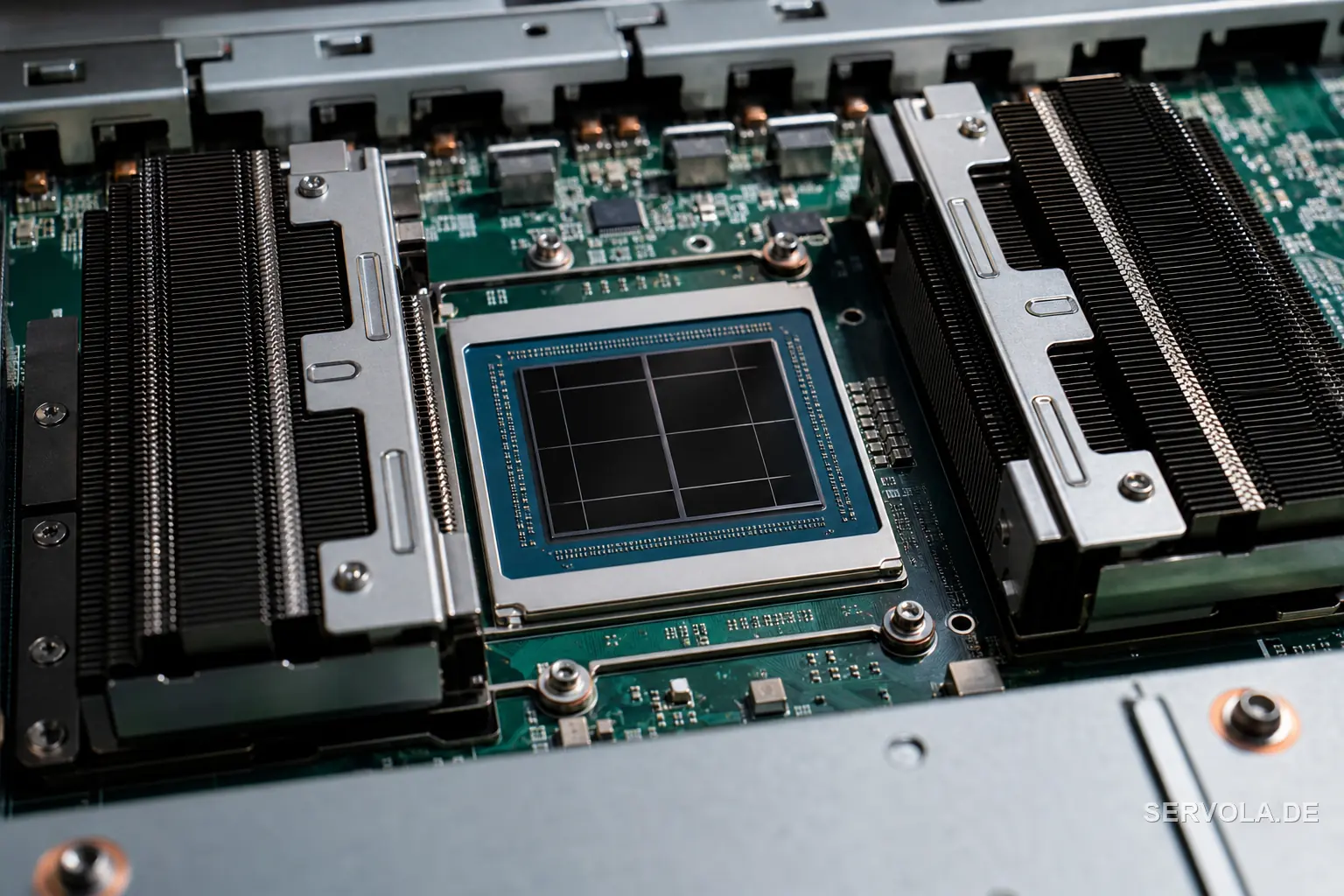
On 20 July 2026 Scott Guthrie, Microsoft's Executive Vice President for Cloud and AI, published a post titled "Microsoft expands Azure AI and HPC infrastructure with AMD". It confirmed that Azure will offer ND MI455X v7 virtual machines powered by the AMD Helios rackscale solution, aimed at production-scale AI inference. AMD describes Helios as a purpose-built platform combining its Instinct MI455X accelerators, next-generation EPYC processors, Pensando networking and the ROCm software stack.
The timing is the first thing worth noticing. AMD holds its Advancing AI 2026 event at the Moscone Center in San Francisco on 23 July, three days later. The supplier had a stage booked and a launch scheduled. The announcement came out of Redmond first anyway. When a buyer of Microsoft's size chooses to break the news itself, it is not doing the vendor a favour. It is claiming the credit for having a second source.
What actually entered the catalogue
Microsoft's post covered two distinct things, and most coverage only picked up one. On the AI side, the ND MI455X v7 series brings Helios racks into Azure for inference at production scale. Microsoft's own post gave no general availability date and no rack-level performance figures. AMD's release the same day supplied both, and the two documents are worth reading against each other.
On the classical compute side, the numbers were specific. Azure HDv2 machines carry nearly 500 physical 6th generation AMD EPYC cores, 4 terabytes of memory, 32 terabytes of local NVMe storage and 400 Gb Azure Boost networking. Azure HXv2 carries 176 EPYC cores running above 5 GHz with 50 percent more addressable cache per core, offered with roughly 2 or 4 terabytes of memory and 800 Gb InfiniBand. AMD's chief technology officer Mark Papermaster called Azure HX "an important platform for scaling complex EDA workloads", and Synopsys chief product development officer Shankar Krishnamoorthy said the systems let its customers "reliably and efficiently leverage cloud-based compute".
AMD's release, issued on 20 July through its investor relations channel, puts a date and a shape on the deal. Helios ships to customers including Microsoft in the second half of 2026. A Helios rack holds 72 Instinct MI455X accelerators and AMD rates it at up to 3 AI exaflops, alongside EPYC "Venice" processors, Pensando networking and the ROCm software stack. AMD also scoped the workloads more tightly than Microsoft did: HDv2 is aimed at agentic AI and data pipelines, HXv2 at semiconductor design, and the Helios deployment itself is described as serving inference rather than training. Lisa Su called the deployments "an important milestone", and Satya Nadella framed the addition as giving customers "the performance, scale and choice". That inference scoping matters for the test proposed below, because inference portability is what this SKU actually buys you, not training portability.
The second source is real. The portability is not automatic
Here is the part no announcement will tell you. A second supplier in the catalogue is not the same as a second supplier you can actually use. AMD accelerators run ROCm. If your inference path was written against a different vendor's toolkit, the existence of an MI455X SKU next to it on the price list gives you nothing at renewal time, because you cannot credibly threaten to move.
Procurement leverage is a function of switching cost, not of catalogue breadth. This is the same trap European buyers walked into with cloud storage a decade ago: three providers on the shortlist, one egress model, and no real exit. The vendors were genuinely different companies. The workloads were not genuinely portable. The negotiation went exactly the way a single-supplier negotiation goes.
So the useful question is not whether AMD is competitive on paper. It is whether the specific model you serve in production, in the framework you serve it with, runs on ROCm without a rewrite. For a growing share of open-weight models served through common inference runtimes, the answer is now yes. For bespoke pipelines built on one vendor's proprietary libraries, it is still no, and no amount of supplier diversity in Azure's catalogue fixes that for you.
The CPU half of the post is the tell
Microsoft announced the AI accelerators and the EPYC general-compute machines in the same breath, and that pairing carries more information than either item alone. A hyperscaler hedging against a dominant supplier buys a small quantity of the alternative and says little about it. A hyperscaler standardising on a supplier extends it across the ordinary workloads too, the EDA jobs and the data processing, where the volume is unglamorous and the commitment is long.
Meta reached a similar conclusion earlier this year, committing to as much as 6 gigawatts of AMD Instinct capacity over time with the first gigawatt due in the second half of 2026. Tata Consultancy Services signed on for Helios in February. The pattern across these buyers is not enthusiasm for a challenger. It is a refusal to let one supplier set the terms for a decade of compute spending.
What to settle before your renewal
The action here is small, cheap and worth doing this quarter. Take your top production inference workload and establish, concretely, whether it runs on ROCm. Not whether a vendor says it can. Whether your team can stand it up on an AMD instance and serve real traffic. That test costs a few days of engineering time and it converts an industry announcement into a number you can use.
If the answer is yes, you walk into your next cloud negotiation with a genuine alternative and you should price accordingly. If the answer is no, you have found the actual cost of your architecture decision, expressed in the discount you will not be receiving. Either way you now know something your invoice was never going to tell you.
Read next: Ledger Confirms a Spy Implant in Reseller-Sold Wallets | Three AI Vendors Went Down in One Window on Sept 3