An Acquisition That Looks Different From the Inside
NEURA Robotics said on August 13, 2026 that it will acquire the ACTIVE Shuttle autonomous transport robot from Bosch Rexroth, effective October 1, along with the ROKIT SLAM-based navigation software and the ACTIVE Fleet Manager orchestration layer that coordinates multiple robots across a warehouse or production line. Neither company disclosed a purchase price. Coverage of the deal, including NEURA's own announcement, framed it purely as an expansion: founder David Reger said the aim is 'an open ecosystem where mobile robots, industrial robots, and humanoids can collaborate on a shared infrastructure,' and NEURA plans to fold ACTIVE Shuttle into its Neuraverse Physical AI platform.
That framing skips over one detail that changes the shape of the story: Bosch is not a stranger to NEURA. In June 2026, Bosch invested in NEURA's Series C round, worth up to $1.4 billion at a valuation near $7 billion, alongside Schaeffler, Amazon, Nvidia, Qualcomm, Tether and the European Investment Bank. Bosch's own chief executive, Stefan Hartung, said at the time that Bosch saw growth opportunities in humanoid robotics and wanted to make greater use of them through the NEURA partnership. Two months later, a Bosch division is transferring a working, revenue-generating product line to the same company Bosch just put money into.
The Robots Already Running on Someone's Floor
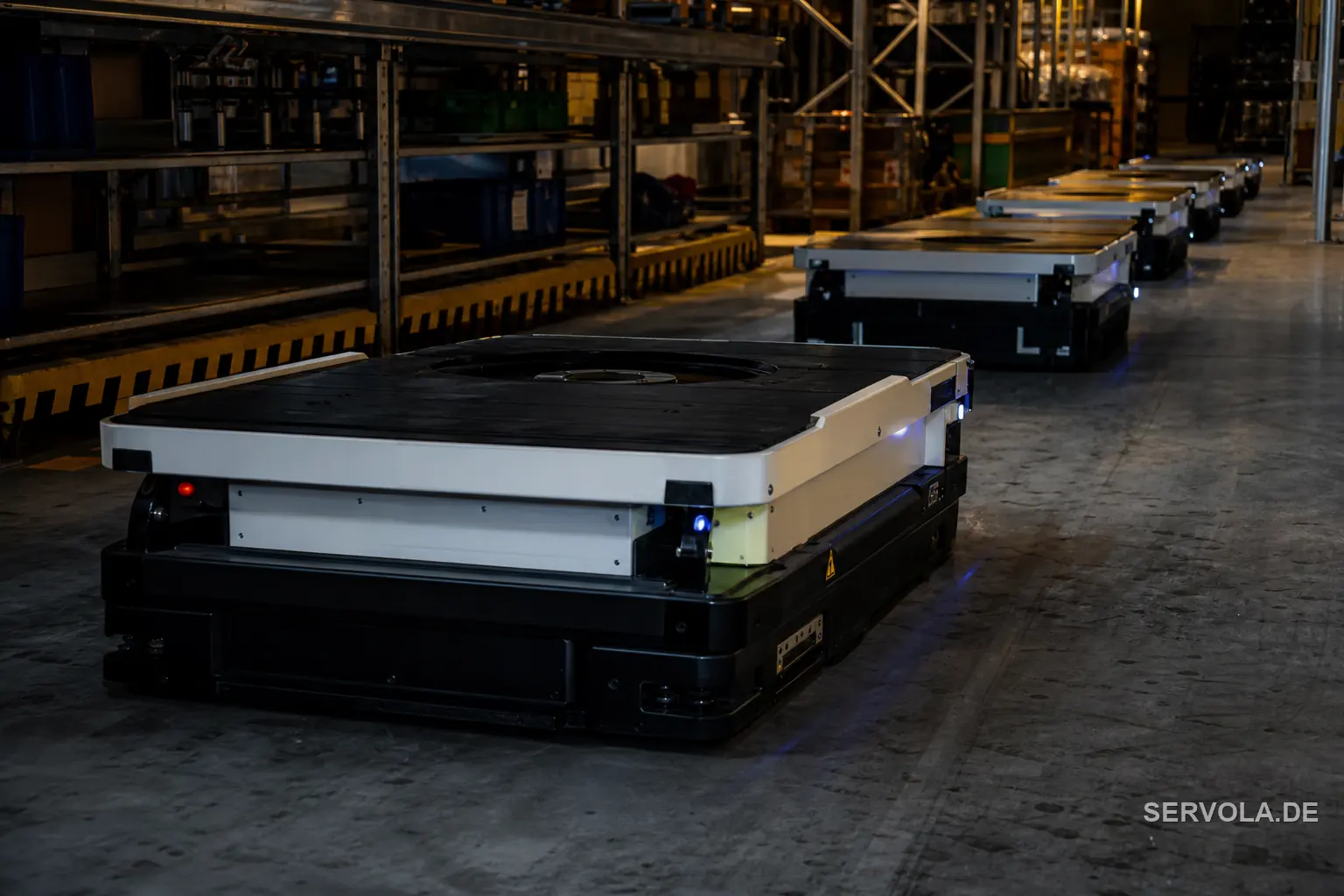
ACTIVE Shuttle is not a prototype. Both companies describe it as field-proven, deployed at numerous industrial companies for automated material handling, supplying assembly workstations and moving small load carriers through production and logistics. Every one of those existing installations came with a Bosch Rexroth support contract, a Bosch Rexroth spare-parts pipeline, and a Bosch Rexroth software roadmap behind the ROKIT navigation stack. From October 1, all of that sits inside NEURA instead.
That is not automatically bad for the operators running those fleets, but it is a change worth flagging on its own, independent of whether NEURA turns out to be a good steward. A six-year-old company mid-way through deploying a mega-round, building a humanoid robot business and a software platform simultaneously, is a different kind of counterparty than a division of a roughly 140-year-old industrial group with its own manufacturing and support infrastructure. Anyone with ACTIVE Shuttle units on the floor today has a concrete reason to ask NEURA, before October 1, what happens to support SLAs, spare parts lead times and software update cadence once the transfer completes.
Why Bosch Chose This Over Building or Selling Outright
Industrial incumbents facing a fast-moving new category, in this case autonomous mobile robots converging with humanoid physical AI, generally have three options: build the capability in-house, sell the product line to whoever will pay the most, or take an equity stake in a specialist and route the business through it. Bosch had already picked the third option in June, when it invested in NEURA rather than announcing its own humanoid or platform-scale physical AI push. The August transfer of ACTIVE Shuttle looks like the second half of that same choice: rather than keep funding an in-house autonomous mobile robot line to compete with a category NEURA is trying to own, Bosch is feeding its existing product into the company it backed.
That is a coherent strategy, and arguably a sensible one for a conglomerate with dozens of business lines competing for capital. It is also a data point for other European industrial groups watching the same wave: the emerging pattern is not incumbents building rival Physical AI platforms from scratch, it is incumbents taking minority stakes in the fastest-moving specialist and then handing over adjacent product lines rather than fighting to keep building them independently.
What This Means for Operators and for Rivals
For any operator with ACTIVE Shuttle robots already installed, the immediate task is contractual, not existential: confirm in writing what NEURA inherits in terms of support commitments, warranty coverage and spare parts availability, and get a timeline for when the ROKIT software stack moves onto NEURA's own roadmap rather than Bosch Rexroth's. None of that requires assuming the deal goes badly, only that a vendor relationship has changed hands and deserves the same scrutiny any vendor change would get.
For rivals in industrial mobile robotics, from Zebra's Fetch Robotics line to MiR and KUKA, the more durable signal is what Bosch's move says about where a major component and automation supplier believes the next few years of competitive advantage sit: not in owning a proprietary autonomous transport product outright, but in being an investor and supply partner to whichever Physical AI platform ends up aggregating the most robot types under one software layer. That is a bet on NEURA's platform ambition succeeding, made with real product, not just capital.
Read next: Robots Just Got a $1.6 Billion Bet on How They See | Skild's Robot Assembles Blackwell From One Video