A bricklayer shortage met a different pitch
Monumental did not raise $32 million by promising better robots. On 15 July 2026 the Amsterdam-based construction robotics firm closed a Series B led by Khosla Ventures, with existing investors Plural and Hummingbird returning, roughly 27 million euros at the day's rate. The founders, Salar al Khafaji and Sebastiaan Visser, sold their previous company, Silk, to Palantir a decade ago; this time they are pointing software at the oldest bottleneck on a building site.
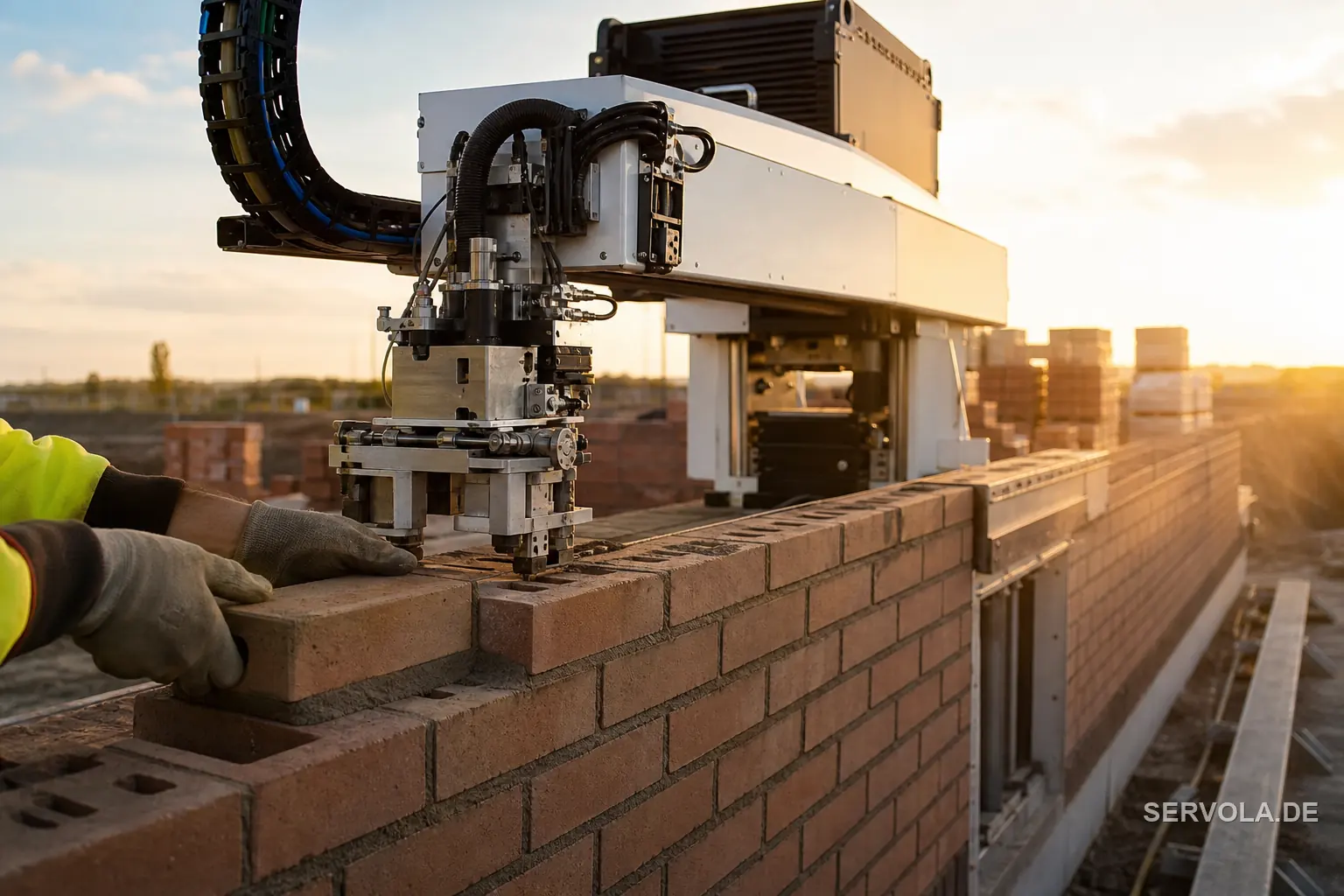
The shortage they are selling into is real and getting worse. Europe cannot find enough bricklayers, and the skilled-trades gap is one reason housing targets keep slipping across the continent. Monumental's fleet of more than 150 robots has already laid walls for over 100 homes in the Netherlands and the United Kingdom, and the new capital is meant to widen the range of tasks and open a US launch this year.
The interesting part is not the machine, it is the invoice. Most robotics vendors sell or lease you the hardware and leave you to make it pay. Monumental charges for the finished wall instead, which means it, not the builder, carries the risk that the robot shows up, works, and hits the spec.
The price tag tells you who owns the risk
How a vendor prices its product is a confession about where it thinks the risk sits. A company that charges per robot or per licence has moved the uptime, the training and the underperformance onto your books the moment you sign. A company that charges per finished output has kept that risk on its own, because it only gets paid when the work is actually done.
Khosla did not write the cheque for the bricks. It wrote it for a model where the vendor eats the execution risk and still makes the unit economics work, which is a far harder thing to build than a robot arm. Outcome pricing forces the supplier to be honest about reliability, because every failed wall comes out of its own margin, not yours.
That is why the pricing line matters more than the demo. A polished demo shows you the best case; a per-output price shows you what the vendor is willing to be judged on. When a supplier agrees to be paid only for results, it has told you it believes its own reliability numbers, and that belief is the part you cannot fake in a pitch deck.
What outcome pricing does not cover
Outcome pricing is a signal, not a guarantee, and owners should hold both ideas at once. Monumental's robots lay walls; they do not roof a house, wire it or finish it, and 100 homes is a proof point, not a record spanning every site condition. The model works because the task is repetitive and measurable, which is exactly the kind of work robots are good at and exactly where the risk transfer is cheap for the vendor to offer.
The trap is assuming the same deal scales to everything. Ask any automation supplier to price the messy, one-off, judgement-heavy parts of your operation per finished output and the offer usually disappears, because that is where reliability is low and the vendor knows it. The absence of an outcome price on a task is itself information: it tells you the supplier is not confident enough to be paid on results.
So read the boundary of the offer, not just the headline. The value in Monumental's raise, for an owner who will never buy a bricklaying robot, is the diagnostic it hands you. It shows you how to separate an automation pitch that has priced its own risk from one that is quietly asking you to underwrite it.
How to read the next automation pitch
Put one question to every robotics and AI vendor before the budget conversation: if this underperforms, whose profit and loss absorbs it. If the honest answer is yours, you are buying a machine and a hope, and you should price the failure case yourself before you sign. If the vendor will carry it in the price, you are buying a result, and the risk you were worried about is already on someone else's books.
Monumental's $32 million is a small round with a large lesson. The company did not win by having the only robot; it won by being willing to be paid for the outcome, and that willingness is the single clearest signal a supplier can send about what it actually believes. Buy the wall, not the robot, and let the pricing model tell you the truth the pitch will not.
Read next: Ledger Confirms a Spy Implant in Reseller-Sold Wallets | The Agent Paying Your Invoices Is Not Software