The Second Re-Rating in Four Months
Cambridge Aerospace closed a $300 million Series C on August 10, 2026, at a $3.4 billion valuation. Four months earlier, in April 2026, its Series B priced the counter-drone startup at $1.3 billion. Both numbers came from paying investors, not from Cambridge Aerospace's own marketing: DFJ Growth, an early backer of Anduril, led the new round, with Lux Capital, Elad Gil & Co., Accel, Lakestar and Never Lift all writing checks alongside it.
The round pushes Cambridge Aerospace's total capital raised since its 2024 founding past $630 million, for a company that has existed for barely two years. It was started by Steven Barrett, a Cambridge engineering professor who spent years at MIT before returning to the UK, and Chris Sylvan, who ran business development for Anduril's UK operation before leaving to build a rival. Between them they had two things a defense-tech startup rarely has at the same time: an engineering pedigree investors trust and a government-relations playbook lifted straight from the market leader.
A Live Contract, Not a Pitch Deck
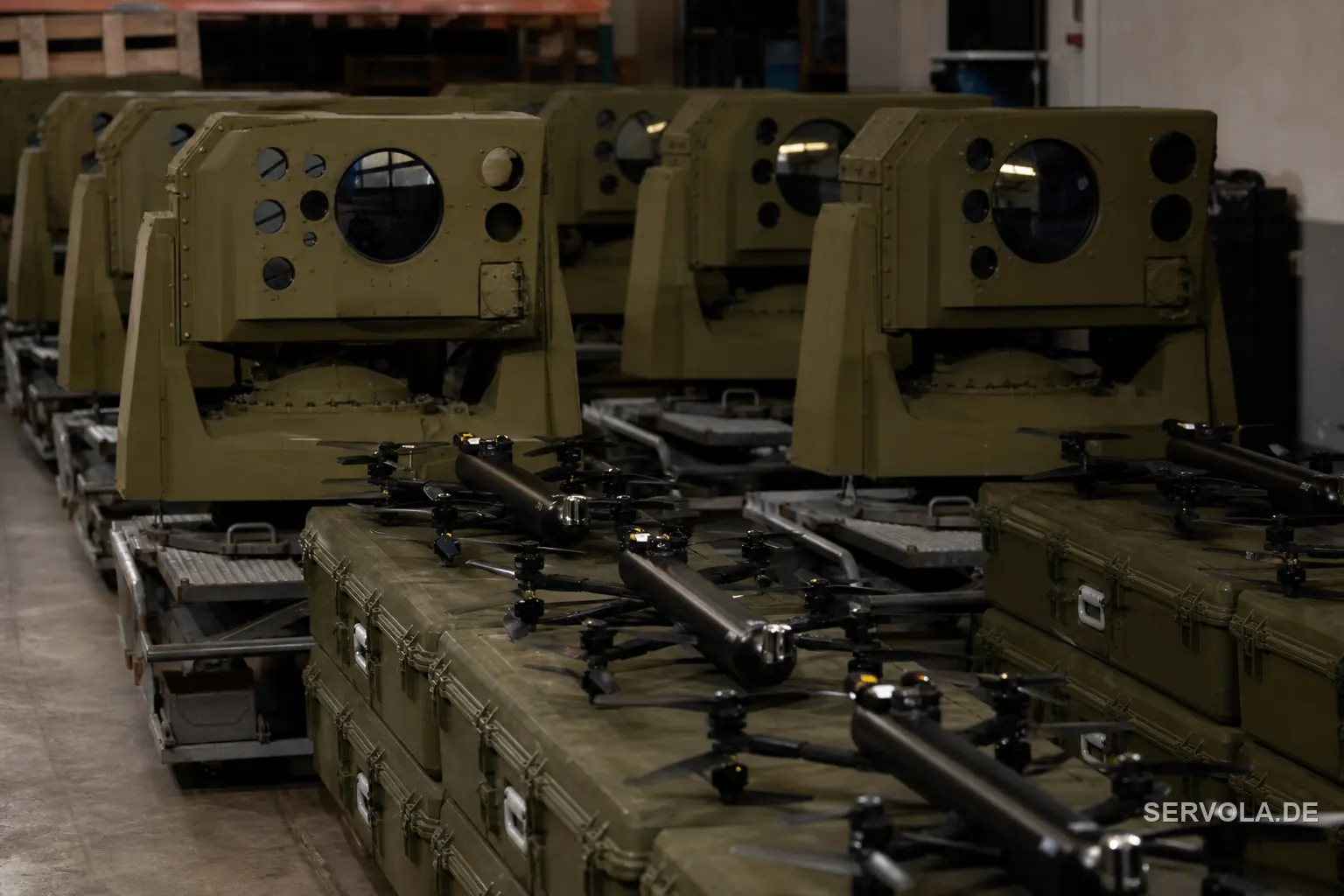
Cambridge Aerospace's flagship product, Skyhammer, is not a prototype waiting for a buyer. It is already operating under a UK Ministry of Defence contract, intercepting the low-cost attack drones that have become the defining threat of the last three years of European conflict. A second interceptor, Starhammer, is scheduled for 2027, and a radar system called Looking Glass rounds out the product line. The company is also in talks with the US government, which would put it inside two of the largest defense budgets in the world at once.
That distinction matters more than the headline number. A $3.4 billion valuation built on a signed government contract prices something closer to guaranteed revenue than a valuation built on projected total addressable market. Investors are not betting that Cambridge Aerospace might someday win a defense budget line - they are betting on a budget line it has already won, times however many more it wins next.
Capital Now Moves Faster Than Procurement
The valuation jump is the headline. The pace is the actual story. A 2.6x re-rating in four months is fast even by AI-infrastructure standards, and Cambridge Aerospace is not selling infrastructure - it is selling hardware that has to survive a live government procurement and security-clearance process before it ever reaches a battlefield. Those processes, even on defense ministries' fastest tracks, typically run twelve to eighteen months. Cambridge Aerospace's investors just repriced the company twice inside that same window.
That gap is the tell. Private capital markets are now moving faster than the government processes they are trying to price. Investors are not waiting for a tender cycle to confirm a relationship is durable - they are pricing the relationship the moment it becomes public, then repricing it again the moment the next one lands. For any founder competing in defense-adjacent hardware, the fundraising clock and the procurement clock used to run at roughly the same speed. They no longer do, and the capital clock is winning.
Who Feels the Squeeze
Every European or UK company building drones, radar, sensors or secure communications for a government customer now has a better-capitalized rival in the room, and that rival's pitch is not a roadmap - it is a signed Ministry of Defence contract plus $630 million in the bank. Out-competing on unit cost or feature list stops being enough once a rival can outspend a procurement cycle rather than out-argue it. A smaller vendor bidding into the same counter-drone or sensor budget is no longer just competing for the contract; it is competing against a company that can afford to lose the pricing fight on this contract and still win the next three.
The practical read for anyone building or funding in this space is to reverse the usual order. Startups have historically raised capital first and then gone hunting for a government reference customer to validate it. Cambridge Aerospace did the opposite: it locked in a Ministry of Defence relationship first and let the valuation catch up to the contract, twice, in under a year. That sequence is harder to copy than the product is to build, and it is the actual moat here - not Skyhammer's specs, but the fact that Cambridge Aerospace's balance sheet is now catching up to a government relationship its rivals do not have yet.
Read next: Same AI Coding Pitch, $43 Billion Apart in Price | Revolut Is Testing Whether London's Fixes Actually Work