Four Years Fighting Over Who Would Win
Futron Inc. filed its first challenge to NITAAC's CIO-SP4 evaluation methodology in 2022, arguing that the agency's self-scoring system for bidder qualifications and its handling of past-performance ratings unfairly favored certain competitors. Futron was not alone. By fiscal 2023, the Government Accountability Office had logged 350 separate protests tied to the procurement, one of the largest waves of bid protests any single federal IT contract vehicle had generated.
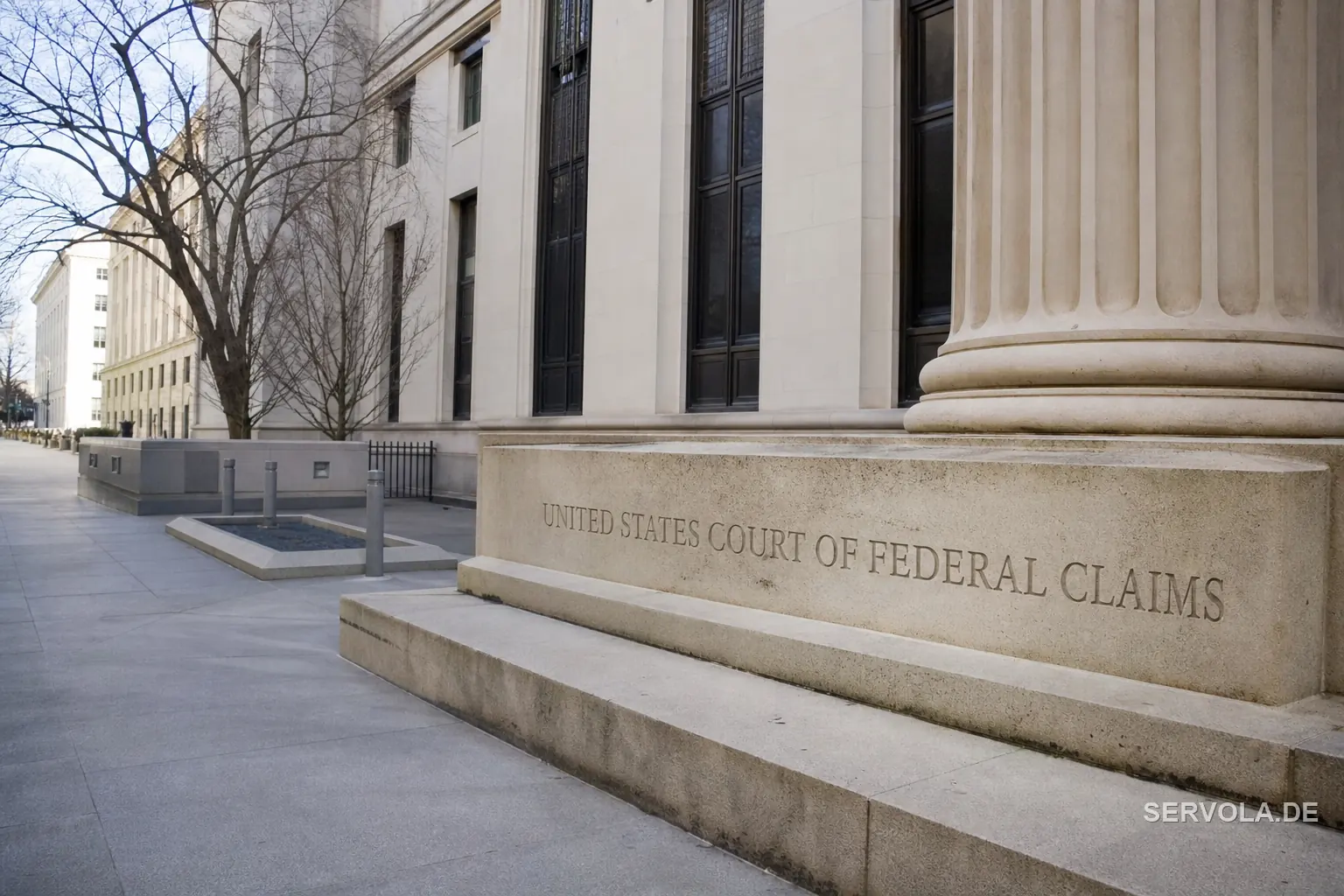
When GAO-level protests could not resolve the dispute, the fight escalated. By early 2024, 39 companies had consolidated their challenges into a single case at the US Court of Federal Claims, all arguing variations of the same core complaint: that NITAAC's methodology for ranking bidders on a 50 billion dollar contract vehicle was arbitrary or unfair to their own bid.
For two more years, the case worked through the federal court system. Companies spent money on legal fees, bid-and-proposal costs, and management time defending or attacking a scoring methodology, all on the assumption that eventually a court or the agency would declare a winner, or at least force a fairer re-evaluation.
The Cancellation That Made the Argument Irrelevant
On January 30, 2026, NITAAC filed notice that it was cancelling CIO-SP4 in its entirety. The stated reason had nothing to do with the four years of protests: the cancellation implemented Executive Order 14240, "Eliminating Waste and Saving Taxpayer Dollars by Consolidating Procurement," and OMB Memorandum M-25-31, which pushed federal agencies to stop running duplicate governmentwide acquisition contracts and instead route common IT purchases through the General Services Administration.
NITAAC said the cancellation process would take about 30 days to complete. HHS did not stop there: it is also sunsetting NITAAC's other vehicles, including CIO-SP3, and shifting the agency's federal IT contracting function to GSA schedules entirely, ending NITAAC's role as a governmentwide IT buyer altogether.
For the 39 companies still fighting over evaluation methodology, the cancellation did not settle their argument. It deleted the thing they were arguing about. A contest over who deserved to win a 50 billion dollar prize became, overnight, a contest over a prize that no longer existed.
What Mootness Actually Means for the Protesters
On August 7, 2026, Judge Thompson M. Dietz of the US Court of Federal Claims dismissed the consolidated protests as moot. The court's logic was procedural rather than substantive: once NITAAC cancelled the entire procurement, there was no live contract award left for the court to evaluate, so the underlying question of whether the scoring methodology was fair became legally irrelevant to the case as filed.
The ruling did leave a door open. Judge Dietz's opinion permits protesters to file supplemental complaints, due by September 4, 2026, that challenge the cancellation decision itself rather than the original evaluation. But that shifts the legal question entirely: instead of arguing NITAAC scored bids incorrectly, protesters would have to prove NITAAC's decision to cancel the whole vehicle was arbitrary and capricious, a standard that gives agencies wide discretion over their own procurement choices.
In practice, that means four years of accumulated argument about scoring methodology, past-performance weighting, and self-reported qualifications is now legally worthless. Any path forward starts over, on a different and harder legal question, against a much stronger presumption that the agency acted within its rights.
The Decision Lesson: A Discretionary Cancellation Beats Being Right
The CIO-SP4 saga is a clean test of a bet every company chasing a mega-contract makes without pricing it: that if you argue the merits well enough, you eventually win or force a fix. Futron and 38 other companies were, on the substance, at least partly right, since NITAAC's own past corrective actions and re-evaluations suggest real problems with the original methodology. Being right about the evaluation did not matter once the government exercised a power no evaluation dispute can touch: the unilateral right to cancel the whole procurement and start over somewhere else.
The base-rate error is treating a mega-RFP protest as a two-outcome bet, win the argument or lose the argument, when a third outcome, the buyer deletes the game, carries real probability whenever a change in political administration, executive order, or budget priority can override a years-long competitive process. A rational bid-and-proposal budget for any large government or enterprise contract should model that third outcome explicitly, not treat cancellation as a tail risk too rare to price.
The harder second lesson is procedural: fighting a discretionary cancellation is not the same fight as fighting a flawed evaluation. Arbitrary-and-capricious review of an agency's policy choice starts from a presumption the agency was right; disputing a specific scoring decision starts from a presumption the process should be fair. Any vendor whose four-year case just got moved from the second standard to the first, by a cancellation it had zero part in causing, has learned the same lesson enterprise AI vendors are learning now when a customer's platform migration erases a signed pilot: winning the argument was never the same as keeping the prize on the table.
Read next: Automattic's 33-Hour Coup Left an $8 Million Bill | Maryland Made Walmart's Pricing Promise Redundant