The Forecast That Moved in Five Weeks
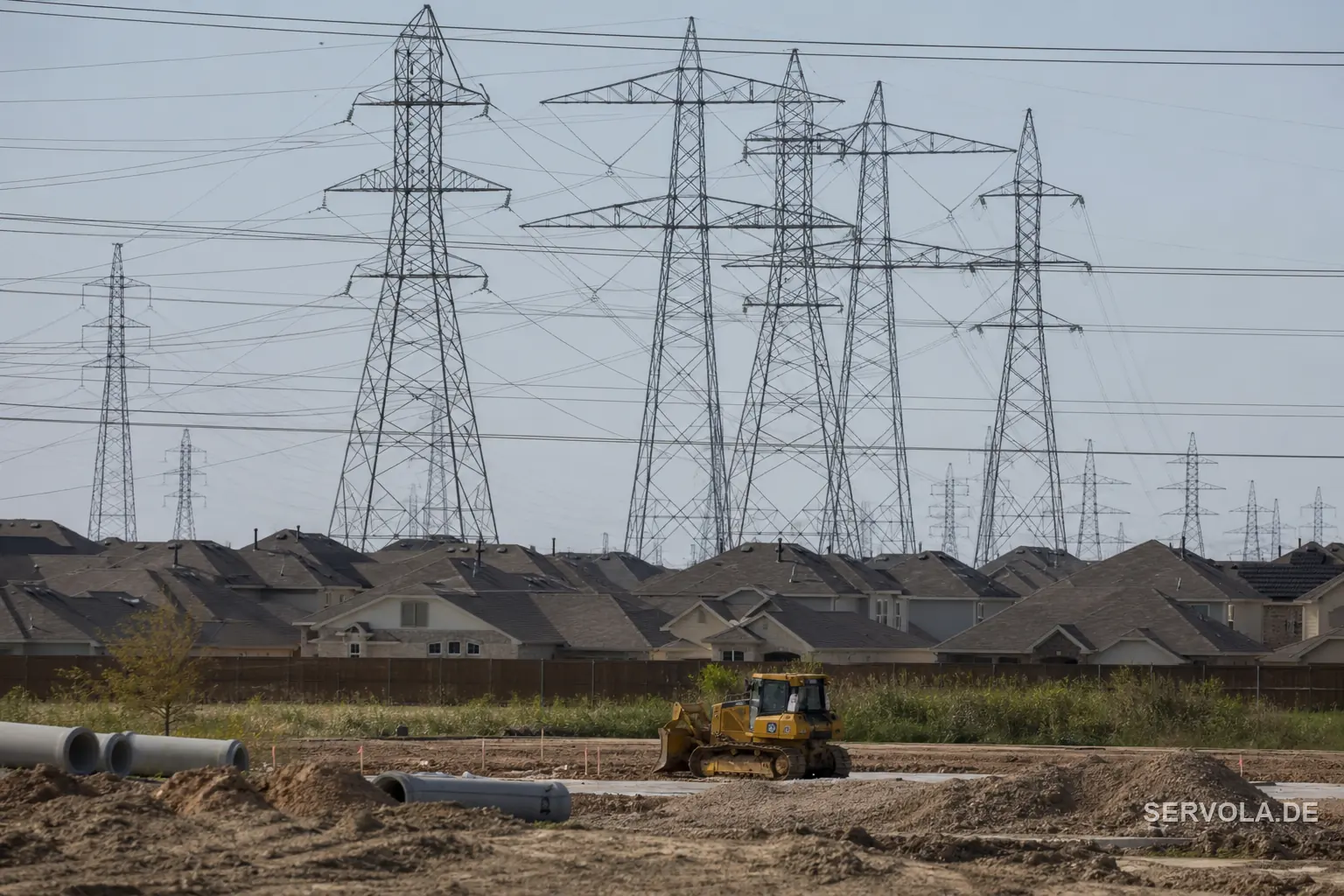
On August 11, 2026, the US Energy Information Administration released government data trimming its forecast for Texas electricity load growth in 2027 to 5.6 percent. One month earlier, in its July Short-Term Energy Outlook, the same agency had projected 14 percent growth for the same year, a figure that would have marked the state's biggest annual demand gain in a decade. Between those two reports, nothing about Texas's underlying electricity consumption changed. What changed was that Governor Greg Abbott, on August 3, ordered a halt to new data center grid connections pending an audit.
The EIA is not a private analyst house and does not lobby for or against any industry position; it is the US government's own statistical agency, and its Short-Term Energy Outlook is the baseline forecast utilities, regulators, and investors across the country treat as the closest thing to an official number. That agency cutting its own Texas growth estimate by more than half inside a single month, without a single audit finding yet published, is a different kind of data point than an advocacy group's warning or a bank's model.
What the Audit Actually Paused
Abbott's August 3 directive instructs the Public Utility Commission of Texas and ERCOT to audit every data center project currently advancing through ERCOT's interconnection process before any additional data centers are approved to move forward. ERCOT is tracking roughly 1,800 such projects requesting a combined 474 gigawatts of capacity, more than five times the grid operator's own peak demand record of 91.3 gigawatts, with data centers accounting for close to 90 percent of that queue. In response, ERCOT suspended the Batch Zero large-load classification notifications it had scheduled to issue on August 7, closing the expedited track it had only opened in June.
The audit itself asks about six things, five of which are not electrical at all: tax incentives received, water consumption and cooling method, community impact mitigation, on-site generation plans, and who actually owns the facility, alongside the underlying power request. No deadline for completing the audit has been published, and the directive does not specify how projects already partway through the queue will be treated. "Simply put, Texans must come first," Abbott said in explaining the freeze, a reversal from his own description of Texas as the epicenter of AI roughly a year earlier.
The Money Behind the Number
BloombergNEF estimated on August 6 that the pause puts approximately 49.8 gigawatts of data center demand, about 20 percent of the entire US development pipeline of roughly 253 gigawatts, at risk of delayed energization. Under a scenario where 60 percent of that delayed capacity is AI-related, BNEF put cumulative at-risk leasing revenue at just over 8 billion dollars by the first quarter of 2027; under a full-delay scenario assuming 100 percent AI-related capacity, that figure rises to roughly 15 billion dollars. "Delays in energization over this period could thus put billions of dollars of data center leasing revenue at risk," the firm's analysts wrote.
The political reaction has been split along predictable lines but at an unusually high level: President Trump called Texas's data center opposition a mistake on August 7, according to reporting from the Texas Tribune, a direct rebuke of a fellow Republican governor's energy policy from the sitting president. Abbott has not reversed course. The audit, still without a published finding or a stated end date, is simultaneously being treated by the market as economically decisive and by national politics as an open, unresolved argument.
Why a Forecast, Not a Ruling, Is Doing the Work
The mechanism worth isolating here is not the audit's eventual outcome, which nobody outside Texas state government has yet seen, but the fact that an official US government forecasting agency already moved its own number by more than 8 percentage points on the basis of the audit's existence alone. Compare that to ERCOT's own collateral-and-forfeiture redesign for large loads, or PJM's federally supervised interconnection reforms elsewhere in the country: those mechanisms work by pricing exit risk into a queue over years. Texas's audit produced a measurable, officially quantified demand-forecast effect in weeks, without a single rule change, fee, or collateral requirement, purely through the uncertainty of what an unscheduled audit might eventually conclude.
That is the transferable lesson for any operator, developer, or grid planner watching from outside Texas, including in the EU and UK, where interconnection queues face their own multi-year backlogs and where governments have similarly signaled openness to slowing data center approvals pending capacity or water reviews. A capacity forecast is not a fixed physical estimate insulated from politics; it is now, demonstrably, a function of how credible a pending regulatory review looks to the agency building the forecast. The revised 5.6 percent figure is still well above Texas's 3.5 percent historical average, so the state is not forecasting a slowdown to normal, only a slowdown from extraordinary. Anyone underwriting a Texas-adjacent capacity bet on the strength of the original 14 percent number needs to treat regulatory uncertainty itself, not just the interconnection queue mechanics, as a line item that can move the forecast on its own.
Read next: Most US Data Center Power Requests Will Never Be Built | Texas Put 474 Gigawatts Behind an Audit