What a first approval actually contains
The exemption became public on 30 July, and the shorthand version is accurate as far as it goes: Amazon's Zoox became the first company allowed to charge American passengers for rides in a purpose-built vehicle that has no steering wheel and no pedals. The mechanism is a temporary exemption under Part 555 of the federal motor vehicle safety rules, granted after an application filed in September 2025, so the process took roughly ten months from receipt to decision.
The detail underneath is more instructive than the milestone. The exemption spans eight federal motor vehicle safety standards, among them windshield defrosting and light vehicle brake systems, all of which assume a human sitting behind controls that this vehicle does not have. Before granting it, the agency had to conclude that the vehicle is as safe as an equivalent vehicle meeting the standards being waived. That is the statutory test, and it is worth stating plainly because it is the opposite of a deregulation story: nothing was declared unnecessary, each waiver had to be bought with an equivalence finding.
The number that did not make the headline
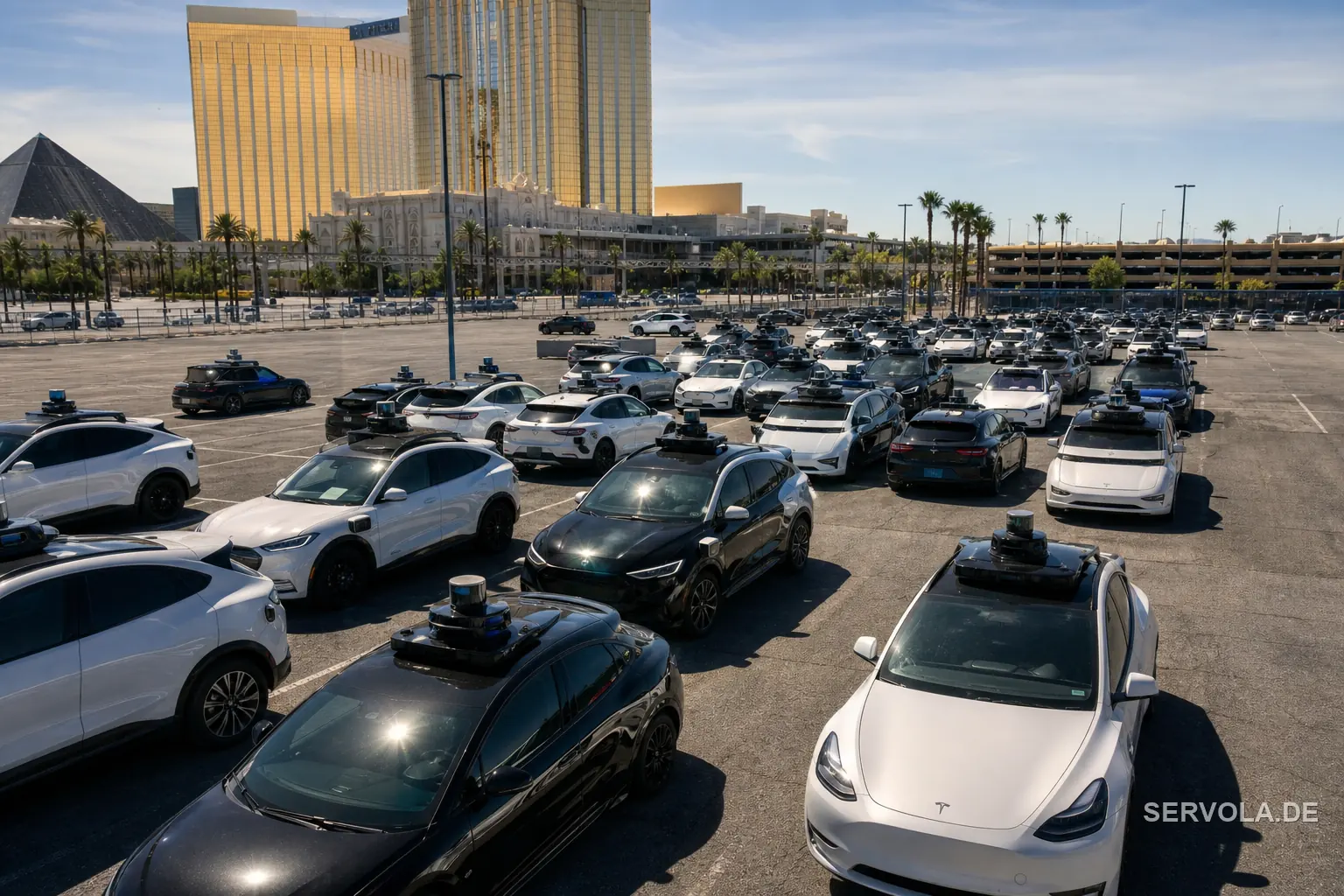
Zoox may field as many as 2,500 vehicles a year across a two-year window, which is a ceiling of 5,000. Set that against the company's own footprint. Zoox lists operations in Las Vegas, San Francisco, Austin, Miami, Atlanta and Los Angeles, so a first-year allowance of 2,500 vehicles spread evenly across six metropolitan areas comes to about 417 cars in each. That is a substantial pilot. It is not a taxi fleet, and it is not what the phrase first approval tends to conjure.
The company said it will begin charging for rides in Las Vegas next month and add markets as it satisfies state-level commercialisation requirements, which names the second constraint. Federal permission removed the vehicle-standards obstacle; it did not remove the state and municipal ones. An operator reading this should take the general lesson rather than the Zoox-specific one: in a layered regulatory system, clearing the hardest layer changes the binding constraint rather than removing it, and the honest question after any approval is which permission is now the slowest.
Supervision moved to after the launch
The conditions are where this decision earns attention. NHTSA placed additional reporting duties on Zoox covering crashes and vehicles stopping inappropriately on the road, said the oversight structure is designed to adapt as the technology advances, and retained the ability to pull the exemption if serious safety problems emerge. Zoox must also publish maps showing where its vehicles operate.
Put together, that is a different instrument from the one most operators picture when they hear the word approval. A certificate is a finding about a product, issued once, filed away, and stable until something forces a review. What Zoox received is closer to a supervised licence: permission that stays contingent on measured behaviour, with an obligation to keep feeding the regulator the measurements. The compliance burden therefore does not fall away at launch, it starts at launch. Any organisation building a plan around a future approval should budget for the reporting function as an operating cost rather than treating the approval as the finish line.
A residency clause from an American regulator
One condition deserves separate billing. NHTSA required that all remote operators be located within the United States. Remote assistance is the human layer behind a driverless fleet, the people who advise a stuck vehicle or resolve a situation the software will not commit to, and the agency has now treated where those people sit as a safety-relevant fact rather than an operational detail.
That is a localisation requirement on a support function, imposed by the regulator of a country whose firms have spent years arguing against localisation requirements elsewhere. Read it without the irony and it is still useful, because it tells any operator planning a European deployment which question will be asked. Remote assistance is not going to be treated as an ordinary outsourced service desk that can sit wherever labour is cheapest. It sits inside the safety case, and once it is inside the safety case, its location, staffing and availability become terms a regulator can set.
What a European operator takes from this
Three things carry across, none of which require predicting what any European authority will do. First, conditions travel faster than statutes: a regulator that wants incident reporting, published operating areas and domestic remote staffing can impose all three as conditions attached to a permission, without waiting for new legislation. Second, the equivalence test is the real work. The agency did not waive eight standards because they were obsolete, it waived them against a finding that the vehicle was as safe without them, and an operator who cannot evidence equivalence has nothing to apply with.
Third, and most practical, build the reporting capability before you need the permission. The duties attached here are continuous and specific, covering crashes and the more mundane failure of a vehicle stopping where it should not, which means the systems that capture and report those events have to exist and work on day one. Firms that treat regulatory reporting as something to assemble after approval will find that the approval was conditional on the thing they have not built.
Read next: Zoox Starts Charging Fares in Las Vegas | Tesla's Cybercab Draws a Federal Probe on Day One