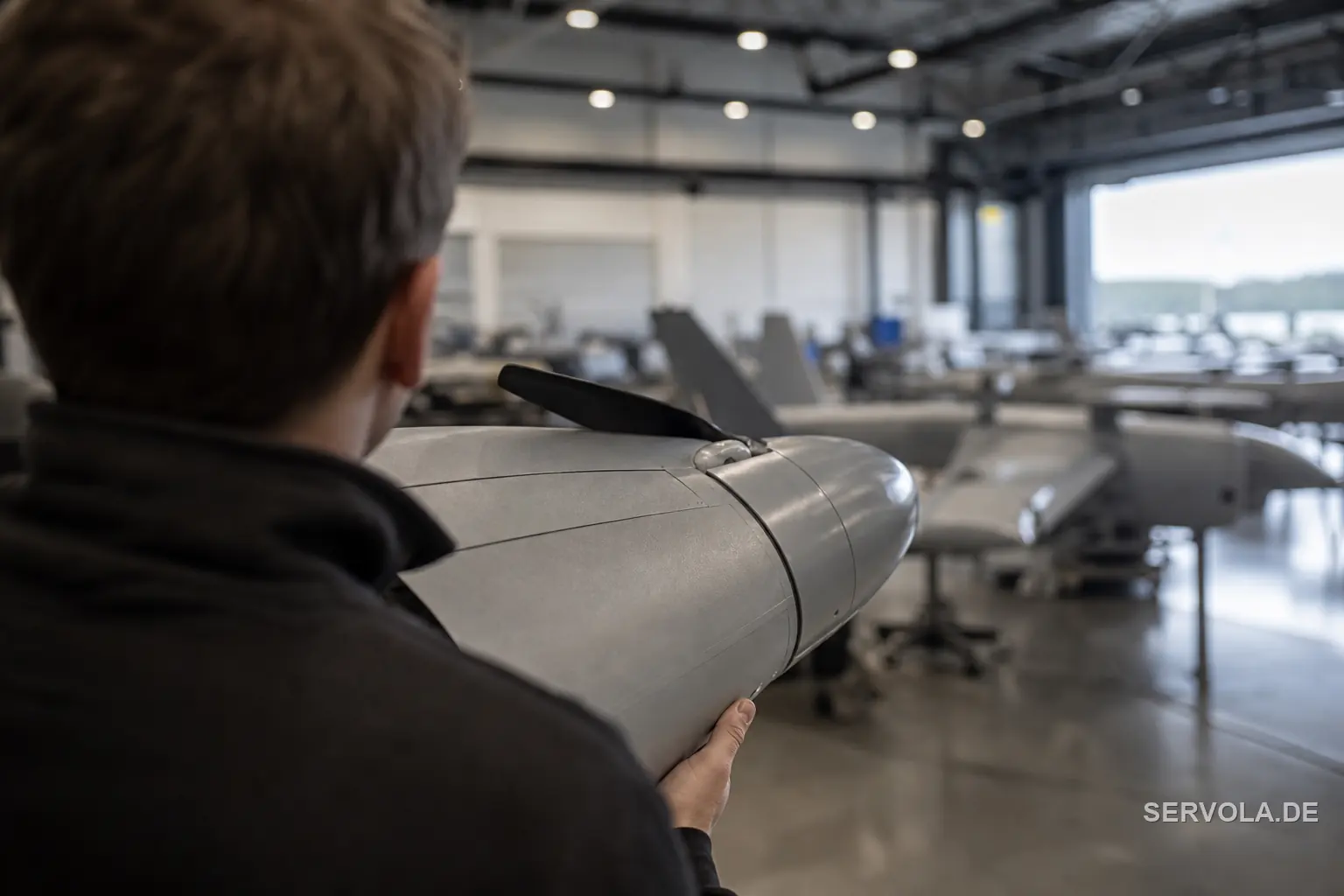
The billion-euro signal from Munich
On 2 July 2026 Quantum Systems, a Munich autonomous-drone maker led by co-CEOs Florian Seibel and Sven Kruck, closed a 1 billion euro Series D, about 1.2 billion dollars, roughly doubling its valuation to around 8 billion dollars post-money. The round was co-led by Blackstone, Noteus, Airbus, and Advent, with Fidelity, Wellington, A.P. Moller Holding, and existing backers Balderton and HV Capital joining. It is the largest private defence-technology financing Europe has seen.
The company says the capital will expand manufacturing, harden its supply chain, speed deliveries to allied countries, and fund AI and its MOSAIC command software. Strip the mission language and one fact remains: institutional money that once avoided defence is now writing nine-figure cheques into a European prime, and it is doing so at a growth-equity valuation, not a strategic discount.
Why capital is repricing dual-use
Days before the round, AVP and Berlin's Earlybird held a first close on E2D, a fund targeting 500 million euros for European dual-use and defence technology, at roughly 25 million euros per company across about twenty holdings. Their headline number is the argument: since 2019 about 85 percent of all NATO defence-tech venture funding went to the United States, and Europe captured just 6.2 percent in 2025. The European Commission is pushing from the public side too, committing 1.07 billion euros to 57 defence projects in April.
Put together, a record private round, a dedicated fund, and public co-investment are not three headlines but one repricing. For a decade European institutions treated defence as uninvestable on policy grounds. Rearmament, a war on the continent's edge, and sovereignty anxiety have turned it into a category with its own funds, benchmarks, and exit logic. That shift, not any single drone, is the story.
What the repricing pulls toward you
Most owners do not build weapons, so it is tempting to file this under geopolitics. That misreads it. Dual-use means the same optics, batteries, secure comms, edge compute, and machine-vision talent that a defence prime now buys at scale are what your industrial or logistics business also buys. When a Quantum Systems commits a billion euros to harden its supply chain, it is bidding for the same components and engineers you are, and it can pay more.
Expect three second-order effects: tighter lead times and firmer prices on dual-use components as defence demand crowds in, a talent market where machine-vision and secure-systems engineers command a defence premium, and investor questions about whether your own supply chain is sovereign enough to survive an export shock. The owners who map that exposure now will negotiate from data while others react to a stockout.
Read next: Same AI Coding Pitch, $43 Billion Apart in Price | One Contract Tripled Crusoe's Price in Ten Months


