A prospectus is where a policy argument becomes audited
Shein filed its draft listing document in Hong Kong on 26 July, and the numbers inside it settle an argument that has been running on assertion for a year. The company swung to a net loss of 99 million dollars in the first quarter, against a net profit of 395 million dollars in the same quarter a year earlier. Revenue for the quarter was 9.05 billion dollars, up 1.1 percent. For the full year 2025 the company reported net revenue of 41.85 billion dollars, up about 8 percent, and net income of 2.06 billion dollars, down 38.7 percent. The growth rate the year before had been 20.7 percent.
Among the headwinds the filing identifies are tariffs, weaker demand in the Middle East, rising logistics and material costs, and the European Union's 3 euro fee on low-value e-commerce items, worth about 3.42 dollars, introduced this month. The European Union accounts for roughly a third of the company's 2025 net revenue and of its first-quarter revenue. A quarter of the loss is explained by something unrelated to trade policy at all: a 328 million dollar fair-value charge on convertible redeemable preferred shares, an accounting consequence of the capital structure rather than of any customs rule.
Why the document matters more than the number. Companies affected by a policy change will always tell a regulator that the change is painful. A prospectus is different, because it is prepared under liability, reviewed by sponsors, and read by people deciding whether to buy. When a fee appears in that document it has stopped being a lobbying position and become a disclosed exposure, and every operator with the same exposure now has a reference point that did not exist a week ago.
The damage is regional, and it arrives as margin
The most useful line in the filing is not the loss. It is the split. US revenue fell 14.3 percent to 2.04 billion dollars, from 2.38 billion, in a quarter when group revenue still grew. Operating margin went from 3.9 percent to 2.9 percent. That is the signature of a customs change working through a business: a single market contracts sharply while the group total holds, and the pain surfaces as a thinner margin rather than as an empty order book.
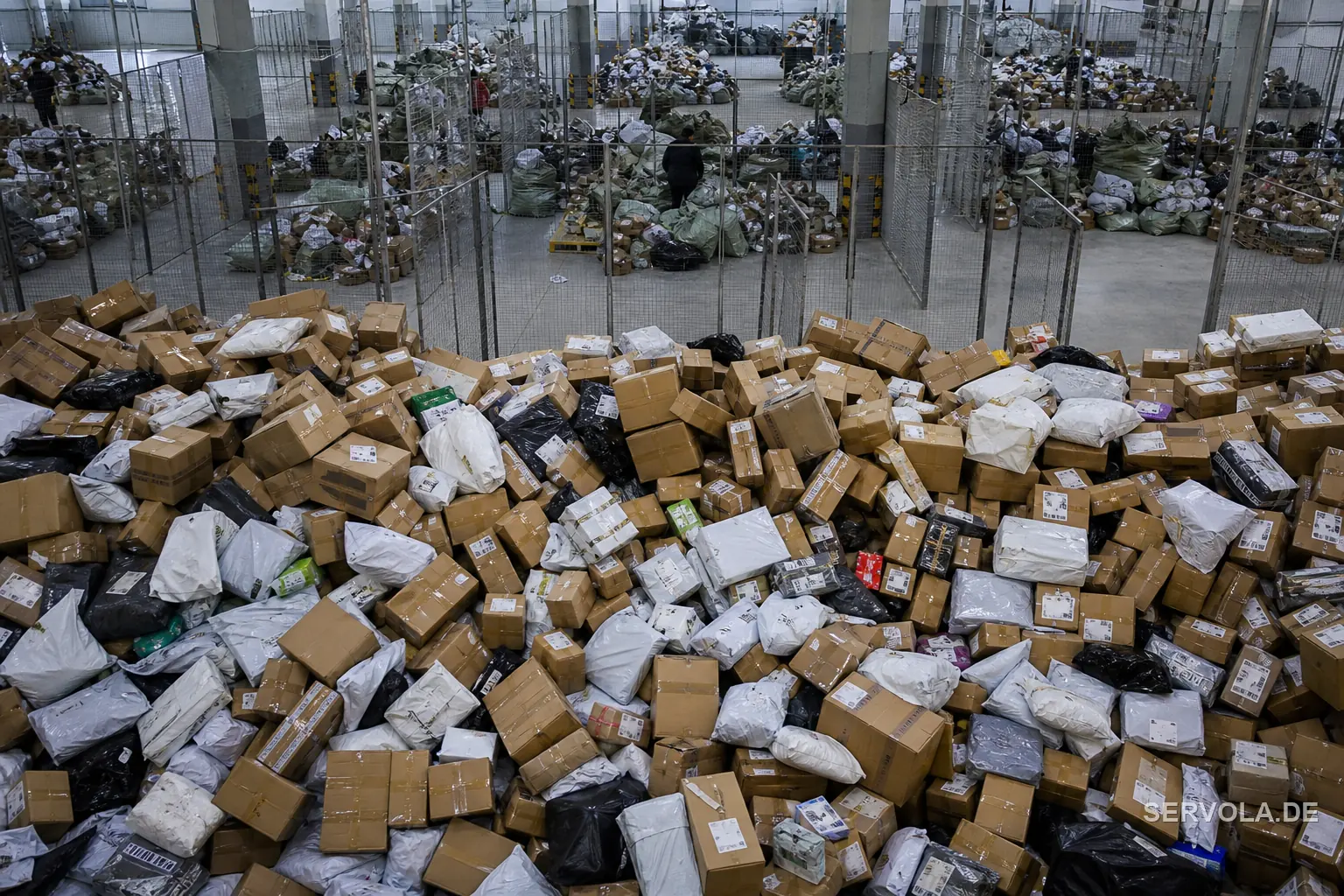
The American mechanism is already visible. The United States removed its de minimis exemption in May 2025, and goods that previously entered duty-free began attracting rates the filing puts between 10 and 87.5 percent. The European fee is a much smaller instrument, a flat 3 euros per parcel rather than an ad valorem duty, but it is aimed at the same structural feature: a shipping model that sends a very large number of individually cheap parcels directly to consumers, and whose unit economics assume that each parcel crosses the border cheaply.
What the two measures have in common. Neither is a tax on the product. Both are taxes on the parcel. A business that ships one consolidated pallet to a European warehouse and fulfils domestically is barely touched. A business that ships ten thousand individual items across the border pays ten thousand times. Any operator whose logistics model sits closer to the second pattern should treat the Shein filing as an early reading of their own cost curve.
An exemption is a dependency, not an advantage
The deeper lesson in this filing is about the difference between a cost advantage and a regulatory dependency. For a decade, direct-to-consumer cross-border retail enjoyed an advantage that came from a threshold rather than from operational skill. Thresholds are set by governments and can be moved by governments, which means the advantage was always a policy position held on someone else's behalf. Shein is not being punished for inefficiency. It is discovering the maturity date on an assumption.
The company is seeking a valuation in the 40 to 50 billion dollar range, against the 100 billion dollar valuation it carried in 2022. Founded in 2012 by Sky Yangtian Xu, it received approval from the China Securities Regulatory Commission for a Hong Kong listing on 10 July, after earlier efforts to list in New York and London did not proceed. A valuation that has halved while revenue has grown is the market pricing exactly this: the earnings are real, and the conditions that produced them are not guaranteed.
The uncomfortable question for a European seller. If a competitor's price advantage evaporates when a customs rule changes, then your own disadvantage was never entirely about your cost base. Some of it was a subsidy your competitor received from a threshold. That cuts both ways, because whatever part of your own landed cost currently depends on a threshold is exposed to the same reversal.
What to pull from this before the next filing lands
The practical work is small and it is overdue in most companies. List every inbound flow by value band and note which ones currently sit under a duty or VAT threshold in each jurisdiction you import into. For European operations, the relevant items are the 3 euro low-value fee, the treatment of consignments under the customs reform still working through Brussels, and whether your carrier or marketplace is absorbing the charge, invoicing it to you, or passing it to the customer at the door.
Then run the same test on the way out. If you sell into the United States, the removal of de minimis in May 2025 has already reset your landed cost, and the rates in the Shein filing give you a range to sanity-check what your broker is telling you. If you sell within the European Union from a domestic warehouse, this quarter is the one where your imported competition gets more expensive, and a price position you could not previously defend may now be defensible without cutting anything.
Use the filing itself. A draft prospectus from a competitor is the cheapest market research available, because the disclosure rules compel a level of specificity that no rival would volunteer. The regional revenue split, the margin movement and the named headwinds in this document describe a cost environment shared by every business shipping small parcels into Europe, and reading it costs nothing.
Read next: Washington Weighs Tariffs on Laptops, Not Just Chips | IMF Finds $1.4tn of Revenue Commitments in 14 AI Deals