What happened on 2 July
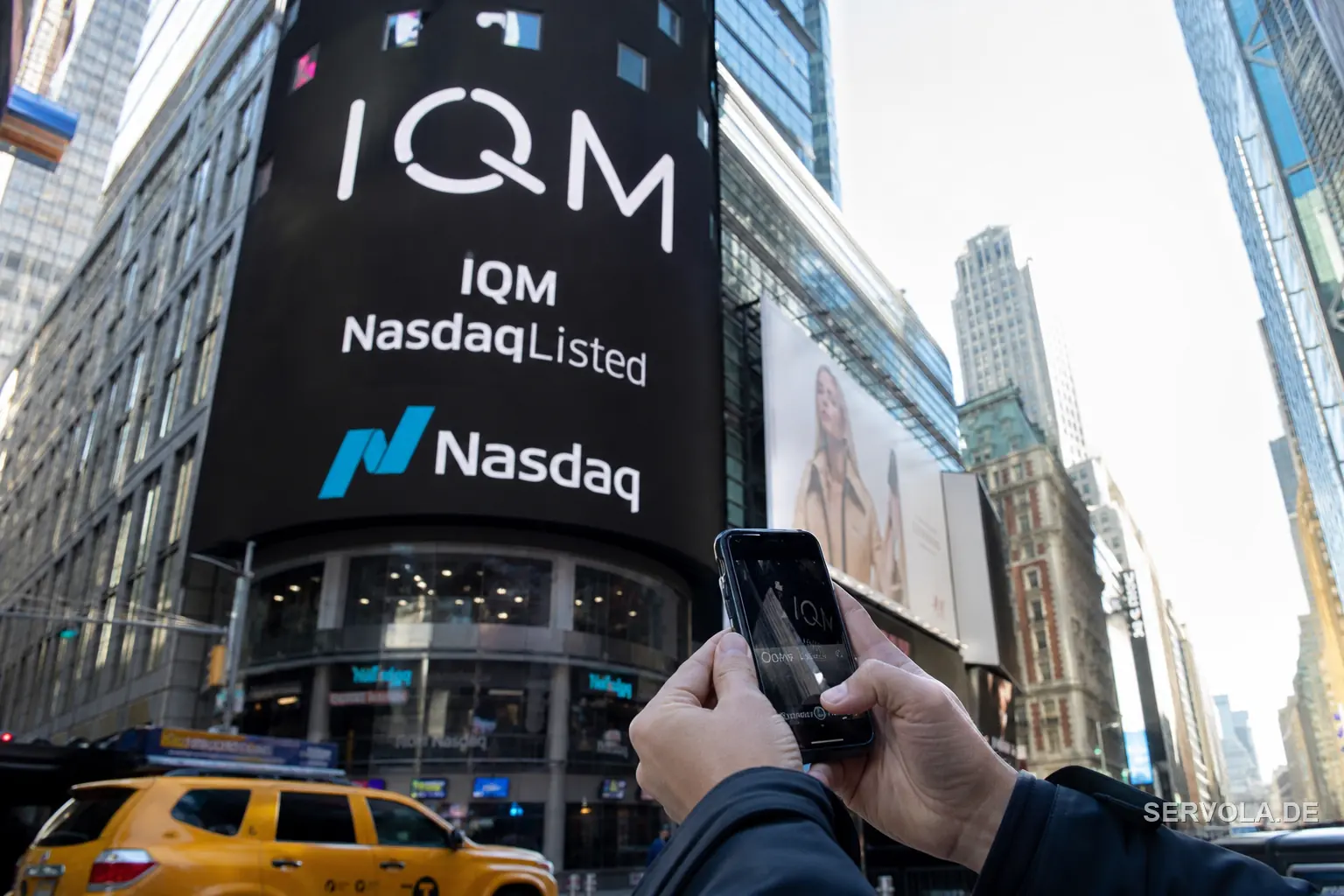
On 2 July 2026 IQM Quantum Computers began trading on Nasdaq under the ticker IQMX, becoming the first European quantum-computing company to list on a major United States exchange. The listing came through a merger with Real Asset Acquisition Corp, a blank-cheque company, that valued IQM at roughly 1.9 billion dollars and put about 226 million dollars of fresh liquidity on its balance sheet. A day later the shares also began trading on Nasdaq Helsinki. The market's welcome was cool: the stock fell about 3.4 percent to 12.97 dollars on its debut, spending most of the session below the price at which it was introduced.
IQM is not a speculative shell. Founded in 2018 as a spinout from Aalto University, it employs about 420 people, roughly 280 of them in Espoo near Helsinki and about 100 in Munich, and its customer count grew from eight in 2024 to twenty-two in 2025, spanning supercomputing centres, universities, national laboratories and, recently, private companies. Chief executive Jan Goetz described the business plainly: the company sells quantum computers into advanced computing centres and sells computing time through the cloud. This is a real company with real machines, which is exactly why its lukewarm reception carries a message.
The sentence in the prospectus that matters
The most important line in the debut was not the share price but a disclosure. IQM's own prospectus states that large-scale commercial traction of quantum computing technology may never occur. The company that builds and sells the hardware wrote that its entire market may not arrive at scale. A private funding round rarely forces that admission into daylight; a public listing does, because the law requires the risks to be spelled out for anyone who might buy the stock.
That candour is the useful part for an operator. When the leading European maker of quantum machines and the public market that priced it both signal caution in the same week, the honest reading is that quantum remains a research horizon rather than a near-term purchase. Treat any quantum line on your roadmap as an option to keep watching, not a commitment to buy: fund a pilot or a partnership if the science touches your problem, but do not budget capacity, savings or a product feature against a delivery date the industry itself will not name.
The sovereignty question this puts on a European desk
The uncomfortable detail sits in the funding history. More than 200 million euros of European public and sovereign support helped build IQM, and the company kept its headquarters and two-thirds of its staff in Finland. Yet when it raised its next tranche of growth capital and created a public price for itself, it did so on Nasdaq, under American market rules, with American investors setting the valuation. Europe funded the science and kept the jobs, but the ownership event and the governance gravity that comes with a listing formed across the Atlantic.
For anyone who cares about where European technology is owned, not just where it is invented, that is the lesson. Sovereignty funded in a laboratory is not the same as sovereignty secured on a share register. A continent can pour public money into a champion and still watch its future capital, its price discovery and its investor base settle in another market because its own public markets were not deep or welcoming enough to hold the listing. If Europe wants to own the next wave of deep tech rather than merely seed it, the missing piece is not more grants but exchanges and investors ready to price a hard, uncertain technology at home.
Read next: IQM Took Europe's Quantum Bet Public in New York | On Pasqal's Nasdaq Filing, France Is a Risk Factor