The deal, and the word it borrows
The move: On 21 July 2026 Brad Smith of Microsoft and Arthur Mensch of Mistral put their names to an expanded partnership, a multibillion-euro commitment to build out Mistral's AI capacity across Europe on thousands of Nvidia Vera Rubin GPUs. Smith framed the goal plainly: Europe should have access to the world's most capable AI without compromising control over its data, operations or digital future. Mistral Medium 3.5 and OCR 4 arrive in Microsoft Foundry, and Medium 3.5 lands in Copilot Studio.
The word doing the heavy lifting is control. This is the French champion of European AI independence expanding on American capital and American chips, and being sold as sovereignty. That is not a contradiction the companies hide; it is the shape of the offer. The interesting question for an operator is not whether the label fits, but what the deal actually hands you that you did not have before.
What a regulated buyer actually gets
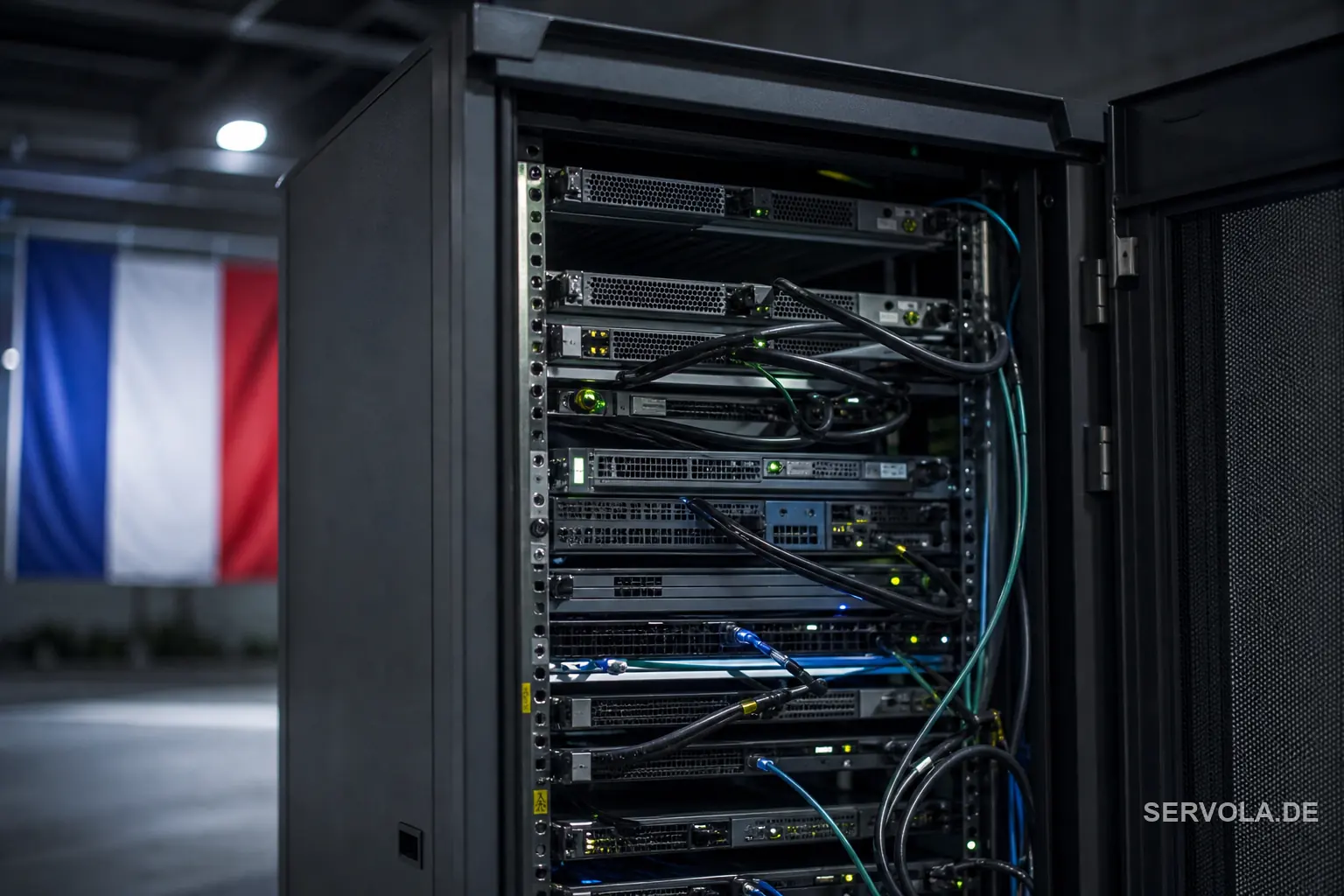
The substance: The concrete gain is a deployment mode. Beyond the standard Azure cloud, Mistral's models can run in Azure Local, where the compute connects to Azure but the data stays on your own infrastructure, or fully disconnected and air-gapped for the most sensitive workloads, cut off from any outside network. For a bank under DORA, a hospital group, or a public body under national data rules, that third mode is the one that matters.
Air-gapped deployment answers the questions a European compliance officer actually asks: where does the data physically live, can it leave the building, and who can reach it. It satisfies data-residency demands, GDPR, and the operational-resilience rules of DORA and NIS2 - not because the vendor is European, but because the data never moves. The nationality of the code stops being the test; the location of the data becomes it.
Sovereignty, redefined
The shift: For years European sovereignty meant owning the stack - your own model, your own cloud, your own silicon, free of US and Chinese dependence. This deal quietly swaps that definition for a narrower, more achievable one: sovereignty as where the data sits and who can pull the plug. On that definition an American-funded model on American GPUs can still be sovereign, provided you can run it disconnected and control the off switch.
For most regulated buyers that redefinition is honest about what they can actually get today. A truly independent European stack does not exist at frontier quality, and waiting for one means running last year's model. Deployment-mode sovereignty is the version that reduces legal risk now. But it is worth naming the trade for what it is: you gain data control and give up the harder kind of independence, and the two should not be confused.
Where the dependency went
The catch: The dependency does not disappear in this deal; it moves. It moves to Nvidia, whose Vera Rubin GPUs the whole thing runs on and whose supply and roadmap you now inherit. It moves to Microsoft, whose Foundry tooling, commercial terms and renewal leverage sit under the sovereign story. And it moves to a roadmap you do not set, on hardware you cannot second-source. Air-gapping your data does not air-gap your supply chain.
The bottom line for an operator is to buy the deployment mode and price the dependency. Put the air-gapped and Azure Local options in the contract in writing, because that is the real value; then negotiate exit terms, model-portability and price protection as if the vendor were any other American supplier, because underneath the sovereign label that is what it is. The right question is not whether this is European enough - it is what happens to you the day the commercial terms change.
Read next: Microsoft Plans to Run Copilot on Its Own Chips | Moonshot Seeks A Cut While Treasury Weighs A Ban