How much is Alphabet really spending on AI infrastructure?
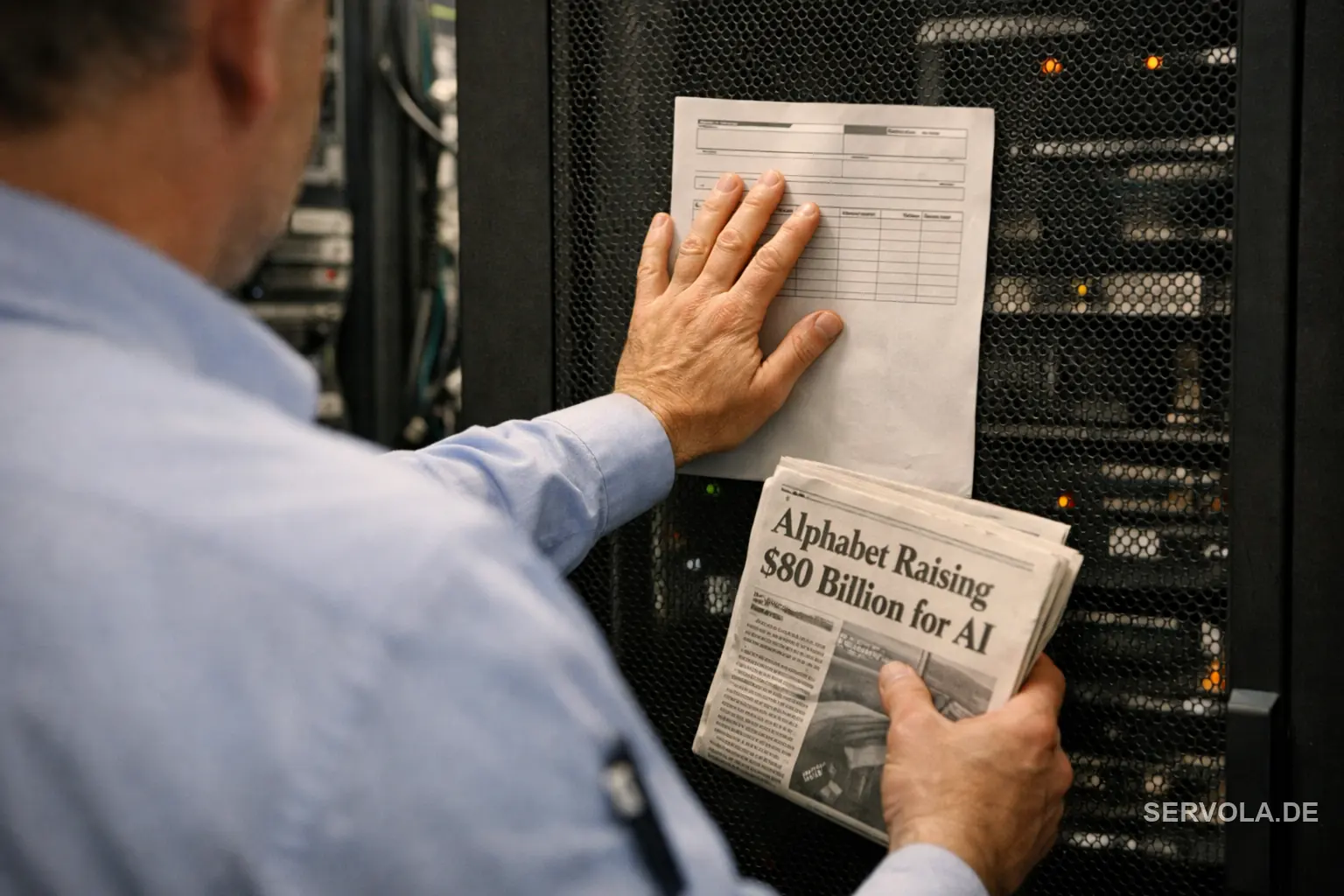
Alphabet announced in 2026 an equity raise of roughly $80 billion, reportedly later upsized to about $84.75 billion, with proceeds earmarked for AI compute infrastructure. That figure is not the whole picture. On its Q1 2026 earnings call the company guided to capital expenditures of $180 billion to $190 billion for the year, and the raise reportedly included a $10 billion private placement to Berkshire Hathaway. Read together, these are the numbers of a company treating frontier compute as a utility it intends to own outright, not a bet it is hedging.
Why does this mean you should stop competing on infrastructure?
Because you cannot win a spending race against a balance sheet measured in hundreds of billions, and you no longer need to. When Alphabet, Microsoft, Amazon, and a handful of others are pouring capital into the same compute layer, that layer becomes a commodity you rent, not a moat you build. The hard part of AI was never going to be access to GPUs for most companies. It is the cost of standing still while believing that buying servers is the same thing as having a strategy.
If not infrastructure, where is the real advantage?
The advantage sits in the three things a hyperscaler cannot buy from you: your proprietary data, your regulated trust, and your judgement about where AI changes your economics. A family office or an owner-operated firm rarely loses to a competitor with more compute. It loses to one that turned a decade of client relationships, deal history, or operational data into something a model can use, while the rivals were pricing out a private cluster. Servola advises on exactly this question of AI infrastructure and where capital actually earns its return.
What should an owner or family office actually do?
Rent the frontier and spend your own capital on differentiation. Concretely: assume the base compute layer will keep getting cheaper and better because the largest companies on earth are subsidising it for you, so do not tie up your balance sheet matching them. Put that capital into proprietary data, security, governance, and the one or two places where AI genuinely changes your unit economics. Decide deliberately what stays in-house for control or confidentiality reasons, and let everything else run on infrastructure someone else is funding at the scale of a small nation's budget.
Read next: Microsoft's AI Bill Dropped $15 Billion on Paper Only | AI Labs Are Racing to Go Public Because Private Capital Can No Longer Carry the Compute Bill