A Rounding Error by AI Infrastructure Standards
Singular Photonics just raised $2.15 million in an oversubscribed round, a sum that would barely cover a single week of the compute deals this journal usually covers. The Edinburgh-based startup announced the round on August 19, 2026, led by ACF Investors, with Wren Capital, Cambridge Angels, Scottish Enterprise, Quantum Exponential, and Old College Capital also participating. Scottish Enterprise's presence is notable on its own: it is the country's national economic development agency, not a typical venture fund, choosing to back a fabless chip designer most business owners outside the sector have never heard of.
Set next to the nine-figure and ten-figure rounds fueling AI training infrastructure, $2.15 million looks almost trivial. But the comparison itself is instructive for any owner mapping the wider chip and physical-AI landscape: not every consequential hardware bet needs headline-grabbing capital. Six named backers, spanning private funds, angel networks, and a public agency, agreed to fund a narrow, specialized sensor category rather than another general-purpose compute play. That is a different kind of signal than a funding total, and it is worth reading as one.
Why a 25-Year Arm Veteran Chose This Board
Dr. Dipesh Patel is joining Singular Photonics' board as part of this funding round, and his background is the more unusual data point here. Patel spent 25 years at Arm, the Cambridge-based chip design company whose IP sits inside most of the world's mobile processors, rising to chief technology officer before this appointment. A senior technologist with that pedigree does not need to lend his name to a sub-3-million-dollar round; joining one signals a judgment about the underlying technology, not the check size.
Alongside Patel, the round brings continuity through Chairman Pete Hutton and CEO Shahida Imani, who lead a company still small enough to be unfamiliar to most owners tracking chip news through Arm, Nvidia, or the big foundries. For owners evaluating which UK deep-tech teams merit attention, a hire like this functions as a credibility marker independent of round size: a person who spent a career inside one of the world's most consequential chip-IP businesses chose to attach his reputation to a niche sensor startup rather than a larger, more visible name.
Sensors That Count Photons, Not Just Light
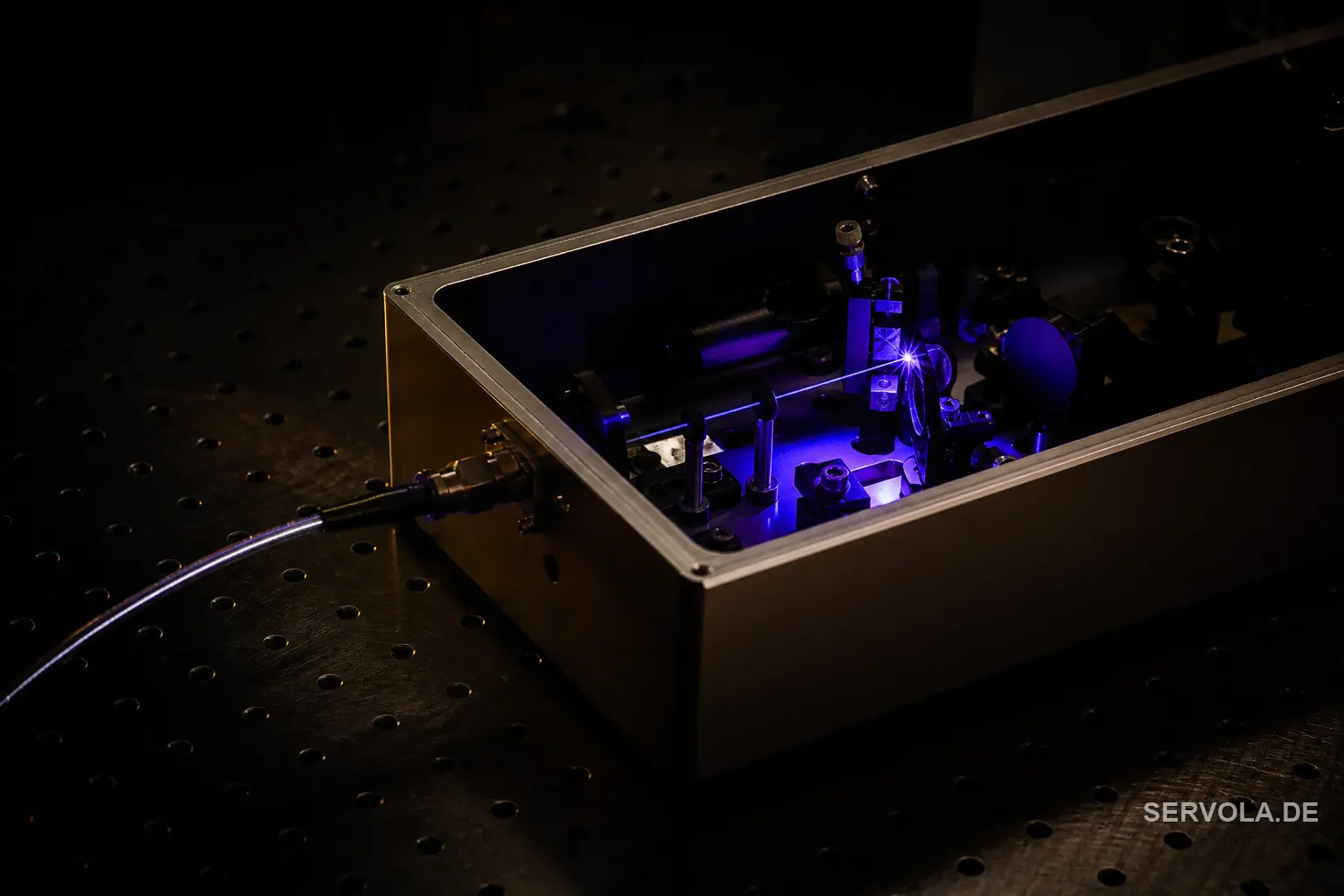
Singular Photonics builds SPAD image sensors, short for single-photon avalanche diode, which detect individual photons rather than measuring aggregate light intensity the way conventional camera sensors do. The company pairs that sensing approach with on-chip computation, meaning data gets analyzed at the point of detection instead of being shipped elsewhere for processing. That combination targets machine vision, industrial automation, physical AI, scientific discovery, and medical imaging, applications where real-time perception matters more than raw training throughput.
This is a useful category to separate from the compute story dominating most AI coverage. Training and inference hardware, the domain of Nvidia's GPUs and the hyperscaler data center buildouts, answers a different question than sensing hardware does. SPAD sensors sit further upstream, in the cameras and detectors that let robots, inspection lines, and diagnostic equipment perceive their environment in the first place. Singular Photonics' recent collaboration with Renishaw, the UK precision-instrumentation company, on spectroscopy applications gives that positioning a concrete, already-shipping example rather than a roadmap promise.
What the Self-Reported Numbers Do and Don't Prove
Singular Photonics says it has already doubled its full-year 2025 sales figure within the first part of 2026, and describes itself as approaching break-even. Both figures come from the company's own announcement, not from an audited filing or an independent third party, so they should be read as a claim the company is making about itself rather than a verified fact. That distinction matters for any owner using this round as a data point in a broader chip-sector assessment.
None of that undercuts the round's real signals: a named senior Arm veteran joining the board, a national development agency writing a check, and a live commercial partnership with Renishaw are all matters of public record, not projections. What this is not is proof of a trend. One small, early-stage round with credible backers does not mean UK deep-tech chip funding outside the Cambridge Arm ecosystem is suddenly flush. It means one specific team, working a specific niche, just earned attention from people whose job is to spot exactly this kind of signal early.
Read next: SK Hynix's US HBM Plant Still Needs Korean Wafers | Mistral Raised 3 Billion, Samsung Got a Chip Model