What Actually Went Live on August 8
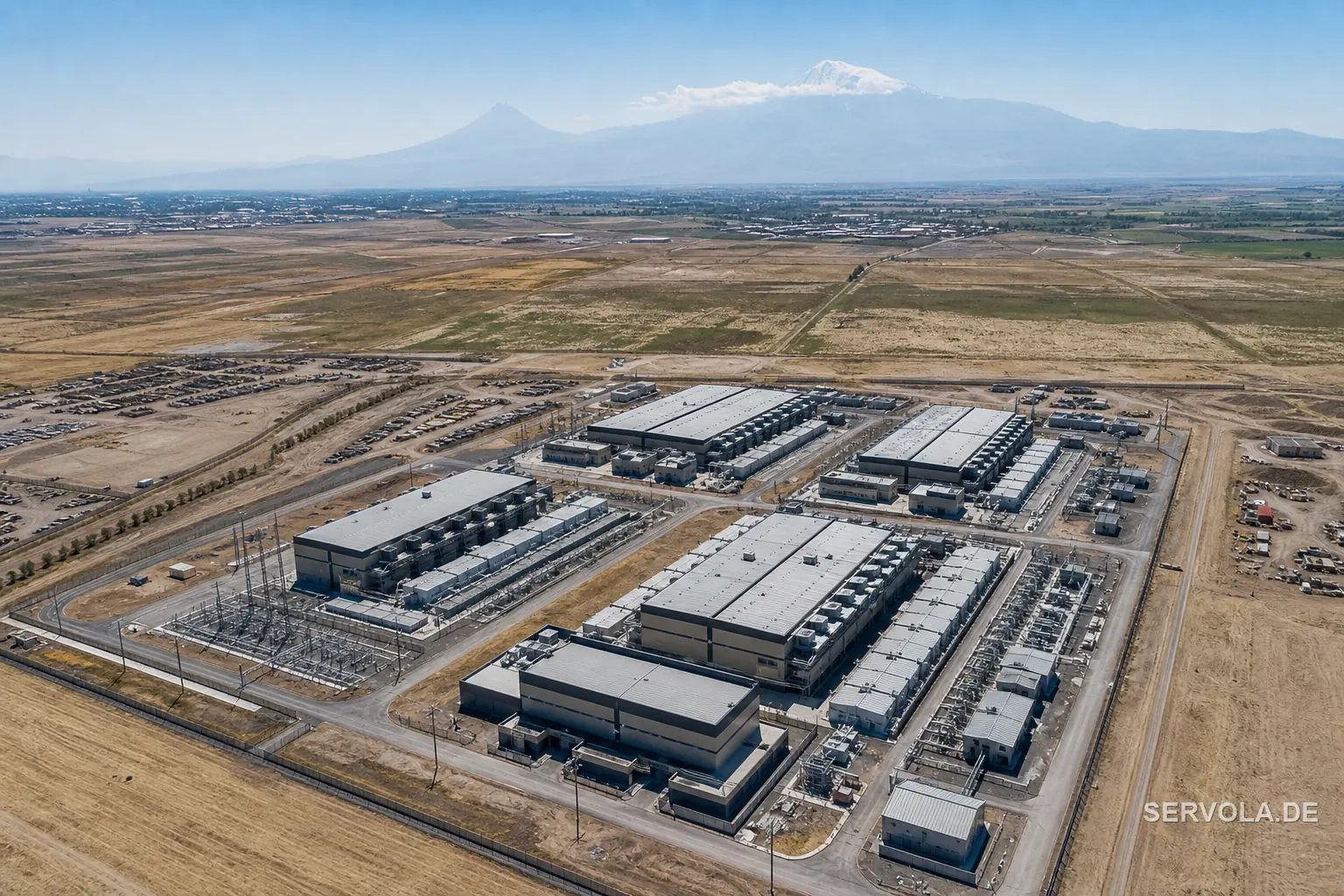
On August 8, 2026, Firebird held an opening ceremony in Hrazdan, Armenia, for a facility that NVIDIA's own blog and Firebird's own announcement both called the CIS region's largest AI factory. Armenian Prime Minister Nikol Pashinyan attended, alongside Kazakhstan's Deputy Prime Minister Zhaslan Madiyev and United States Charge d'Affaires David Allen, a guest list built for a national infrastructure story.
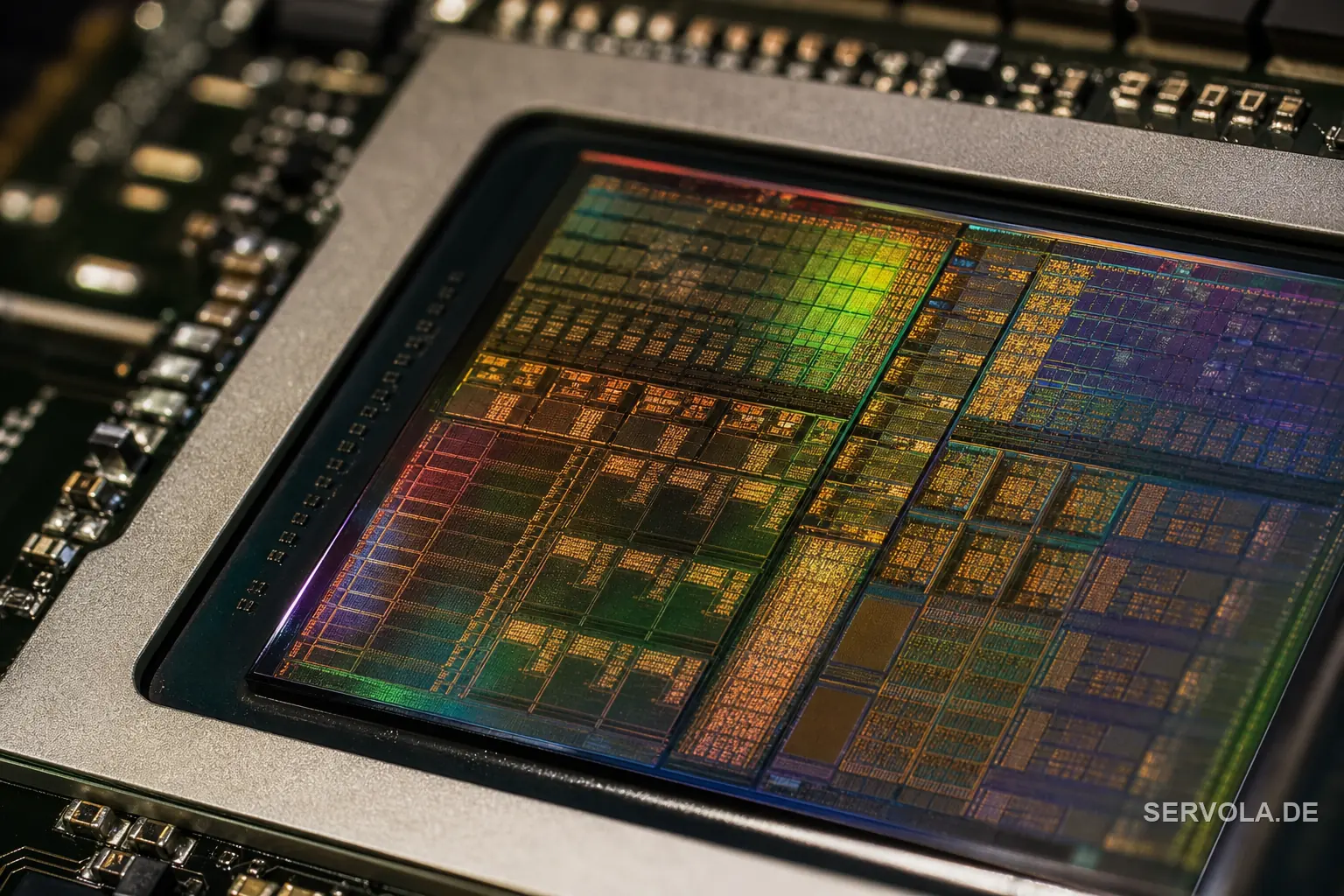
The facility itself, called DC-1, runs on 6,144 NVIDIA Blackwell-generation B200 GPUs across roughly 15 megawatts of power, built on Dell Technologies infrastructure and NVIDIA's DSX AI Factory reference design. That is the capacity customers can rent against today: one defined, operating cluster.
Perplexity, the AI answer-engine company, is already running production workloads on the facility, an early proof point that the compute is live and usable at its current scale.
The Roadmap Number Doing the Work in the Headlines
Both primary sources for this launch feature a second, much larger figure alongside the operating one. NVIDIA's own blog and Firebird's own press release each state that the Armenia site is targeted to scale to more than 70,000 NVIDIA Rubin and Blackwell GPUs and 300 megawatts of capacity by the end of 2027. That figure, not the 6,144 GPUs running today, is the one most of this week's headlines have repeated.
Independent tech commentary picked up on the gap immediately, separating the operating number from the target and noting that an AI factory becomes usable capacity in stages: chips arrive, clusters are commissioned, grid power firms up, and paying customers move onto sustained workloads. Firebird's own infrastructure page lists the 6,144-GPU, 15-megawatt DC-1 cluster as what exists now; the 70,000-GPU, 300-megawatt figure carries an end-2027 date in the same materials.
A Pipeline Twice Removed: 2 Gigawatts by 2028
Beyond the 2027 target sits a third figure, larger still and further out. Firebird has said its ambition for the next two years is roughly 2 gigawatts of AI computing capacity worldwide, spread across Armenia, Kazakhstan, and other frontier markets the company has not yet named. Kazakhstan is already Firebird's confirmed second market, with 125 megawatts secured at Data Center Valley.
Three numbers now describe one company: 6,144 GPUs operating today, 300 megawatts targeted for Armenia by the end of 2027, and roughly 2 gigawatts targeted worldwide by the end of 2028. Each is real, and each describes a different point on the same multi-year build-out, which is exactly why they should never be quoted interchangeably.
Why NVIDIA and Dell Are Underwriting the Bet
The launch carried financial weight beyond the ribbon-cutting. NVIDIA confirmed it intends to make a direct investment in Firebird, joining CoreWeave, which had already backed the company earlier in 2026. Dell Technologies supplied the underlying server infrastructure, and NVIDIA founder and chief executive Jensen Huang said in the company's own blog that AI factories of this kind are the infrastructure nations need to create intelligence and compete in the age of AI. Dell chair and chief executive Michael Dell added that Firebird is demonstrating what is possible by building an AI factory in Armenia.
Six Armenian financial institutions financed the buildout with a 300 million US dollar syndicated loan, a detail that anchors the project in domestic capital as well as vendor capital. Firebird co-founder and chief executive Razmig Hovaghimian has committed publicly to the 2-gigawatt-by-2028 target, while co-founder Alexander Yesayan described the ambition as building capacity across frontier markets over the next two years.
The Read-Past-the-Headline Discipline for Owners
The gap between Firebird's live number and its roadmap number is not unique to Firebird. It is the standard shape of an infrastructure launch: a working phase-one deployment, announced alongside a multi-year target that reads, in a headline, as if it were already built. The same pattern applies to a new cloud GPU region, a new chip fab, or a new data-centre campus. The press release leads with the end state because it is the larger, more impressive number to put in a headline.
An owner evaluating any capacity claim, Firebird's or a competitor's, should ask two questions before relying on it: what is operating today, with a specification such as GPU count, power draw, and generation attached, and what delivery date is written into the contract for the rest. Servola's advisory approach treats the operating number as the only one worth planning around until a signed delivery date backs the remainder.
Read next: Nvidia Sits on Three Sides of Anthropic's $35B Deal | 50 Billion Dollars In Data Centers Is Splitting America's Unions