What Foxconn Actually Reported
Hon Hai Precision Industry, the Taiwanese contract manufacturer known globally as Foxconn, reported consolidated revenue of NT$2.53 trillion (roughly $78.7 billion) for the April to June quarter, up 39.8 percent from a year earlier and above the NT$2.372 trillion consensus tracked by LSEG. Net profit reached NT$59.97 billion (about $1.86 billion), up 35 percent year on year and 20 percent from the first quarter, with earnings per share rising to NT$4.27 from NT$3.19. June alone brought in NT$821.8 billion, up 52.1 percent year on year and a record for that month, while first-half net profit for 2026 reached NT$109.89 billion, up 27 percent from the same period last year.
Why Crossing 50 Percent Matters More Than the Headline Number
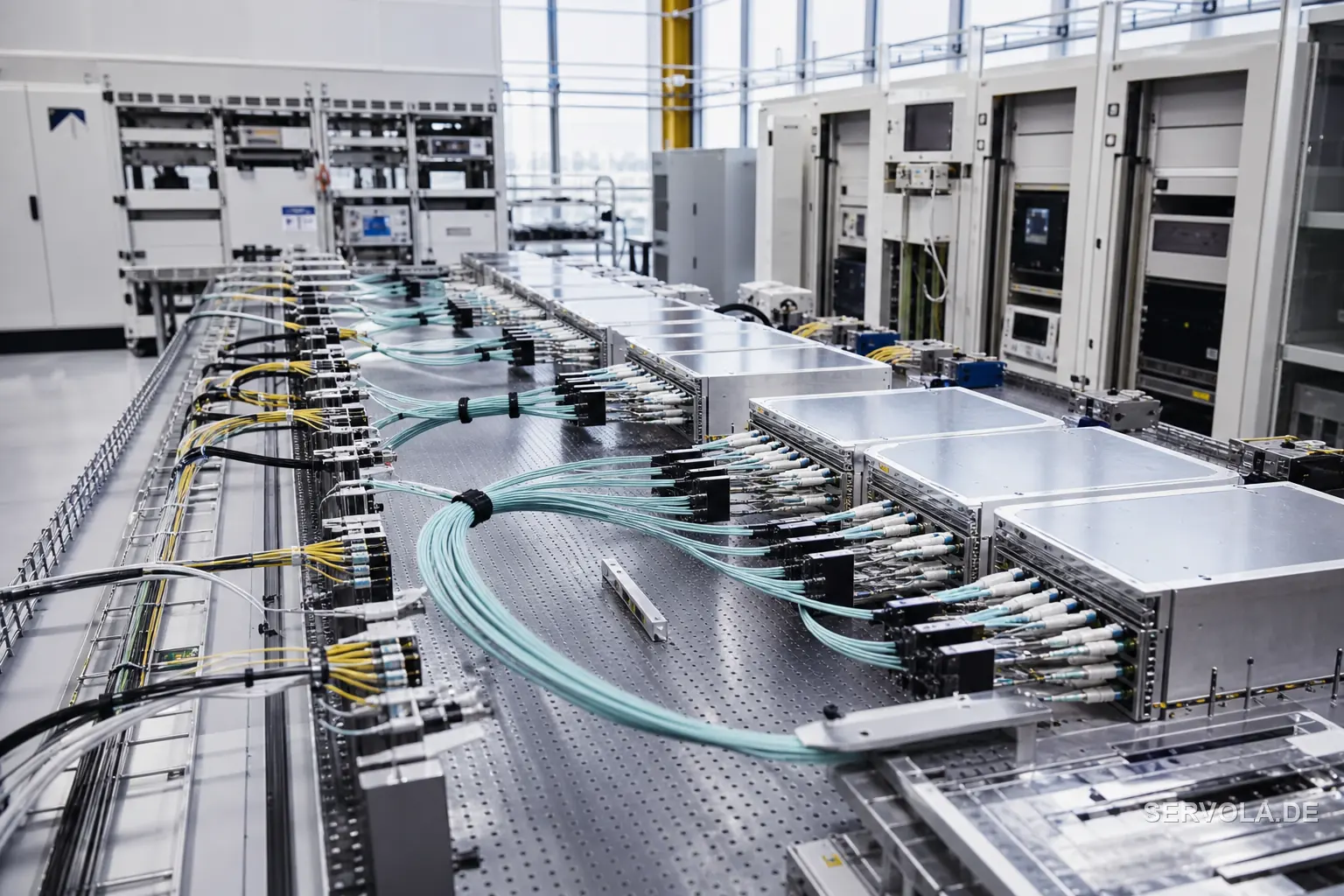
The more consequential figure sits inside the segment breakdown. Foxconn's cloud and networking division, the unit that builds AI servers and AI racks for customers including Nvidia, generated 51 percent of second-quarter revenue, up from 48 percent in the first quarter and the first time it has passed half of total company revenue. Smart consumer electronics, the segment that includes iPhone assembly for Apple, came in at 29 percent. A company organized for three decades primarily around consumer electronics has now shifted the majority of its production toward AI infrastructure hardware, a reallocation of factory floor space, tooling and supplier contracts, not just a change in which product line a press release highlights.
The Servola Thesis: A Contract Manufacturer's Invoice Is the Hardest Checkpoint in the Chain
That distinction matters for anyone trying to separate real AI infrastructure demand from the announcement cycle around it. A hyperscaler's capex guidance is a forecast; a chip booking is an order that can still be delayed or cancelled; a contract manufacturer's revenue is neither. Foxconn is paid when a server or rack is built and shipped, not when a deal is signed, so its quarterly print is one of the hardest checkpoints in the entire AI supply chain, closer to proof of delivered hardware than any capex announcement from the customers on the other end of that hardware. When a contract manufacturer's own product mix flips majority toward one category, its factories are already committed to that reality, whatever tone next quarter's earnings call takes.
What This Means for an EU or UK Buyer Planning AI Infrastructure Procurement
For a European or British business planning AI infrastructure procurement, whether that means renting GPU capacity from a cloud provider or ordering racks for a private deployment, the practical read is on lead times and currency, not sentiment. Foxconn's own guidance points to continued quarter on quarter and year on year growth in the third quarter, with management describing AI rack deliveries as maintaining their upward trend, which suggests the order queue ahead of any new buyer is not shrinking. Because pricing runs in dollars through the Nvidia to TSMC to Foxconn chain, a euro or pound denominated infrastructure budget carries currency exposure on top of unit price, independent of whatever the hardware itself costs next quarter. The practical steps are unglamorous: lock in delivery slots earlier than feels necessary, and build a currency buffer into 2027 budgets now, while the backlog is still visibly growing rather than after it eases.
The One Thing Foxconn's Own Numbers Do Not Resolve
None of this settles the broader argument about whether hyperscaler AI capital spending will ultimately pay for itself, a financing and return-on-investment question that a manufacturer's shipment volumes cannot answer either way. Foxconn's own quarter also shows the size of the bet concentrating rather than spreading: more than half of the company's revenue now depends on demand from a small number of AI-chip customers, Nvidia foremost among them, assembled through manufacturing sites concentrated in Asia. Foxconn's management said only that it remains necessary to monitor a volatile global political and economic situation, without elaborating, alongside guidance for continued growth. A buyer reading the revenue number as reassurance should read that caveat with equal weight.
Read next: Europe's Pension Funds May Buy a Circular AI Bet | Nvidia Buys the Hub Your Open AI Stack Runs On