A Seed Round Becomes a $500m Bet on One Robot
Genesis AI announced on 17 November 2026 a $500m Series A co-led by Khosla Ventures, Premji Invest and Eclipse. TheNextWeb lists NVentures, AMD Ventures, Bpifrance, Samsung Next and Ericsson Ventures among the other backers and reports a $3.5bn valuation, a figure TechCrunch says was not disclosed. The money follows a $105m seed in July 2025. Zhou Xian and Théophile Gervet founded the company in 2024. TheNextWeb calls it Paris-based and TechCrunch describes a Silicon Valley facility, so the company is best read as a Franco-American build.
What Eno Does Today and What It Cannot Yet
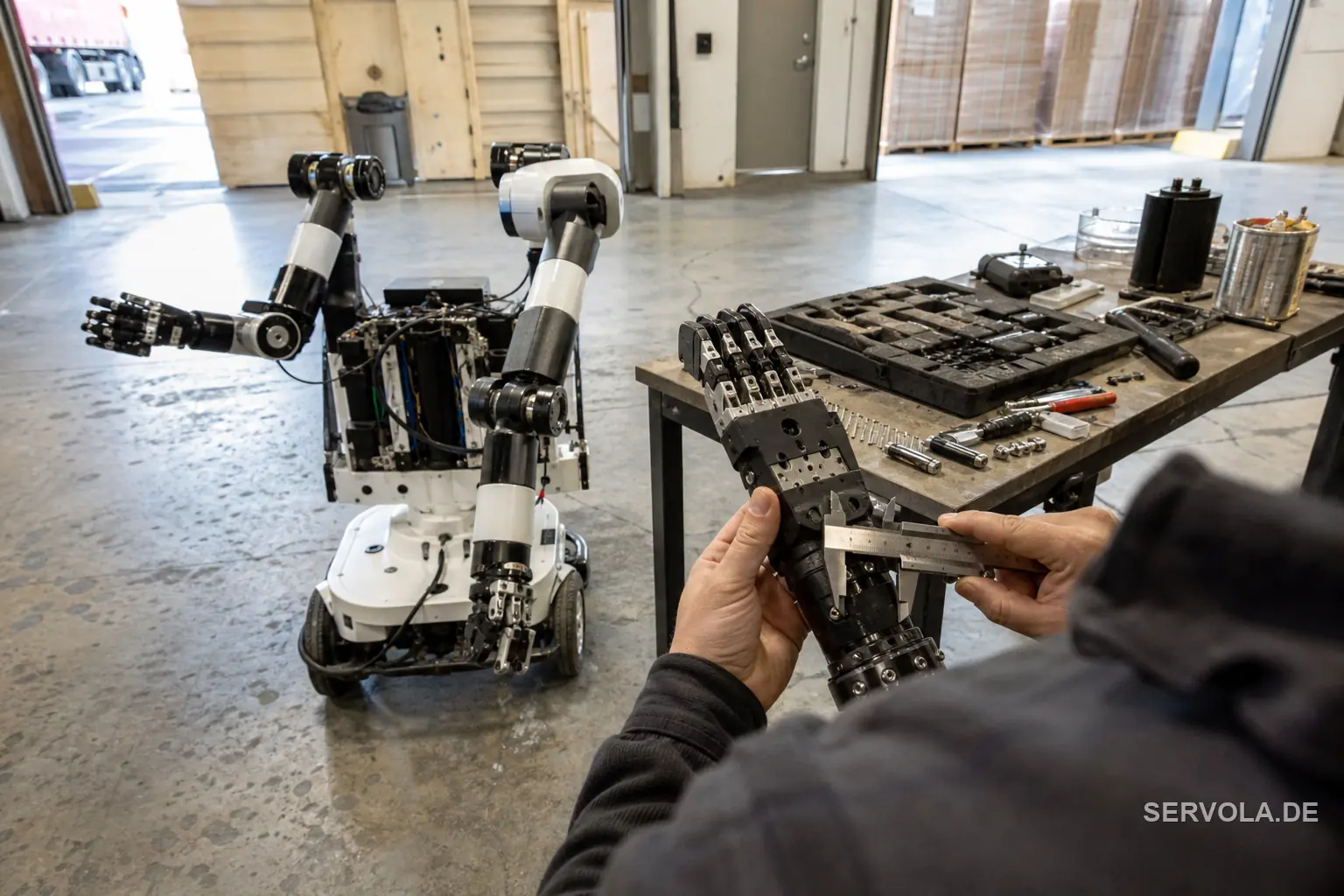
Eno is two arms on a rotating wheeled base with no humanoid head. Genesis has built 30 to 40 units and pilots them with a handful of undisclosed customers, and TheNextWeb names LG CNS as a test partner in manufacturing and logistics. The model learns from more than 100 workers worldwide who wear sensor gloves and headset cameras, which the company says map one to one onto the robot hands. Both outlets report the same limit: the hands wear out after a few weeks of regular work. The CEO says dexterous manipulation is solved, but a part that needs replacing every few weeks is a running cost and not a demo detail.
What a Buyer Should Ask Before Any Pilot
The funding buys production, not proof. A contract manufacturer begins mass production in the US next year and a wider rollout is expected in 2027, so a pilot signed today runs on hand-built units. Ask for three numbers in writing: cost and lead time of a replacement hand, hours of work between replacements, and who pays for downtime. Then compare the result with what a human shift costs you, in euros or pounds. If the vendor cannot answer, you are funding its learning curve and not buying a robot.
Read next: Same AI Coding Pitch, $43 Billion Apart in Price | A Forklift Maker Just Became a Deep-Tech VC