Ytterbium Atoms Replace The Deep Freeze
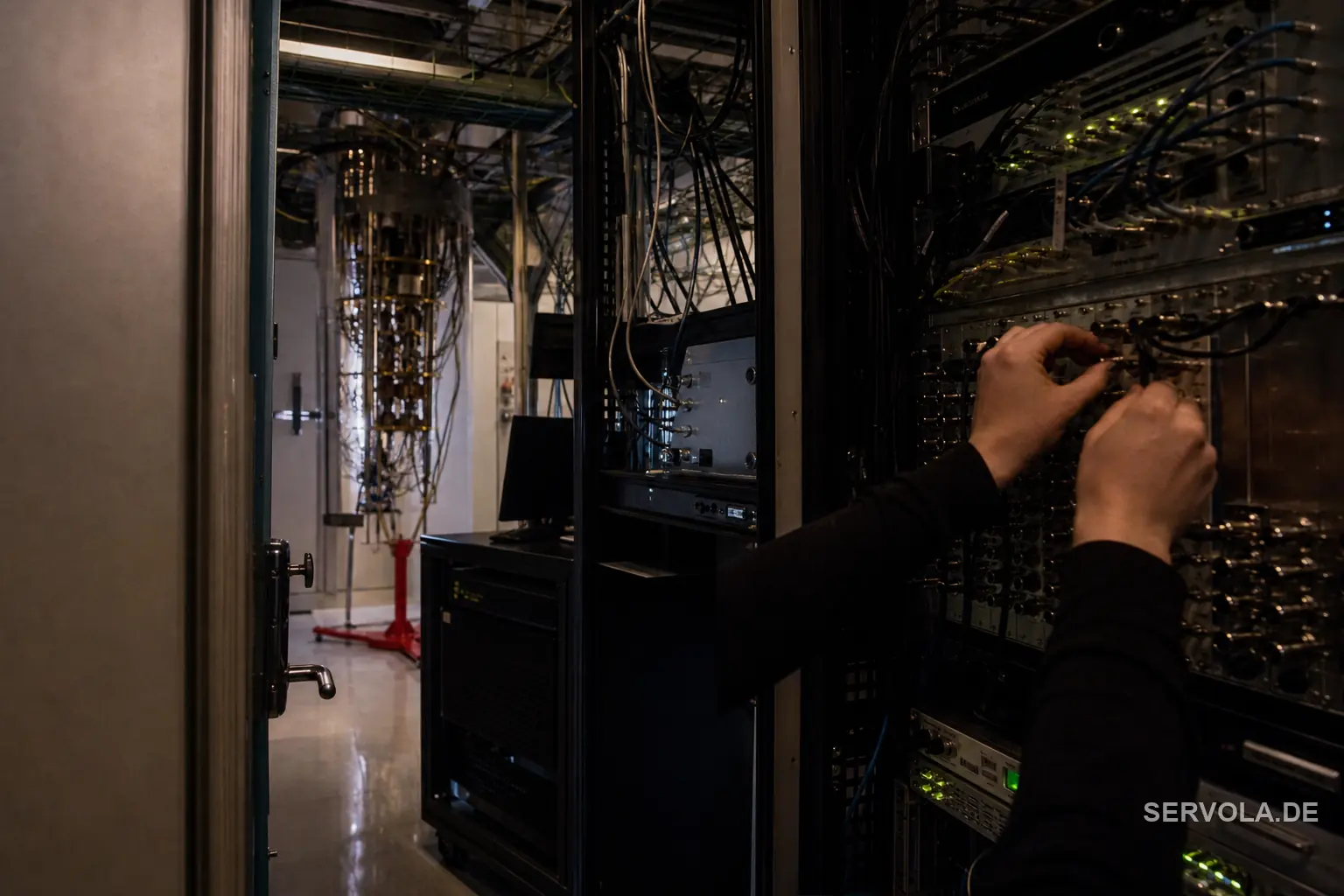
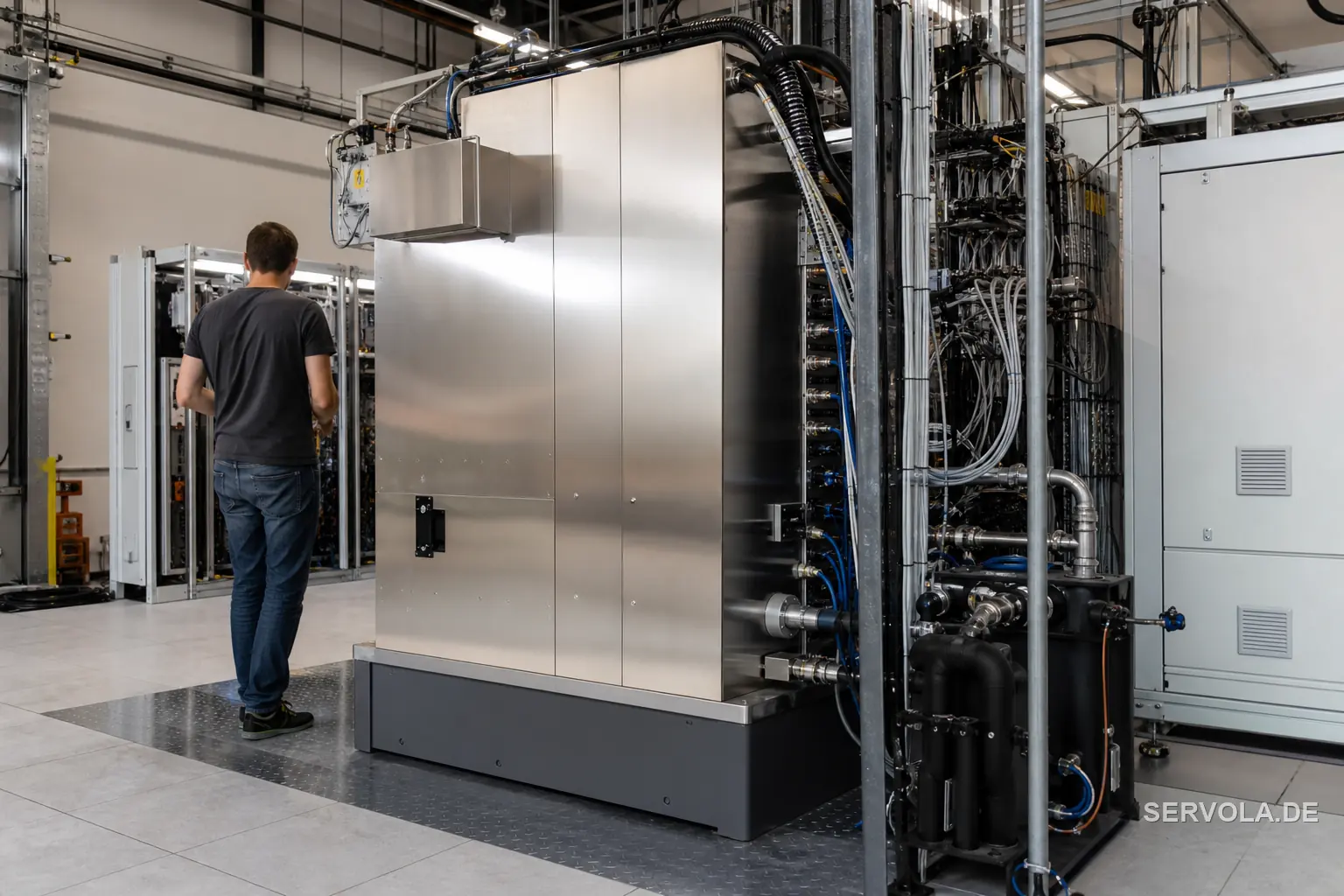
Forschungszentrum Julich and Siegen-based startup eleQtron switched on JION, a trapped-ion quantum computer, on September 3 inside the Julich Supercomputing Centre. Unlike the superconducting qubits used in most quantum machines running today, JION holds its qubits as ionized ytterbium atoms, steered by microwaves and static magnetic field gradients rather than the individually aimed lasers most trapped-ion systems use. eleQtron calls the approach MAGIC, for magnetic gradient induced coupling. The practical payoff is that JION runs close to room temperature instead of the near-absolute-zero cooling superconducting processors require, removing an entire category of engineering cost and failure mode from the machine.
JION is not a lab piece kept for eleQtron's own use. It is wired into JUNIQ, Julich's quantum access infrastructure, and connected directly to the centre's high-performance computing cluster, so researchers can hand part of a calculation to the quantum processor and the rest to conventional supercomputing inside a single job. Julich Supercomputing Centre head Kristel Michielsen said JUNIQ lets users compare performance across a range of quantum computers side by side, not just run whichever machine happens to be available.
One State, Three Different Quantum Bets
The money behind JION did not come from Brussels. North Rhine-Westphalia's Ministry of Culture and Science funds the EPIQ partnership between Julich and eleQtron with roughly EUR21 million over four and a half years, and JION is that partnership's first working machine. EPIQ is only one of three separate NRW funding lines now paying for quantum hardware, and each one bets on different physics.
| Program | Funding | Qubit technology |
|---|---|---|
| EPIQ | about EUR21 million | Trapped ions (built JION) |
| SQALING | up to EUR25 million | Chip-scale trapped ions (eleQtron, EU-funded) |
| Q-STAR.NRW | up to EUR25 million | Semiconductor qubits, up to 200-qubit machine planned |
SQALING funds eleQtron again, this time to shrink trapped-ion hardware onto a chip-scale platform for industrial use. Q-STAR.NRW is a separate procurement entirely: a semiconductor-qubit quantum computer of up to 200 qubits, bought from a different vendor and integrated into JUNIQ alongside JION. None of Europe's other quantum sites picked three technologies inside one region. IBM's European flagship in Ehningen, running since 2021, is superconducting, the same technology behind two of the four machines the EuroHPC Joint Undertaking opened to free pilot access this year. NRW is not following that consensus; it is funding trapped ions, chip-scale trapped ions, and semiconductor qubits at the same time, through a company small enough that EUR21 million is a real share of its backing rather than a rounding error.
Why This Matters Beyond The Physics
For a European technology buyer, JION's real value is not a claim that trapped ions will win the wider quantum race. Even the outlets covering the launch noted the announcement gave no timeline for JION to demonstrate an advantage over classical computing, and eleQtron's own CEO Jan Henrik Leisse described the next phase as building the conditions to integrate the system into hybrid architectures, not proving supremacy. The real value is optionality close to home: JUNIQ now lets Julich's users test the same workload on structurally different quantum hardware, without a separate procurement process or a second country's export rules to navigate for each one.
That optionality matters most for near-term optimisation and materials-science problems, exactly where qubit technology tends to change the answer, and where trapped-ion systems have generally held coherence longer at smaller qubit counts against the larger, noisier superconducting processors most of the industry has bet on. Minister-President Hendrik Wust called the race for quantum leadership "still wide open on the international stage." JION, SQALING and Q-STAR.NRW are the clearest evidence yet that one German state is treating that literally: rather than waiting to see which qubit technology wins, it is paying for three different answers to run inside the same lab at once.
Read next: Nvidia and Palantir Call It Sovereign, Germany Already Said No | Berlin's New AI Watchdog Has No Bite Yet