A cleanroom that already exists gets bigger, not a ribbon to cut
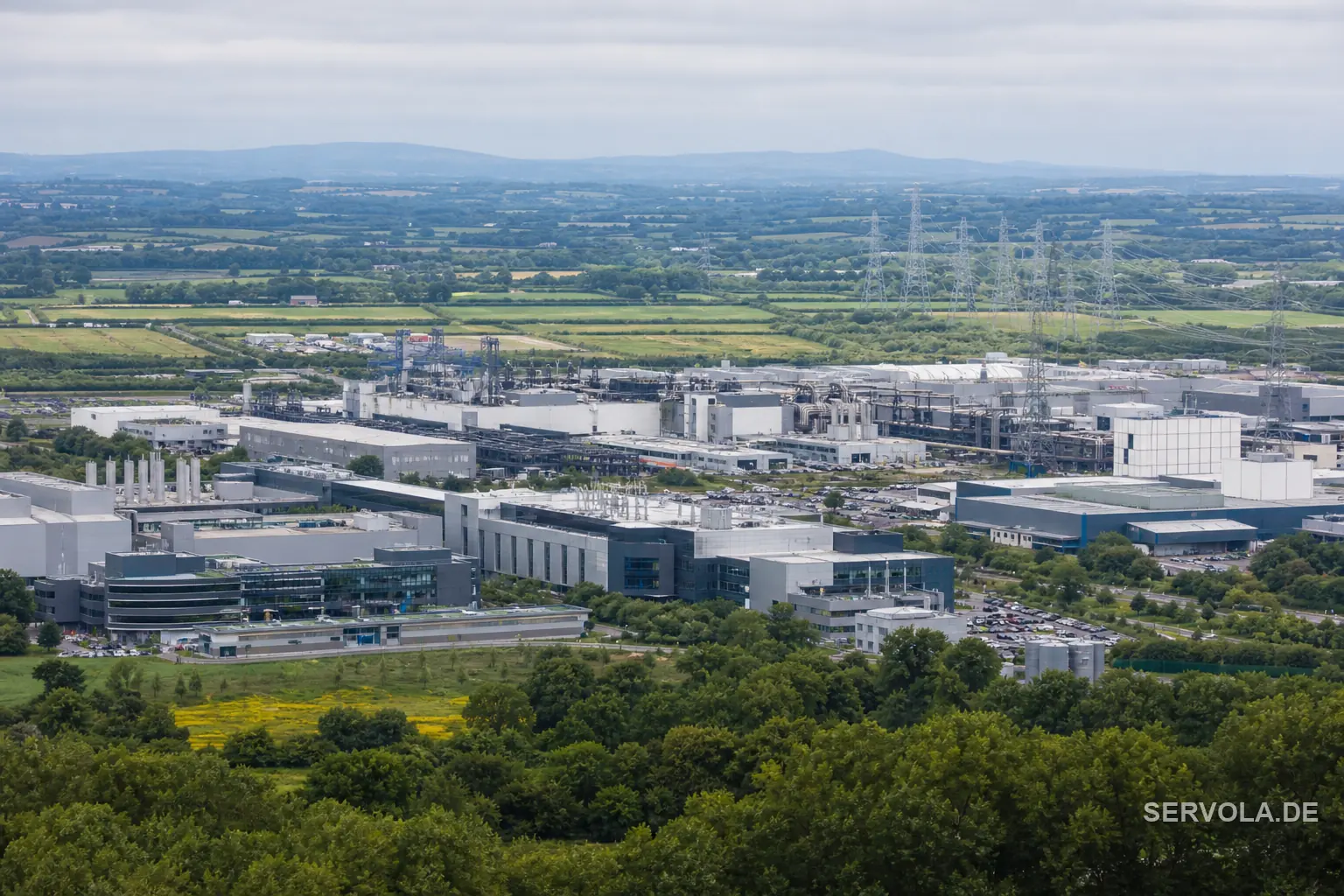
Inside the Leixlip campus west of Dublin, wafers already ride an automated track between fabrication modules that have been running for years. On 13 July Intel said it would spend 5 billion euros to make that floor bigger, faster and more connected, rather than break ground on something new. There was no empty field and no ceremonial first stone, only a decision to double down on a site that has been making chips in Ireland since 1989.
That choice is the story. In a year when the industry keeps announcing giant new plants, Intel picked the quieter option of expanding what it already owns and runs. For a company that has spent two years cutting costs, a proven cleanroom is a safer bet than a promise on a map.
What Intel actually committed to
The 5 billion euros, about 5.7 billion dollars, funds the next phase of capacity at Leixlip. Intel says the expansion will produce Intel Xeon 6 and next-generation Xeon processors built on its Intel 3 node, the server-class silicon that goes into the racks behind AI and high-performance computing. The money upgrades existing fabs, installs leading-edge equipment and extends the automated track system so separate campus modules run as one high-velocity line.
This is capacity and research combined, not a fresh footprint. Intel has now put more than 30 billion euros into Ireland since it arrived in 1989, and Leixlip remains one of its most advanced manufacturing sites anywhere. The headline number is large, but the shape of the spend, deepening an existing plant, matters more than the figure.
Why an expansion, and why now
Two years ago Intel paused its planned megafab in Magdeburg, Germany, a greenfield project that would have cost tens of billions and taken most of a decade. Against that backdrop, pouring 5 billion euros into a cleanroom that already yields working chips is a de-risking move. A brownfield expansion is cheaper per wafer, comes online in quarters rather than years, and keeps an EU manufacturing footprint without betting the balance sheet on a new site.
The pull is demand for server silicon. The same AI and high-performance workloads that are straining power grids also need vast quantities of processors, and Intel wants Xeon to hold its place inside those systems. Choosing Ireland over a new build is Intel choosing certainty at a moment when it cannot afford another stalled project.
Proximity is not sovereignty
The EU Chips Act set a goal of holding a fifth of global semiconductor value in Europe by 2030, and a 5 billion euro expansion nudges that number in the right direction. But it does not touch the control question. The capacity will stand on Irish soil while the capital allocation, the process roadmap and the decision to keep or close the line all remain in Santa Clara. Europe hosts the fab; it does not own the switch.
For an owner that distinction is the whole point. The genuine gain here is a second geography for advanced x86 server chips beyond a supply base concentrated in Taiwan and the United States, which is real resilience. It is not independence. Reading a foreign company's local plant as European sovereignty is how buyers talk themselves into a security they do not have.
What to do with this
Do not rewrite procurement assumptions on an announcement. Capacity plans slip, and the meaningful signal is silicon shipped, not billions pledged. The one practical difference from most fab news is speed: because this is a brownfield expansion, the extra Xeon output could reach the market within about two years rather than late in the decade, so it is worth tracking on a real timeline.
The forwardable version for a board is simple. Intel is adding advanced server-chip capacity in Europe, which improves where your processors can come from, but it does not change who decides whether they get made. Treat it as one more supplier option, weigh it when Ireland is actually shipping volume, and keep proximity and sovereignty in separate columns.
Read next: $16.8B Terafab Deal Tops Entire EU Chips Act | 293 Million Explains Why Intel Shared Its x86 Core