iPronics closes a $125 million Series B for optical switching
iPronics, a photonics company based in Valencia, Spain, closed a $125 million Series B round on September 2, 2026. The round was co-led by Maverick Silicon and Light Street Capital, with Nvidia and eight other investors also participating, and it takes iPronics's total funding raised to date to $177 million.
| Series B round (announced September 2, 2026) | $125 million |
|---|---|
| Total funding raised to date | $177 million |
| Investors in this round | Maverick Silicon and Light Street Capital (co-leads), Nvidia, plus 8 others |
iPronics disclosed the round in a release distributed via GlobeNewswire, and HPCwire independently reported the same figures the same day.
What programmable optical circuit switching actually does
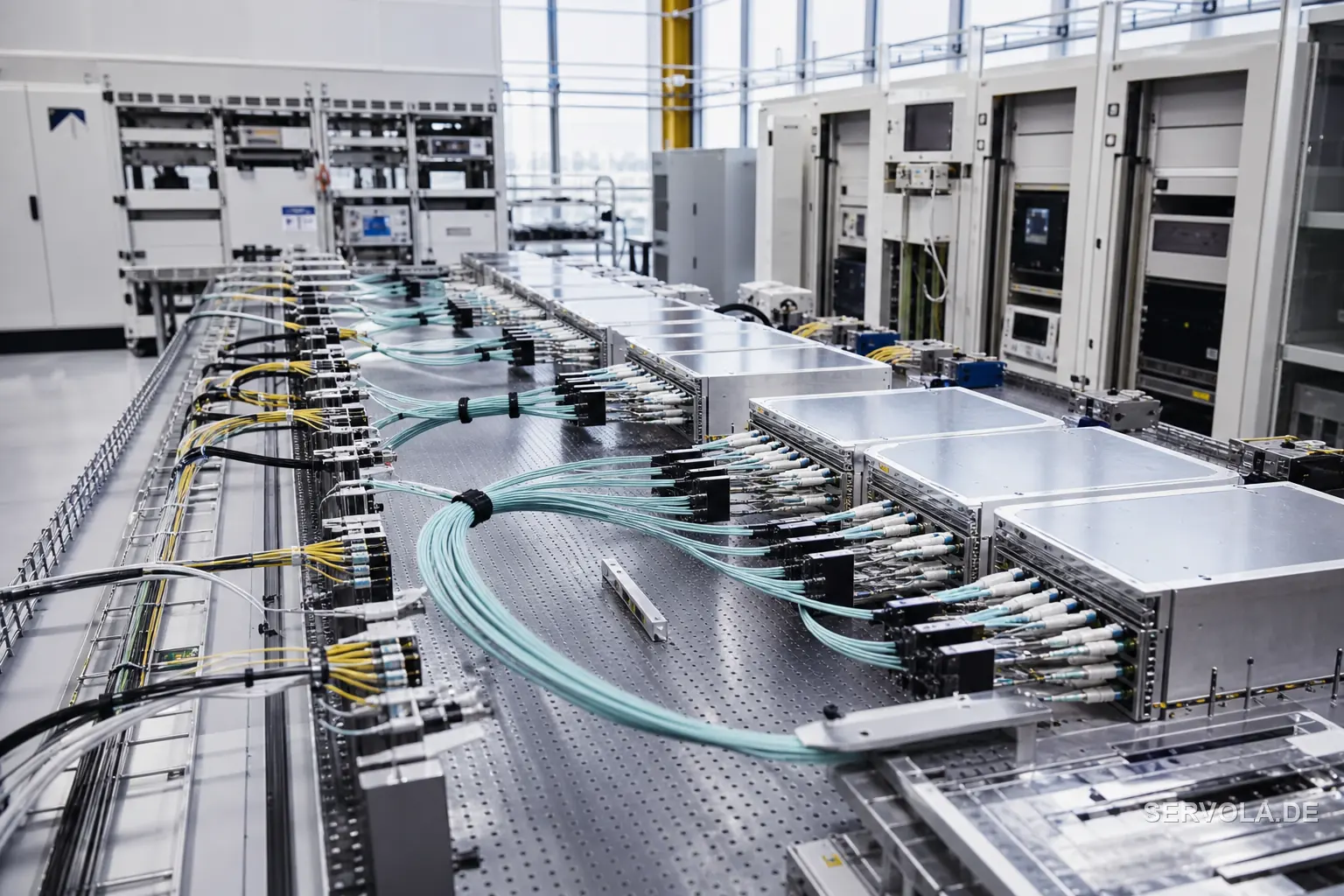
Programmable optical circuit switches route laser light directly between servers inside a data center instead of converting that light into an electrical signal at every hop along the way. iPronics builds this switching on photonic chips that can be reconfigured in software, aiming to move traffic between GPUs with less latency and less energy spent on optical-to-electrical conversion than a conventional electronic switch fabric requires.
The pitch is not that optical switching replaces electronic switching everywhere in a data center; it complements the electronic layer at the points where GPU clusters exchange the most traffic, lifting the share of purchased GPU capacity that a cluster can actually put to work. That Nvidia, which sells both the GPUs and much of the electronic networking gear those GPUs run on, chose to back an alternative switching approach is itself a signal that the company sees interconnect efficiency, not just chip supply, as a real constraint on its customers.
Utilization, not raw GPU count, is becoming the competitive line
AI infrastructure buyers are increasingly judged on how much of their purchased GPU capacity actually gets used, not on how many GPUs sit in the rack. A cluster that runs at 50 percent effective utilization needs twice the hardware to deliver the same throughput as one running near full utilization, and in 2026's tight AI-chip supply environment, that gap is measured in cost and in wait time, not just in an efficiency report nobody reads.
Interconnect bottlenecks are one of the largest drivers of that gap: GPUs sit idle waiting for data to move between nodes, and a switching layer that moves it faster raises the effective size of a fleet a buyer already owns. A real gain here is a lever on cost per token that does not require winning the queue for more silicon, which is exactly the queue that is currently longest.
Why EU cloud resellers and colocation operators are the ones fighting for this
European cloud resellers, colocation operators and enterprises assembling their own inference clusters compete for a global GPU supply that remains constrained through 2026, and allocation into the EU has generally trailed allocation into US hyperscale campuses. An efficiency gain that raises the output of GPUs a buyer can already secure is worth more to that buyer than it is to an operator who can simply order a larger allocation next quarter.
That does not make optical circuit switching a drop-in upgrade. It has to be integrated into a data center's existing fabric, validated against whatever electronic switching and NVLink or Ethernet interconnects already run the cluster, and proven at production scale before an operator can budget against it with confidence. iPronics has not yet named a first commercial deployment.
A Valencia company, a US-led round, and a small data point for European deep tech
iPronics is a Spanish company headquartered in Valencia, and the investors leading its new round are based mostly outside Europe. A Spanish infrastructure-layer hardware company attracting a $125 million round, co-led by two US investors with Nvidia's strategic backing, is a concrete, if modest, signal that Europe can produce companies at the AI infrastructure layer.
Investor interest at this size, in this specific layer of the AI stack, and from Nvidia specifically, draws more attention than most European AI funding announcements receive, since most of those describe an application built on top of someone else's infrastructure.
What buyers should watch next
iPronics has not yet disclosed which data center operators or cloud providers will deploy its optical switches first, and that detail will matter more than the funding number once it arrives. A named production deployment, at real scale, inside a named operator's facility, is the point at which this technology stops being a funding story and starts being a procurement decision.
Buyers do not need to act on this today, but they should treat it as one more input into an interconnect strategy that already needs revisiting: ask current networking vendors how they plan to answer optical switching's efficiency claims, and watch for iPronics's first named customer rather than waiting for a second funding round to pay attention.
Read next: AMD Pays $8.2B for a Lab Nvidia Also Backed | One Contract Tripled Crusoe's Price in Ten Months