What the Office of Government Procurement Actually Cancelled
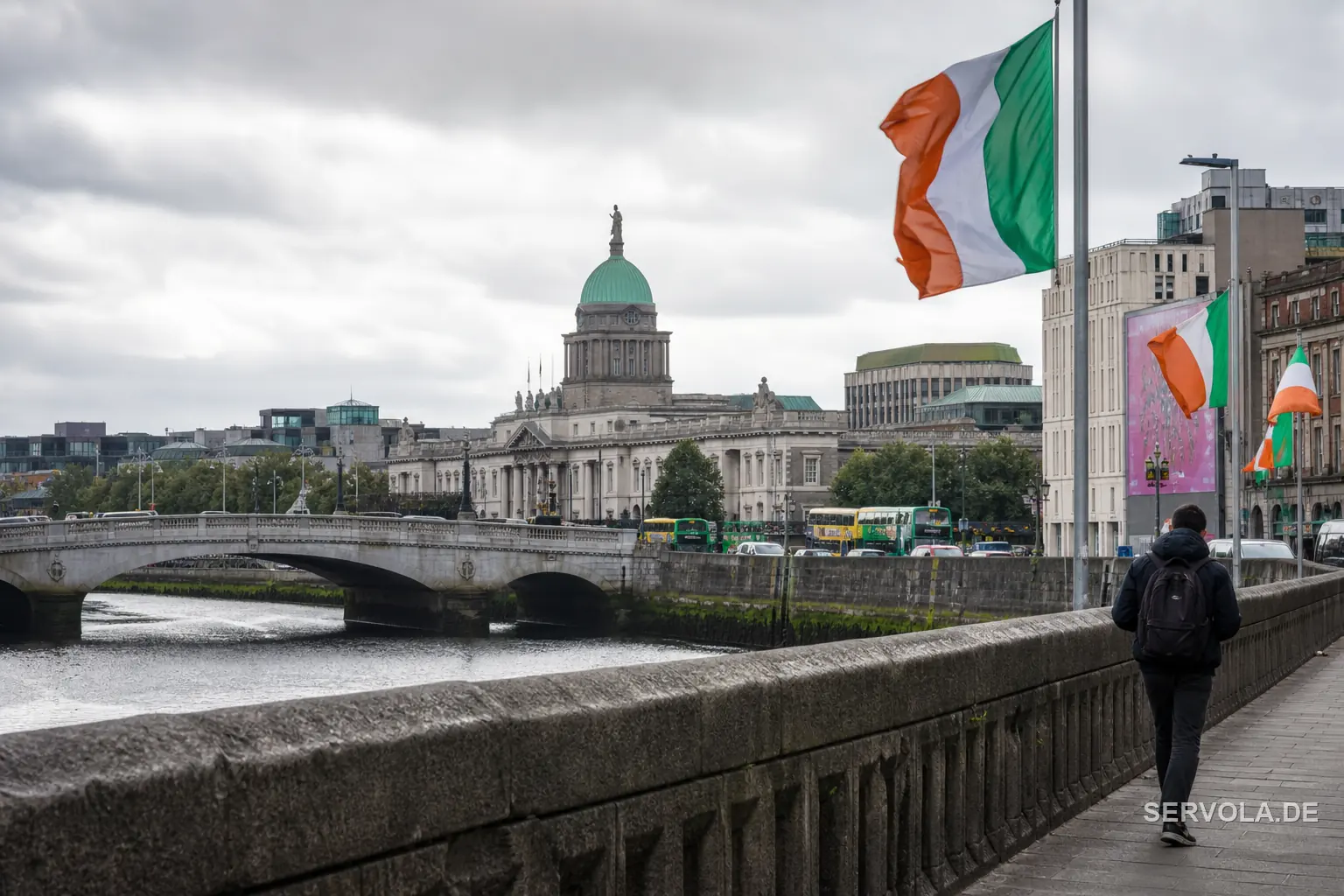
On July 22, 2026, Minister of State Frank Feighan confirmed in the Dail that Ireland's Office of Government Procurement (OGP) had cancelled its competition for a new framework agreement covering Microsoft software and cloud services for public bodies. The planned framework was worth between EUR750 million and EUR1 billion over its term, replacing the OGP's current Microsoft framework, which is capped at EUR350 million and expires in September 2027.
Feighan told the Dail the process had run for roughly eight months before the OGP "determined it was prudent to cancel the competition and notify the market accordingly," after what he described only as "matters of concern... raised by an interested party." He did not name the party or specify the nature of the concern, and committed to publishing a revised tender "as early as is feasible" - language that commits to nothing more than restarting the process at an unspecified date. For public bodies planning IT budgets against a September 2027 deadline, that leaves the single largest Irish government software contract without a confirmed successor for the first time since the current framework was awarded.
The Concern That Killed It Was Not Framed as Sovereignty
The phrase Feighan used - "matters of concern... raised by an interested party" - is the standard formula Irish and EU procurement law uses for a bid or process challenge, not for a policy review. Under the EU's procurement remedies regime, any economic operator with an interest in a contract can challenge a tender's specifications, evaluation criteria or conduct before award, and contracting authorities routinely pause or cancel competitions rather than risk a legal challenge succeeding after the fact.
Nothing in Feighan's Dail statement links the cancellation to a sovereignty or vendor-dependence objection; the standard reading is that a rival bidder, or a disputed aspect of how the tender was structured, triggered a procedural complaint. That distinction matters because the political debate that followed treated the cancellation as evidence Ireland was reconsidering its Microsoft dependence, when the actual trigger was almost certainly unrelated to sovereignty at all - a bid protest, not a sovereignty audit, is what stopped the clock.
Schleswig-Holstein and the Gendarmerie Became Ireland's Test Case
Social Democrats deputy leader Cian O'Callaghan used the cancellation to ask why the OGP had not evaluated cheaper, open-source alternatives before drafting a replacement framework worth up to EUR1 billion. He pointed to two precedents already in motion elsewhere in Europe: the German state of Schleswig-Holstein, which has moved roughly 30,000 public-sector staff to Linux, LibreOffice, Thunderbird and Open-Xchange, saving an estimated EUR15 million a year, and France's Gendarmerie Nationale, which converted more than 100,000 desktop computers to Linux for a projected EUR500 million in savings over 15 years.
Both cases involve large, centrally managed public-sector estates switching a defined desktop stack - closer in shape to what a national procurement framework actually buys than the ad hoc pilots most sovereignty coverage cites. O'Callaghan's question was whether Ireland could do the same and gain control over its own computer systems, not just save money - but the government's response so far has been to review the framework's scope and specifications, not to open a comparative evaluation against LibreOffice, Nextcloud or openDesk.
A Rushed Retender Now Looks More Likely Than a Real Review
The mechanics work against O'Callaghan's ask. Ireland's current EUR350 million Microsoft framework expires in September 2027, roughly 13 months from now, and the OGP has already spent about eight months on a competition that collapsed before award. Restarting a procurement of this scale, running it through evaluation, and getting a new framework in place before the old one lapses leaves little room for a genuine build-versus-buy comparison against open-source alternatives - the kind of exercise that took Schleswig-Holstein years, not months, to execute.
The more probable outcome is a re-run tender built on largely the same specification, moving faster precisely because the clock is now tighter, or a short-term direct extension of the existing EUR350 million framework to buy time. Either path narrows, rather than widens, the opening for the alternatives O'Callaghan named. The debate the cancellation triggered was genuine; the procurement timeline it now sits inside makes it structurally unlikely to change the outcome.
Read next: Rockstar's GTA VI Subpoenas Hit Only US Platforms | A 300 Million Euro Bet That Satellites Are a Service