Jensen Huang came to Tokyo with 27,500 GPUs
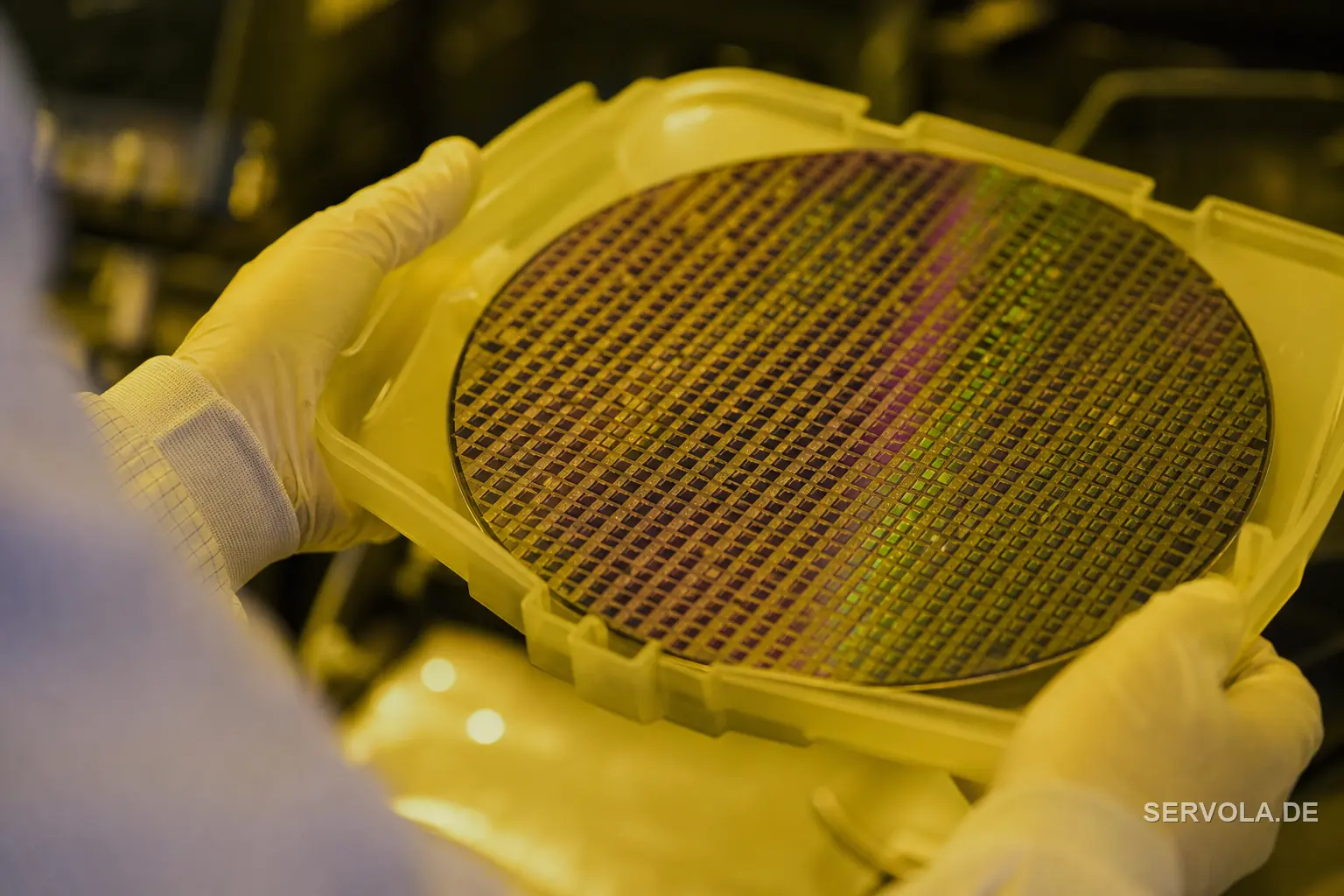
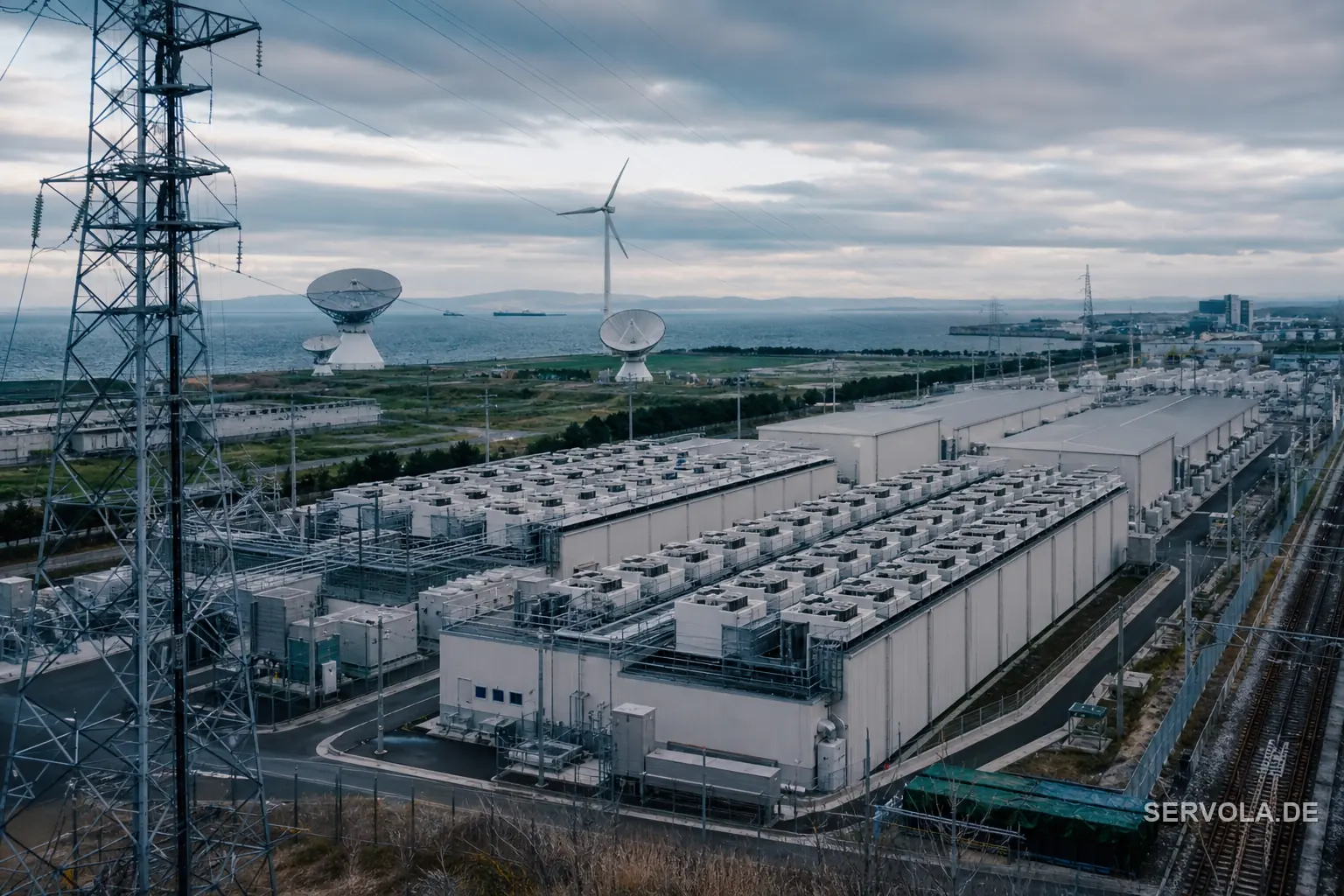
On 16 July, Japan's government and Nvidia announced what they are calling the world's first national AI infrastructure, and the specification is unusually concrete for a sovereignty announcement. The facility will be built and operated by Noetra Corp. and runs 13,750 Nvidia Vera CPUs and 27,500 Nvidia Rubin GPUs across 140 megawatts of data centre capacity, on the Nvidia DSX platform with Spectrum-X Ethernet networking. It underpins the FRONTia project, whose full name is the development of multimodal foundation models with a view to AI robotics and physical AI. Jensen Huang, Nvidia's chief executive, framed it in the register you would expect: Japan invented modern manufacturing, and is now building the AI factories that will power the next industrial revolution.
Most sovereign AI announcements are a number and a press conference. This one has a delivery vehicle. Noetra was commissioned by METI, Japan's ministry of economy, trade and industry, together with NEDO, its innovation agency, alongside AIST, the national research institute. The company is majority-owned by SoftBank Corp., Sony, NEC and Honda, and it is targeting participation from around 40 more firms across manufacturing and non-manufacturing sectors. The programme runs from fiscal 2026 to 2030, and the plan is to ship a first foundation model within this fiscal year, with improved versions each year after.
The reflex reading is that Nvidia has found another government to sell to, and that reading is not wrong. Nvidia's sovereign AI revenue reached 30 billion dollars in its 2026 fiscal year, more than triple the year before, with Canada, France, the Netherlands, Singapore and the United Kingdom among the buyers. France alone deployed 18,000 Grace Blackwell systems. Japan is the largest and most specific entry on that list. But the interesting part of this deal is not the part Nvidia gets paid for.
The cheque is smaller than the headline
The figure in circulation is 1 trillion yen, roughly 5 billion euros, over five years. The figure that has actually been committed is 387.3 billion yen, roughly 2 billion euros, for the first fiscal year. The rest is subject to annual review after the first two years. That is not a criticism of the programme, it is how commissioned development funding normally works. It is a criticism of how the number travels. By the time a five-year ceiling has been through three re-tellings it has become a spent sum, and a stage-gated ceiling is a very different object from a bank transfer.
The distinction matters because you are being sold the same structure. Vendor roadmaps, national programmes and AI partnership announcements all quote the ceiling and let you assume the floor. The discipline is the same in each case: ask which tranche is contracted, what the review gate is, and who decides. In this programme the answers are public. In your last three vendor announcements, check whether they are.
For scale, Japan's prime minister, Sanae Takaichi, has promoted 17 strategic economic sectors with a projection of 10.5 trillion yen, around 64 billion dollars, of public and private investment in physical AI by 2040. Against that, the AI Robotics Strategy published in March 2026 targets more than 30% of a global AI robotics market estimated at 133 billion dollars by 2040. The compute announced this week is the down payment on that, not the thing itself.
What Nvidia cannot put in the crate
Anyone with a budget and a place in the queue can buy 27,500 Rubin GPUs. Nobody can buy twenty years of Honda's assembly-line sensor traces. That asymmetry is the whole design. The model Noetra and AIST are building is multimodal in a specific and physical sense: it is meant to read data, images, video, audio and physical properties together, so that a machine can interpret a room and act in it rather than execute a pre-programmed motion. A model like that is not trained on the open web. It is trained on operational data from real factories, hospitals and disaster sites, and the stated plan is to rebuild it annually on manufacturer data.
Noetra's president, Hironobu Tanba, was explicit about the reasoning, and it is worth reading twice. Dependence on overseas large language models, he said, carries not only the concern of a company's confidential information being unintentionally transferred abroad, but also serious risks related to business continuity itself. Notice what is absent. He did not argue that Japan must make its own chips. He argued that Japanese firms cannot put their process knowledge into someone else's model and call it a strategy.
This is the layer the sovereignty debate keeps skipping. Compute is a commodity with a lead time. Model weights are downloadable, and half the frontier is open. Data from a working factory floor is the only input in the chain that is genuinely scarce, genuinely proprietary, and impossible to reconstruct from money. Japan's bet is that if it pools that layer across four industrial giants and forty more firms, the American silicon underneath stops being the strategic question. That bet may fail on execution. It is not confused about where the value sits.
This is labour policy wearing a technology costume
The target is 10 million AI-equipped robots across 18 sectors by 2040, including restaurants, food manufacturing and medical care. That number does not come from a technology ambition. It comes from a demographic one. Japan's population is ageing, its immigration policy will not backfill the shortfall, and the shortage is already acute in exactly the sectors on that list. The country is not automating because automation is impressive. It is automating because there is no one to hire.
That gives the programme something most sovereign AI efforts lack: a business case that survives a change of government. An AI gigafactory justified by strategic autonomy competes with every other line in a budget, and loses when the politics move on. An AI programme justified by the fact that the restaurants cannot staff the kitchen has a floor under it. Europe has the same demographic curve arriving and has largely framed its own compute spending as independence from the American stack. Those two framings do not fund the same way, and they do not survive the same way.
It also explains the shape of the technology. Physical AI, robotics, disaster response and nuclear decommissioning are not the highest-margin applications of a foundation model. They are the ones a shrinking workforce actually needs. Japan picked the use case first and bought the compute to fit it. The more common sequence, in Europe and elsewhere, is to buy the compute and then go looking for the use case.
The question this puts on your table
The takeaway is not that you should build a national AI programme. It is that Japan has correctly identified which layer of the stack is yours, and you probably have not audited it. Your sensor logs, process traces, maintenance records, quality-control images and service histories are the one asset in this entire supply chain that no competitor can buy, no vendor can ship, and no government can subsidise into existence. They are also, in most firms, being handed to a model owned by someone else, one API call at a time, with nobody keeping count.
Three things are worth doing this quarter. First, find out what operational data is currently leaving your network through AI tooling, and read the terms on whether it trains the vendor's model. Second, decide whether your process data is an asset you are compounding or an input you are donating. Those are different postures and they require different contracts. Third, when you next see a sovereignty pitch, ask which layer it actually covers. Data residency, model weights and silicon are three separate claims, and vendors routinely sell the cheapest one using the language of the most expensive.
Japan is doing something Europe has mostly talked about. Not because it bought American GPUs, which anyone can do, but because it organised the one input that is not for sale and put a named operator, a funded tranche and a delivery date behind it. The GPUs are the least interesting part of this announcement, and they are the only part most coverage will mention.
Read next: The Sovereignty Pitch Two Governments Already Rejected | Nvidia and Palantir Call It Sovereign, Germany Already Said No