The Day Two Numbers and Two Names Landed Together
On August 18, 2026, Sebastian Siemiatkowski, the chief executive who has run Klarna since he co-founded it, had two announcements to make on the same day, not one. The Swedish buy-now-pay-later fintech was cutting its revenue guidance, and in the same disclosures, the company confirmed that both its chief financial officer and its chief marketing officer were leaving. By the closing bell, Klarna's stock (NYSE: KLAR) had fallen roughly 20 to 21 percent, one of the sharpest single-day drops the publicly traded company has recorded.
The two departures were not framed as a shake-up. Niclas Neglen, CFO for six years, and David Sandstrom, CMO for nine years, are both staying on through early 2027 to hand off their roles in an orderly way, and Siemiatkowski himself remains in place. Sifted broke the story, and the numbers were confirmed the same day by MoneyCheck and Trending Topics EU. For a market watching a richly valued fintech, a guidance cut is one kind of news. A guidance cut arriving in the same breath as the exit of the two executives most responsible for those numbers and the narrative around them is a different kind of news entirely - and for merchants who have built Klarna into their checkout, it is not investor news at all. It is vendor news.
Why This Is a Vendor Story, Not Just a Stock Story
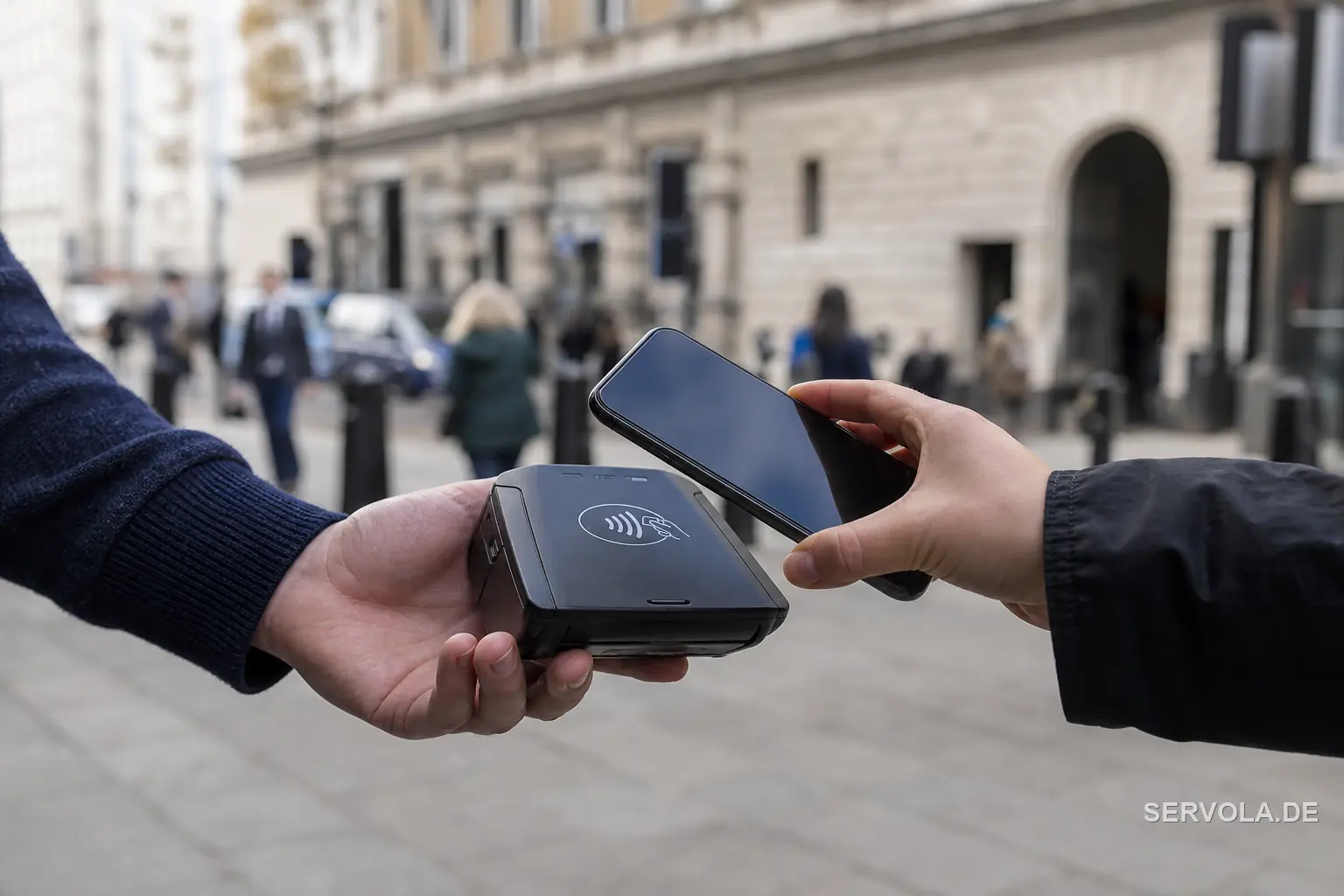
For most people who will read about this 20 percent drop, Klarna is not a line on an investment statement. It is the button a customer clicks at checkout on thousands of European and UK e-commerce sites, the financing rail that lets a shopper split a payment into installments, and the integration a merchant's own developers wired directly into the buying flow, often years ago and often without revisiting it since. When a company occupies that position, its stock price becomes an indirect proxy for something a merchant should be tracking directly: the operating health of an infrastructure vendor sitting inside their own revenue line.
Why it matters: a checkout-embedded vendor does not fail the way a raw-materials supplier fails, with a shipment that is late. It fails at the exact moment a customer is trying to pay, in front of that customer, on the merchant's own site. Klarna's guidance cut does not mean that failure is imminent. It means the gap between the growth story merchants were sold when they integrated Klarna and the growth Klarna is actually delivering now has become large enough for the company itself to publish it - and that gap is exactly the signal a merchant should read as their own, not file away as someone else's quarterly earnings call.
The Compound Signal: A Guidance Cut and Two Exits, Same Day
Either event on its own would be routine. Guidance cuts happen; software and fintech companies revise their numbers almost every reporting season. Executive transitions happen too, and a handoff planned through early 2027 is, on its face, the opposite of an emergency exit. The reason this coincidence deserves an owner's attention is precisely the timing: the finance chief who spent six years building Klarna's numbers and the marketing chief who spent nine years building the story around those numbers are both leaving in the same announcement that cuts the guidance those numbers were supposed to support.
The bottom line: that is not proof of anything hidden. It is a compound signal - two independent data points arriving together that, taken separately, would each be easy to dismiss, but that together describe a company where financial performance and the growth narrative sold to merchants are diverging at the exact moment the two executives most responsible for each are stepping back. A prudent owner treats a compound signal differently than a single data point, because compound signals are usually what precedes the events single data points miss.
The Decision: Read the Contract, Then Test the Fallback
The instruction, not the theory: if Klarna sits inside your checkout, the correct response to this week's news is not to wait and watch the stock. It is to open the actual contract you signed and find two specific things: a change-of-control clause that could alter your terms if Klarna's ownership or leadership structure shifts further, and a service-continuity or termination-notice clause that tells you how much warning you would actually get if the relationship changed. Most merchants who integrated a BNPL provider years ago have never reread that document since the integration went live.
The second half of the exercise is operational, not legal. Confirm - do not assume - that you have a second payment processor that could be activated within days. Ask your own team the direct question: if Klarna checkout stopped working tomorrow morning, what happens at the register? If the honest answer is that you would need to source and integrate a replacement, you do not have a fallback. You have a gap, and this week is the moment to close it, while it is still a planning exercise rather than an emergency.
Neither step requires believing Klarna is in trouble. Both are simply what a vendor-dependency review looks like when the vendor in question has just published a guidance cut and lost its two most senior executives below the CEO on the same day. The review costs an afternoon. Discovering you skipped it costs a checkout outage during a busy sales period.
Waiting to See If It Blows Over Is Still a Decision
Some owners will read this week's Klarna news and decide the sensible move is to wait: watch the stock over the next few quarters, see whether Neglen's and Sandstrom's replacements stabilize the story, and revisit the question later. That is a legitimate call to make - but it is worth naming for what it is. Choosing not to review the contract and not to test the fallback is itself a decision, made now, with the same consequences as any other, whether or not it is labeled as one.
The asymmetry is what makes waiting the wrong default. Reviewing a contract clause and testing a fallback processor costs an afternoon and changes nothing about how the business runs today. Discovering, mid-incident, that the fallback plan existed only as an assumption costs a checkout outage, a queue of customers who cannot pay, and a scramble that a calmer week would have prevented. Klarna's guidance cut and its two departures may turn out to be nothing more than the transition the company says it is. The merchants who come out ahead either way are the ones who used this week to find out what their own contract actually says.
Read next: Apple Replaces iPhone Financing With a Klarna Lease | PayPal Turned Down a Fully Financed $53 Billion Buyout