Twenty-eight percent more revenue, ninety-one percent less cash
The number that moved the stock was not on the revenue line. On 29 July Meta reported second-quarter revenue of 60.801 billion dollars, up 28 percent year over year, and net income of 15.848 billion. Then the cash flow statement showed free cash flow of 784 million dollars, against 8.549 billion in the same quarter a year earlier. The shares fell more than 6 percent after hours.
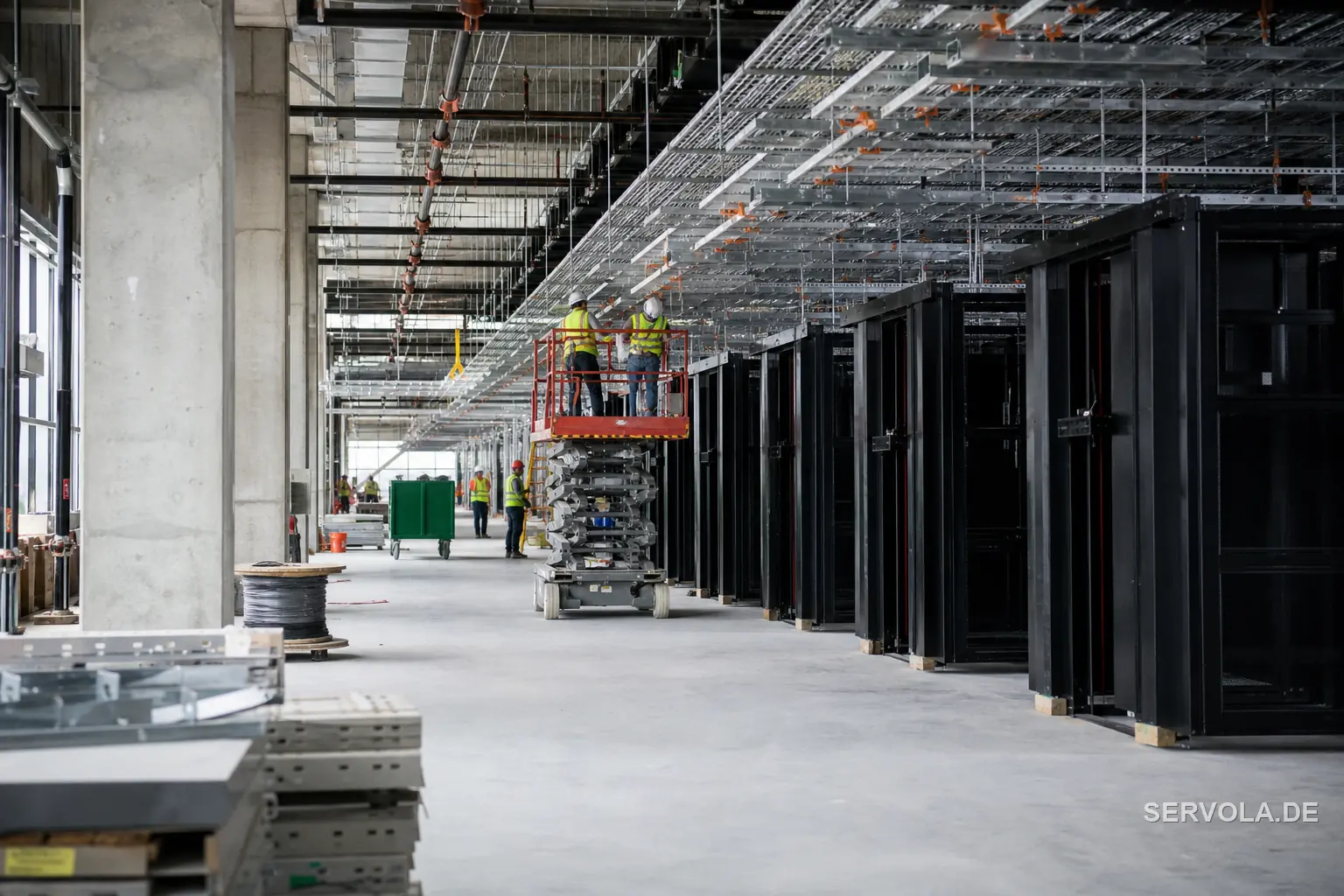
The gap is capital expenditure. Meta spent 31.08 billion dollars in the quarter, including principal payments on finance leases, which is more than half of everything it billed. Of the 15.848 billion dollars of profit it reported, 784 million survived as free cash, about five cents on the dollar. In euro terms the quarter earned roughly 14.6 billion and kept roughly 720 million.
Two other charges sit inside the quarter: 2.4 billion dollars for legal proceedings and 1.18 billion in severance from the May headcount reduction. Headcount closed at 75,472, down 1 percent year over year. Reality Labs booked 431 million dollars of revenue against an operating loss of 4.619 billion, which is a division spending more than ten euros for every euro it earns.
The floor moved, the ceiling did not
Why it matters. Meta now expects full-year 2026 capital expenditure of 130 to 145 billion dollars, about 120 to 133 billion euros, or roughly 103 to 115 billion pounds. Three months ago the same line read 125 to 145 billion. The top of the range did not move. The bottom rose by 5 billion dollars.
That asymmetry is the most useful thing in the release. A ceiling is an ambition and can be quietly missed. A floor is a set of signed commitments, data centre shells, grid connections and component orders that cannot be unwound inside a year. When a company raises the minimum it will spend and leaves the maximum alone, it is saying the discretionary part of the budget has already gone.
The second half has to be bigger than the first
The arithmetic is worth doing because the releases do not do it for you. Meta spent 19.84 billion dollars in the first quarter and 31.08 billion in the second, so the first half consumed about 50.9 billion. Against guidance of 130 to 145 billion, the second half has to carry roughly 79 to 94 billion.
That implies a quarterly run rate of about 40 to 47 billion dollars for the rest of the year, against the 31.08 billion just reported, a further rise of a quarter to a half. The spending is not levelling off and the steepest part is still ahead. Anyone whose power connection, component supply or skilled-trades hiring competes with a hyperscaler build should plan against the second-half figure rather than the one in tonight's headline.
Component prices are now inside the guidance
Yes, but. The raise is not only about building more. When Meta lifted the range in April it named higher component pricing first and additional data centre costs second. That is a hyperscaler writing hardware inflation into its own forward guidance, in public, as the leading explanation.
For an operator that is the transmission mechanism. The memory and accelerator prices showing up in Meta's capital expenditure are the same prices that reach your server quotes, your colocation renewals and your cloud list prices a few quarters later. Read as a story about one company's ambition it is noise; read as a price signal about parts everybody buys, it is a budgeting instruction.
What to do before the next renewal
Budget against the floor rather than the forecast. If your own AI plan assumes hardware or capacity gets cheaper this year, the largest buyer in the market has just told you the opposite and raised its minimum commitment to say so. Re-run your 2027 hardware line at flat-to-higher unit prices before you sign anything with a fixed term.
Assume your vendor has no cushion. A company converting five cents of each profit dollar into cash cannot absorb a weak quarter out of reserves, so the pressure lands on price, packaging and enforcement of terms. Expect firmer renewals, less discount latitude and more aggressive monetization of anything currently free, and get your price protection written into the contract rather than trusting the relationship.
In the European Union and the United Kingdom the practical exposure is the advertising line, because ad rates are billed in euros and pounds and rise without any contract being reopened. If a meaningful share of your acquisition spend sits with one platform, price a ten to fifteen percent increase into next year's plan as a scenario and know which channel absorbs it, because the party funding a 130 billion dollar build has to earn it back from the people buying inventory.
Read next: $265m Trains the Electricians Money Cannot Buy | SK Hynix Earned 76 Percent And Held Its Capex