A New Institution, Not a New Factory
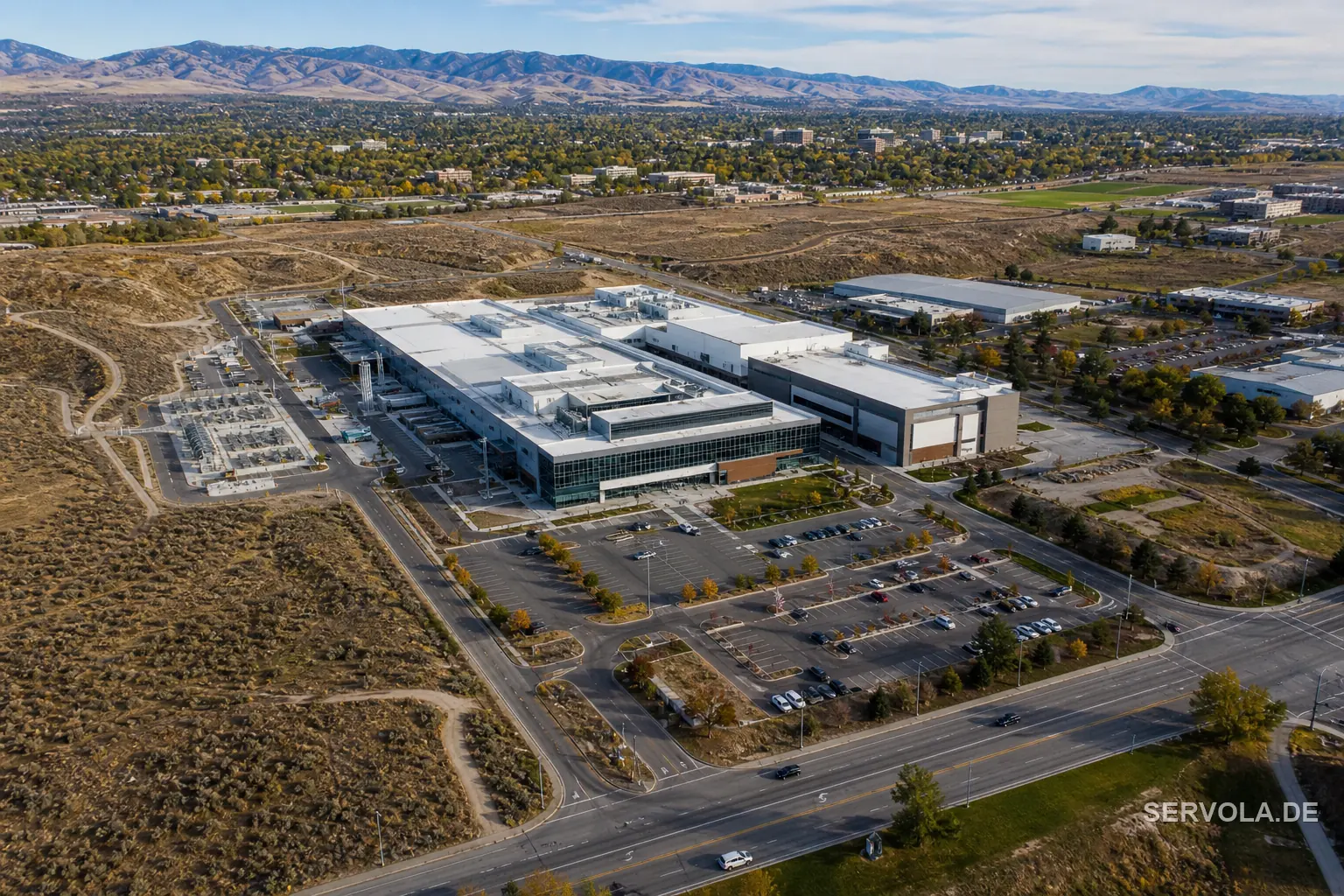
Micron announced on August 20, 2026 that it is standing up Micron Research Labs, a US-based long-horizon research institution headquartered in Boise, Idaho, backed by a planned $10 billion investment over the next decade. The company describes it as the first dedicated memory research institution of its kind in the US, built to work on problems that sit beyond current technology roadmaps: new memory technologies, advanced memory and compute architectures, packaging, and future semiconductor manufacturing.
The distinction matters. This is not a fab, and it is not counted inside Micron's existing buildout. CEO Sanjay Mehrotra was explicit that the money is layered on top of what the company has already pledged: "This builds on the more than $250 billion we have separately committed to manufacturing and R&D across the United States." One number funds production capacity that exists today. The other funds the research layer that decides what gets built a decade from now.
The Timing Undercuts the Usual Read
Companies typically fund long-horizon research when a core business is under pressure and needs a new story. Micron's numbers say the opposite. Its entire 2026 HBM (high-bandwidth memory) capacity is already sold out under binding, multi-year contracts, and Q2 fiscal 2026 revenue hit $23.9 billion, up 196 percent year over year. There is no capacity gap this lab is patching and no demand shortfall it is answering.
That makes the $10 billion a different kind of signal. A company sitting on a fully booked order book does not need to spend a decade's worth of research money to survive the current cycle - it needs that money if it believes the current cycle is not the ceiling, and that whoever defines the next memory architecture keeps the pricing power once today's shortage eventually eases. CTO Scott DeBoer framed the lab as "a dedicated home for long-horizon innovation, the kind of research that sits upstream of every product we build" - upstream, notably, of the fabs the $250 billion is already paying for.
Boise First, Then a Global Spoke Network
Micron expects to break ground on the flagship Boise facility in calendar 2027, with the campus designed to host hundreds of researchers and serve as a venue for research conferences and innovation forums. Funding also extends outward from that single site: university collaborations, ecosystem partnerships, and a hub-and-spoke network of satellite labs planned across the US, Europe, Japan, India, Singapore, and Taiwan. Micron's announcement drew public endorsement from Nvidia, Apple, Applied Materials, Lam Research, imec, Stanford, and UT Austin, and the company is building on a base of 62,000 lifetime patents.
US Secretary of Commerce Howard Lutnick cited the commitment as reinforcing domestic semiconductor capabilities, tying the lab into the broader push to keep advanced memory research and production onshore rather than dependent on facilities elsewhere.
What This Means for Multi-Year AI Procurement
For an EU or UK enterprise budgeting AI infrastructure spend past 2027, the useful reading is not the headline number - it is what the number implies about supply. Memory-chip suppliers do not typically fund decade-long fundamental research while sitting on sold-out order books unless they view the current AI-driven shortage as structural rather than cyclical. Micron, alongside SK Hynix and Samsung, controls nearly all of the advanced memory market, and a $10 billion research bet from one of the three is a vote that the shortage does not resolve on today's roadmap - it resolves on whichever company's next architecture ships first.
Procurement teams building multi-year AI infrastructure plans should treat memory pricing power as staying concentrated with a small number of suppliers well past 2027, not as a temporary bottleneck that eases once current fabs ramp. Budgets built on memory costs softening in the next two to three years are budgeting against a signal the supplier itself is not sending.
Read next: Micron Says 2027 Will Be Tighter Than 2026 | A 30 Billion Dollar Data Center Meets a 5 Billion Dollar Insurance Ceiling