The Round, and Who Is In It
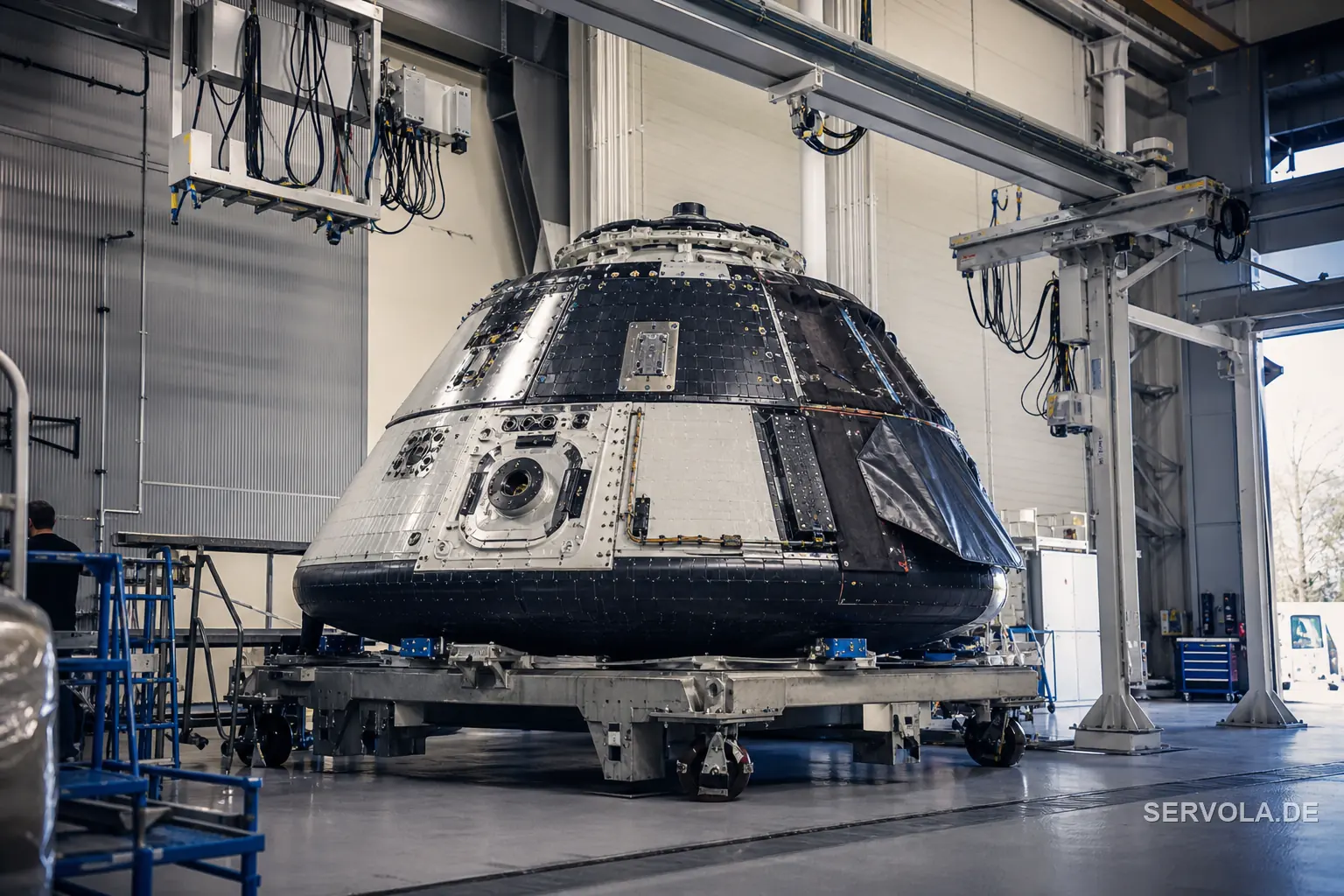
Muon Space, a US satellite manufacturer, announced on August 20, 2026 that it closed a $250 million Series C round at a $1.5 billion valuation, according to the company's own release, corroborated by Bloomberg, SpaceNews and SatNews. The round was led by Eclipse Capital, with Galvanize, Google, Salesforce Ventures, Wellington Management, I Squared Capital, Woven Capital and other investors also participating, and it takes Muon Space's total equity raised to date past $386 million.
Muon Space describes itself as a vertically integrated satellite manufacturer, meaning it designs, builds and operates its own spacecraft rather than assembling a constellation from third-party parts, and it has said the new capital will help it scale toward producing 500 satellites a year, aimed at earth-observation and climate and connectivity data infrastructure.
Why Google and Salesforce Ventures, Specifically
Google and Salesforce Ventures are not typical satellite-hardware investors, and that is the point worth sitting with. Google already runs one of the largest commercial consumers of earth-observation imagery through Google Earth Engine and its climate and sustainability data products, while Salesforce has spent years building Net Zero Cloud and other data products that customers use to report on emissions, supply chains and climate exposure. Both companies need a reliable, scaled upstream supply of the raw earth-observation and climate data, not just the software layer that sits on top of it.
A strategic investor backing a vendor further up its own supply chain is a familiar pattern in cloud infrastructure and semiconductors; it is a newer one in earth-observation, where the customer base has historically bought data from a fragmented set of government programs and mid-size commercial operators. Google and Salesforce Ventures putting money into a single manufacturer that is aiming for hundreds of satellites a year is a signal about where each company expects its own data pipeline to come from later this decade.
What 500 Satellites a Year Does to the Earth-Observation Market
Earth-observation and climate data today comes from a mix of government satellite programs, a handful of established commercial operators and a longer tail of smaller specialists, which keeps buyers with real negotiating leverage on price, resolution and licensing terms. A single vertically integrated manufacturer producing 500 satellites a year, with the balance sheet of a $1.5 billion valuation and strategic backers who are themselves large data consumers, changes that arithmetic: production at that scale is a route toward becoming the default supplier for a meaningful share of the market, not just one vendor among several.
None of this happens instantly. Muon Space still has to build toward that production rate, and a funding round is a plan, not a delivered constellation. But the capital, the investor list and the stated target are all aimed at the same outcome, and earth-observation and climate-data buyers who wait until that scale is actually operating before they think about vendor concentration will be negotiating from a weaker position than the ones who start now.
The Servola Read: Price In Vendor Concentration Now
For any organization budgeting for earth-observation or climate-data contracts over the next two to three years, government climate and environmental agencies, insurers pricing physical climate risk, agricultural and supply-chain data buyers, this round is worth reading as a market-structure signal rather than a space-industry curiosity. It has nothing to do with Muon Space having, or needing, a presence in any particular market; it has to do with how much of the global supply of this data may soon run through one manufacturer's satellites.
The practical move is not to react to Muon Space directly, it is to check what a current or prospective data contract actually locks in: multi-year pricing, exclusivity terms, and whether an alternative supplier would still exist if this one becomes dominant. That homework is cheap to do before the market consolidates and expensive to skip until after it has.
Read next: Google's $1.5B AI Deal Is Not Legally A Merger | Five Billion In Defense Money Is Now Chasing GPUs