Two Filings, No Press Release
The deal became public because a company worth a fraction of it had a duty to speak. On 28 May 2026 Duos Technologies Group, a Nasdaq-listed microcap, filed a Form 8-K stating that it "owns a 5% non-voting ownership interest in Sawgrass APR Holdings, LLC, the ultimate parent company of New APR Energy, LLC". The same filing records that "As of May 26, 2026, substantially all of the assets of New APR were sold to a third party."
The buyer's name sits in a regulator's database, not in a press release. The United States Federal Trade Commission's early termination notice for transaction number 20261350, granted on 14 May 2026, names the acquiring party as Elon Musk and the acquired party as CF APR Super Holdings LLC, with New APR Energy, LLC listed among the acquired entities. Antitrust clearance came twelve days before the assets changed hands.
No party announced any of it. There is no statement from APR Energy, none from Musk, and none from any company he controls. The transaction cleared a federal review, closed, and left no public trace beyond two filings that exist because the law compelled them.
What Five Percent Tells You About the Whole
Duos disclosed the number it was required to disclose, and that number sizes the deal. The 8-K reports "net proceeds of approximately $50.4 million" with "an additional amount of approximately $9.9 million" retained in escrow. A 5 percent holder receiving 50.4 million dollars implies a transaction of roughly 1.01 billion. Counting the escrow, the implied figure moves closer to 1.21 billion.
Both numbers are floors rather than estimates. The filing says net proceeds, which means the gross figure behind them is higher by whatever fees and obligations were deducted first. An implied value derived this way understates the deal rather than inflating it. We are stating the arithmetic consequence of a disclosed figure, not a price that any party confirmed.
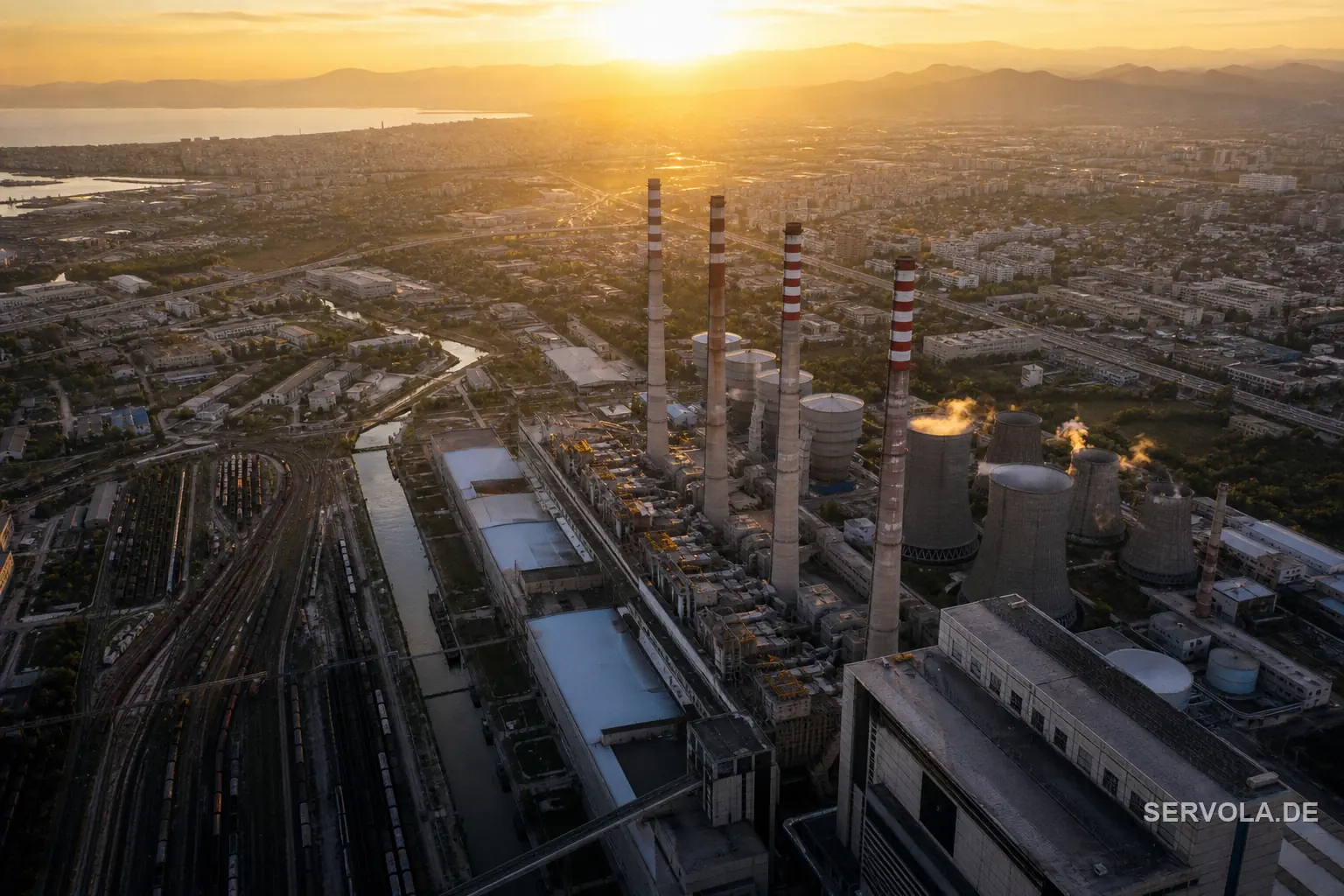
What nobody has published is the fleet itself. Press reporting has described mobile gas turbine capacity in the gigawatt range and a deployment near Memphis. APR Energy's own site returns an access error to us, and no filing we read states a megawatt figure, a turbine count, or a location. Every capacity number now in circulation is press reporting, and it should be repeated as press reporting or not at all.
The Acquirer Is a Person, Not a Company
The FTC notice names Elon Musk, and that detail carries more weight than it first appears to. Filings under the Hart-Scott-Rodino Act identify the ultimate parent behind an acquisition. Here that party is a natural person rather than one of the companies he runs.
Every connection to a specific business is press inference. Reporting in mid-July linked the purchase to xAI's compute build-out. That link may well prove correct, but it appears in no primary document we read. An operator reading this should hold apart what a regulator recorded and what a journalist concluded, because only one of the two is evidence.
The ownership structure changes what anyone else can see. Generation held personally rather than inside an operating company does not appear in that company's disclosures, does not show up in its capital expenditure guidance, and cannot be tracked by a competitor or counterparty through the usual filings. The asset can be pointed wherever its owner chooses, and the first outside signal will be the electricity, not a document.
Why a Buyer Skips the Queue, and What That Costs You
Buying turbines outright is a decision about time rather than about electricity. A large load waiting for a grid connection is waiting on a study process it does not control and cannot accelerate by spending more. Acquiring an existing mobile generation fleet converts that wait into a procurement problem, which is the kind of problem capital actually solves. Mobile units exist precisely to be delivered, sited and started without the permanent interconnection a fixed plant requires.
The consequence for everyone else is the part worth writing down. When the buyers with the deepest capital stop queueing and start acquiring generation, the connection queue stops being a reliable picture of who is competing for power in your region. Your own position does not improve because someone ahead of you left, and the demand they represent has not gone away. It has simply moved somewhere you cannot see it.
So test the assumption rather than the forecast. If a facility plan rests on a connection date derived from a queue position, write down what happens if that date slips by a year and price the bridge, whether that is on-site generation, a shorter-term lease, or a smaller first phase. The buyers who can afford to bypass the queue entirely have already answered that question, and they answered it by spending a billion dollars.
Read next: Washington Just Told Brussels It Cannot Fine X | No AI Safety Rule Binds Your Vendor Yet