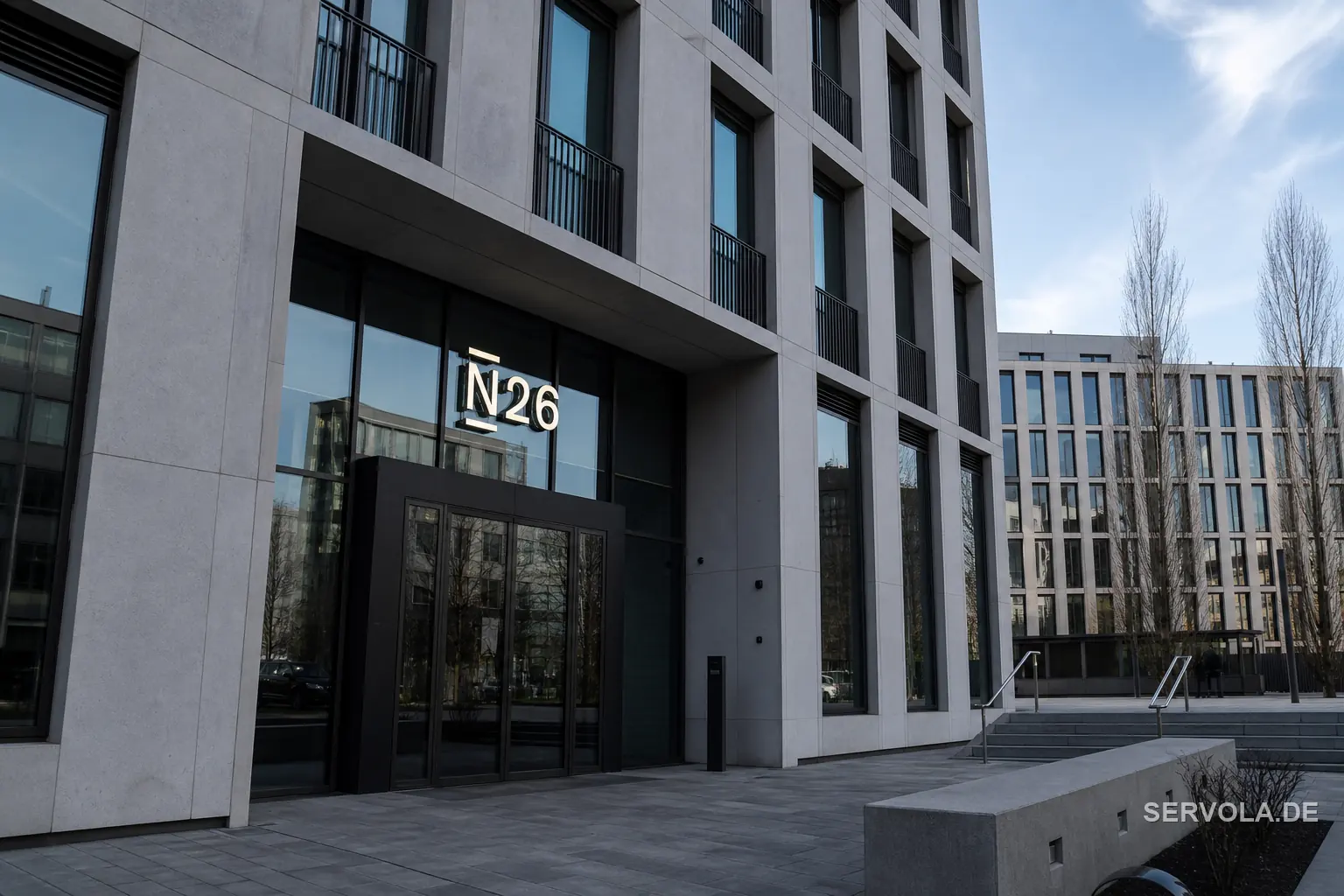
N26 flips the default switch on August 11
On August 11, 2026, N26 made Wero the default instant-payment option across its banking app in Germany and France, letting customers send and receive money using only a phone number or email address. The transfer needs no IBAN, runs over the SEPA Instant network, and lands in the recipient's account in under ten seconds, whether or not that recipient banks with N26 at all.
Daniel Lappas, N26's Chief Product and Business Officer, put it this way: "Instant payments without an IBAN have been a core N26 feature since our inception. With Wero, we're extending this seamless experience to the broader European banking ecosystem, bringing the simplicity N26 customers already know to even more people." N26, which counts roughly 8 to 10 million registered accounts across 24 European markets, is applying the default change only in Germany and France for now.
Wero's numbers before N26 joined
Before N26 signed on, Wero already ran across Belgium, France and Germany with roughly 47 million registered users, more than EUR 7.5 billion in transfers processed, and over 1,100 participating banks and payment institutions, including groups such as ING, BNP Paribas Fortis, Deutsche Bank, Sparkasse, Rabobank and KBC. Merchant acceptance began in late 2025, when Lidl, Decathlon and Rossmann started taking Wero payments online in Germany, with France and Belgium following through 2026.
| Network | Registered users | Countries live | Notable detail |
|---|---|---|---|
| Wero (standalone) | about 47 million | Belgium, France, Germany | EUR 7.5 billion processed, 1,100+ member institutions |
| EuroPA Alliance (combined) | about 130 million | 13 countries, about 72% of EU plus Norway | Cross-border P2P live 2026, point-of-sale/e-commerce 2027 |
| N26 (now defaulted to Wero) | 8 to 10 million registered accounts | Germany and France, of 24 N26 markets | Default in-app option since August 11, 2026 |
The Netherlands is next on Wero's own roadmap, with its site saying only that further countries follow "after that," so today's live footprint is three countries, not a continent-wide rollout yet.
From bank consortium to neobank default
Wero has spent two years being described mainly as a bank-backed consortium project, something dozens of financial institutions built together rather than a product any single brand pushed on its customers. N26 switching its own app to default new and existing customers onto Wero, instead of leaving it as an opt-in alternative, is a different kind of event: a fully digital, pan-European bank choosing the EU-native rail over card networks by default, for its whole active base at once.
That distinction matters because N26 carries no branch network and no legacy card business to protect, so its choice is a clean statement about which rail it wants customers using first. Once one major neobank defaults to Wero, the pressure on the next digital-only bank to match that default only grows, since customers increasingly notice which app charges nothing on a transfer and which one still routes through a card network.
The EuroPA Alliance is the bigger sovereignty story
A memorandum of understanding signed on February 2, 2026 links Wero to the EuroPA Alliance, a grouping that includes Italy's Bancomat, Spain's Bizum, Portugal's MB WAY and the Nordic region's Vipps MobilePay. Combined, those networks already serve roughly 130 million users across 13 countries, close to 72 percent of the population of the EU plus Norway, all without a single transaction touching Visa or Mastercard.
Cross-border peer-to-peer payments between the linked wallets are due to go live in 2026, with point-of-sale and e-commerce acceptance across the combined network following in 2027. ECB president Christine Lagarde had already framed the underlying goal in similar terms in a 2025 radio interview, arguing that payment rails should sit "under our control" rather than route through providers she named as either American or Chinese; N26's move is the first time that argument has a concrete, whole-customer-base rollout behind it rather than just a policy ambition.
What EU and UK merchants should do next
For merchants and payment-dependent businesses operating in the EU or serving EU customers from the UK, the practical read is that Wero acceptance is moving from a nice-to-have into a near-term checkout requirement. Lidl, Decathlon and Rossmann did not add Wero as an experiment; they added it because a meaningful share of their German customer base already carried a Wero-linked account, and N26's default flip only accelerates that base.
The operator step is straightforward: fold Wero acceptance planning into the same roadmap that already covers SEPA Instant and open banking rails, budget it into 2026 checkout work now, and watch the EuroPA Alliance's 2027 point-of-sale timeline as the point at which the same decision will need to be made across 13 countries at once, not just Germany and France.
Read next: Mistral Large 4 Wins Where Closed Models Refuse | The Netherlands Also Said No to IBM and SUSE