Sales down 9.5 percent, profit up 150 percent
On 6 August 2026, Nintendo published its financial results for the fiscal quarter ended 30 June 2026, the first quarter of fiscal year 2027, reported the same day by Nintendo Everything and Nintendo Life. Net sales came to 517.8 billion yen, down 9.5 percent from the same quarter a year earlier. Operating profit came to 142.5 billion yen, up 150.5 percent, more than double what the company reported a year earlier. Nintendo remains one of the best-established console brands across EU and UK retail, so today's numbers touch a wide layer of local electronics retailers, game studios and accessory makers even where Nintendo itself is not the direct counterparty.
Put next to each other, those two lines look like they cannot both be true. A shrinking top line is supposed to squeeze profit, not multiply it, and a business rarely gets to report both a steep sales decline and its best profit growth in the same three months. There is no restatement or one-off gain hiding in these figures to explain the gap away, both numbers come from the same release, the same quarter, the same company.
The explanation is not an accounting trick. It is where Nintendo currently sits in a hardware generation change, and reading that transition correctly is what turns two apparently contradictory numbers into one coherent story.
A hardware transition, told in two console generations
Nintendo is running two hardware lines side by side. The original Switch, now years into its life, has sold 156.59 million units lifetime and is still moving units, but it is by this point a mature, largely sunk-cost hardware business: the console itself carries little pricing power left, and most of the engineering cost was recovered long ago.
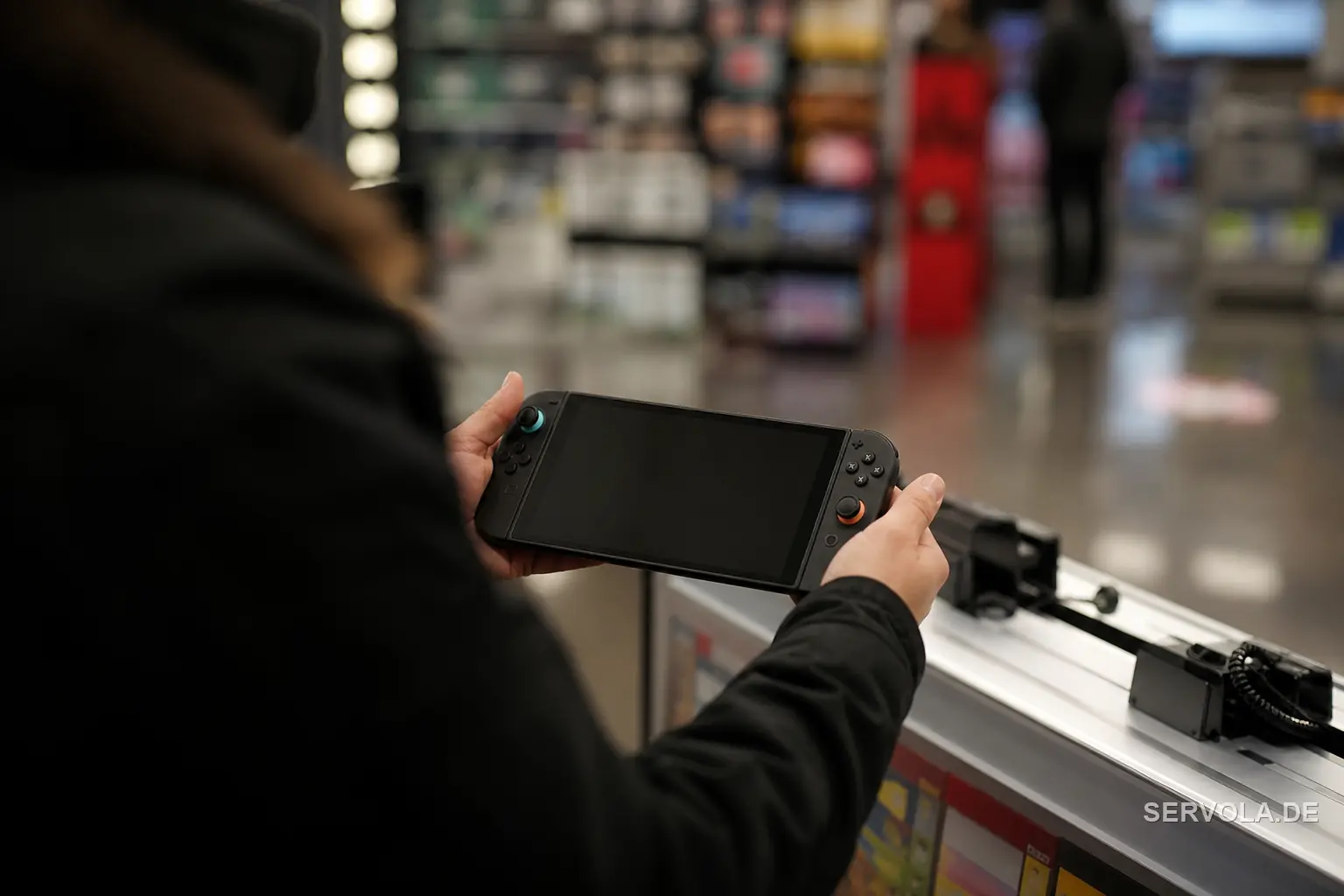
Switch 2, launched more recently, has sold 23.68 million units lifetime, with 3.82 million of those sold in this single quarter. That is still the early-adoption phase of a console's life, the period when a new machine typically commands its full price, sells alongside premium bundles, and has not yet been discounted down by retailers or by Nintendo itself. Early-cycle hardware is where a console platform usually earns its best margin per unit sold.
Put the two together and the net sales decline stops looking like weakness and starts looking like mix. As the installed base shifts away from an ageing, low-margin Switch and toward a still-premium Switch 2, the total units and total yen moving through retail can fall even while the profitability of what is actually being sold improves. That is the same transition told from two different points, not two different stories.
The number that matters more: digital sales up 90 percent
The detail in Nintendo's release worth reading past the headline profit figure is digital. Digital game sales rose 90.0 percent year on year to 132.7 billion yen, and Nintendo attributed a substantial part of that jump to digital, downloadable versions of packaged titles, players choosing to buy the download rather than the disc or cartridge.
That growth rate matters more than the unit totals because of what it says about margin and control, not because the yen figure is the largest one in the release. A digital sale keeps more of its revenue with Nintendo: no retailer margin, no manufacturing or distribution cost for physical media, no shelf space to negotiate for. A boxed copy sold through a retailer runs through more hands before Nintendo sees its share.
The growth rate is also a statement about who controls the transaction. Ninety percent growth in digital sales means Nintendo's own storefront, not a third-party retailer, is capturing a growing share of every yen its customers spend, and with international markets supplying 77.9 percent of total net sales, 403.2 billion yen of the 517.8 billion yen total, that shift toward the direct channel is playing out across Nintendo's whole global business, not one region.
The transferable lesson for reading a hardware transition
The instinct when a headline sales number falls 9.5 percent is to read it as bad news and stop there. Nintendo's quarter is the case for why that instinct fails mid-transition: a falling top line can coexist with a genuinely strengthening business if the underlying mix is shifting toward a newer product that is both higher margin and more directly controlled by the platform owner.
The practical rule for any owner or investor evaluating a hardware business, or a hybrid hardware-plus-platform business, going through the same kind of generational switch: do not stop at the headline sales figure. Look at the growth rate of the platform's own direct or digital channel relative to the channel it is replacing. That rate, not total units shipped, is the earliest reliable signal of whether the transition is going well.
Nintendo itself has not called the transition finished. The company said it aims to maintain the momentum of Switch 2 hardware sales and will work to expand sales of existing titles while introducing new releases, and it did not issue an updated numeric full-year forecast alongside this release. The instruction that follows is simple: keep watching the digital growth rate over the next few quarters rather than fixating on any single quarter's unit shipment number, because that rate is what will confirm or undercut this quarter's story.
Read next: All Three Console Makers Raised Prices In 2026 | Nintendo Pivots Splatoon Into Switch 2 Exclusive