A record chip claim with no independent referee
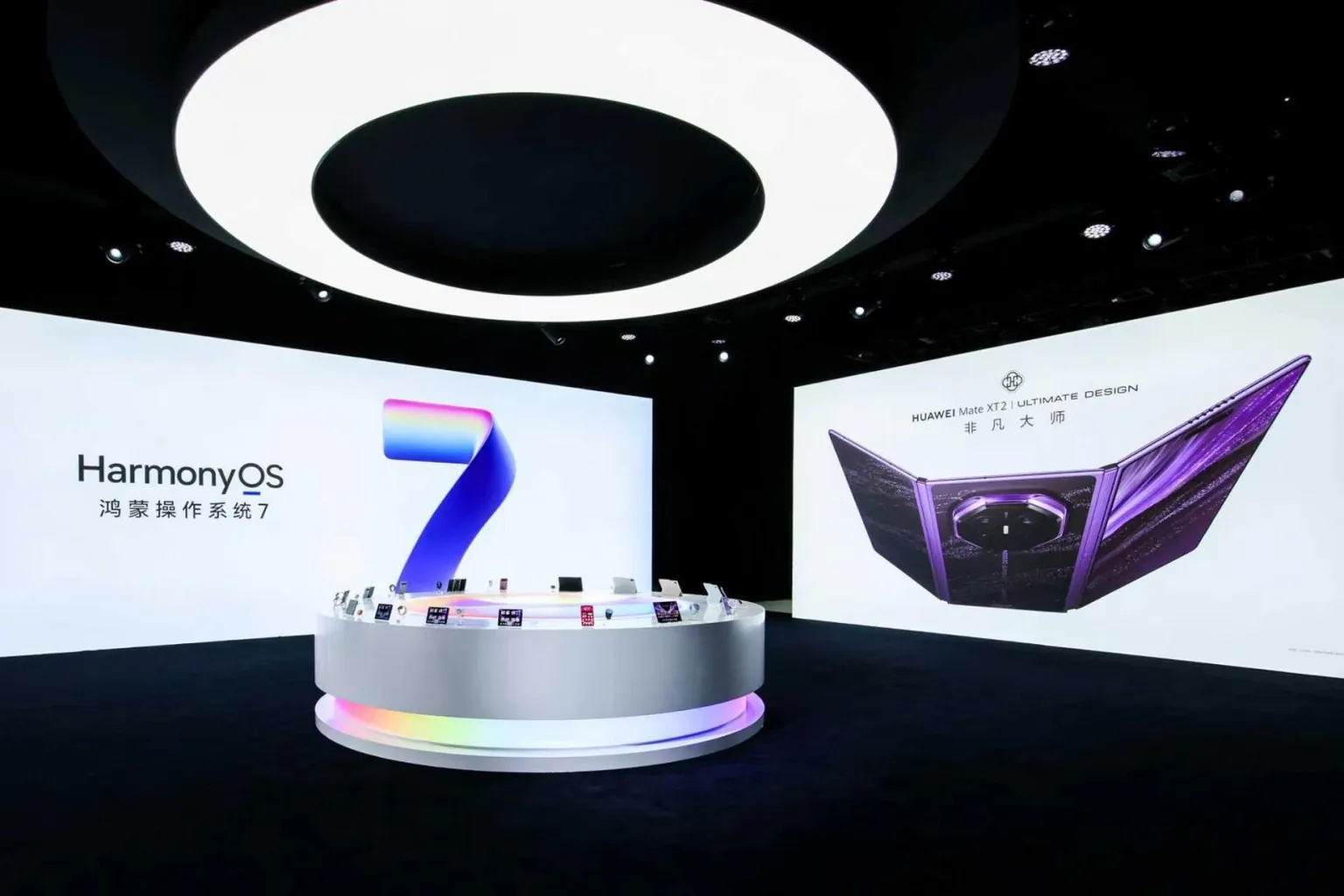
Huawei launched the Mate XT2 tri-fold smartphone in Guangzhou on September 7, built around the Kirin 9050 Pro, a chip the company says stacks logic units in layers within a single die using a design it calls LogicFolding, shortening signal paths and cutting latency. Huawei's own figures put the transistor density at 238 million transistors per square millimeter, a 55 percent jump over the prior Kirin 9030 Pro, alongside a 42 percent overall performance gain and a 142 percent leap in graphics ray-tracing throughput.
Every one of those numbers is Huawei's own. Tech Times, which has tracked the LogicFolding architecture since Huawei first announced it in May, reports that no independent lab has verified the density or performance claims in the four months since, and that the electronic design automation software needed to design future chips on this architecture, built by researchers at Peking University, remains a prototype rather than production tooling. A leaked Geekbench 6 single-core score of 2,084, attributed to the chip by a Chinese tech tipster, would put it behind Apple's A18 Pro and Qualcomm's latest Snapdragon in raw single-core output even if the broader architectural claims hold up.
The chip is real progress even if the specific numbers are not yet checked
Independent verification is missing, but the underlying approach is not vapor. Chiplet packaging, the technique Apple, Qualcomm and MediaTek use to combine multiple dies in one package, treats each die as a separate, independently manufactured component. Huawei's LogicFolding instead stacks two silicon wafers face-to-face using hybrid bonding, redesigning how logic is physically laid out rather than just how finished dies are packaged together. Huawei's own July 2026 engineering paper acknowledged real manufacturing challenges in the approach, and the company's public roadmap projects reaching a density equivalent to a 1.4-nanometer process by 2031 by adding more vertical layers, not by shrinking the underlying 7-nanometer-class manufacturing node.
The timing was not an accident either. The Guangzhou event landed just ahead of Apple's own annual iPhone launch, and it followed a strong run for Huawei at home: smartphone shipments grew 19.4 percent year on year in the second quarter of 2026, pushing Huawei to a 22.6 percent share of the Chinese market, the top position, according to Xinhua. Huawei's research and development spending reached a record 121.38 billion yuan, about 17.9 billion dollars, in the first half of 2026, more than a quarter of the company's revenue.
The legal fact that travels with the chip, whether or not it works as claimed
The Mate XT2 is launching exclusively in China, with sales beginning September 12 from 19,999 yuan, about 2,980 dollars. No independent chip audit and no international release date change what already applies to any Huawei hardware a European business encounters, at home or through an employee's travel: China's National Intelligence Law of 2017 requires Chinese organizations and citizens to support, assist and cooperate with state intelligence work when asked. No backdoor has been confirmed in the Kirin 9050 Pro specifically, and Huawei has repeatedly denied that its products are used for state surveillance, but the legal obligation exists independent of whether any given chip contains one.
That is the fact that should outlast the specs debate for a European reader. Whether the Kirin 9050 Pro's density claims survive independent testing is a question chip analysts will resolve over the coming months. Whether Chinese law can compel cooperation from a Chinese hardware maker is not in question at all, and it is the reason the United States designated Huawei a national security threat in 2020 and why enterprises in regulated industries anywhere in Europe are advised to treat Huawei hardware as a compliance question, not just a specifications one.
Read next: The $35 Billion IPO Missing One Customer's Name | Huawei's Nvidia-Rival Chip Arrives Nine Months Early