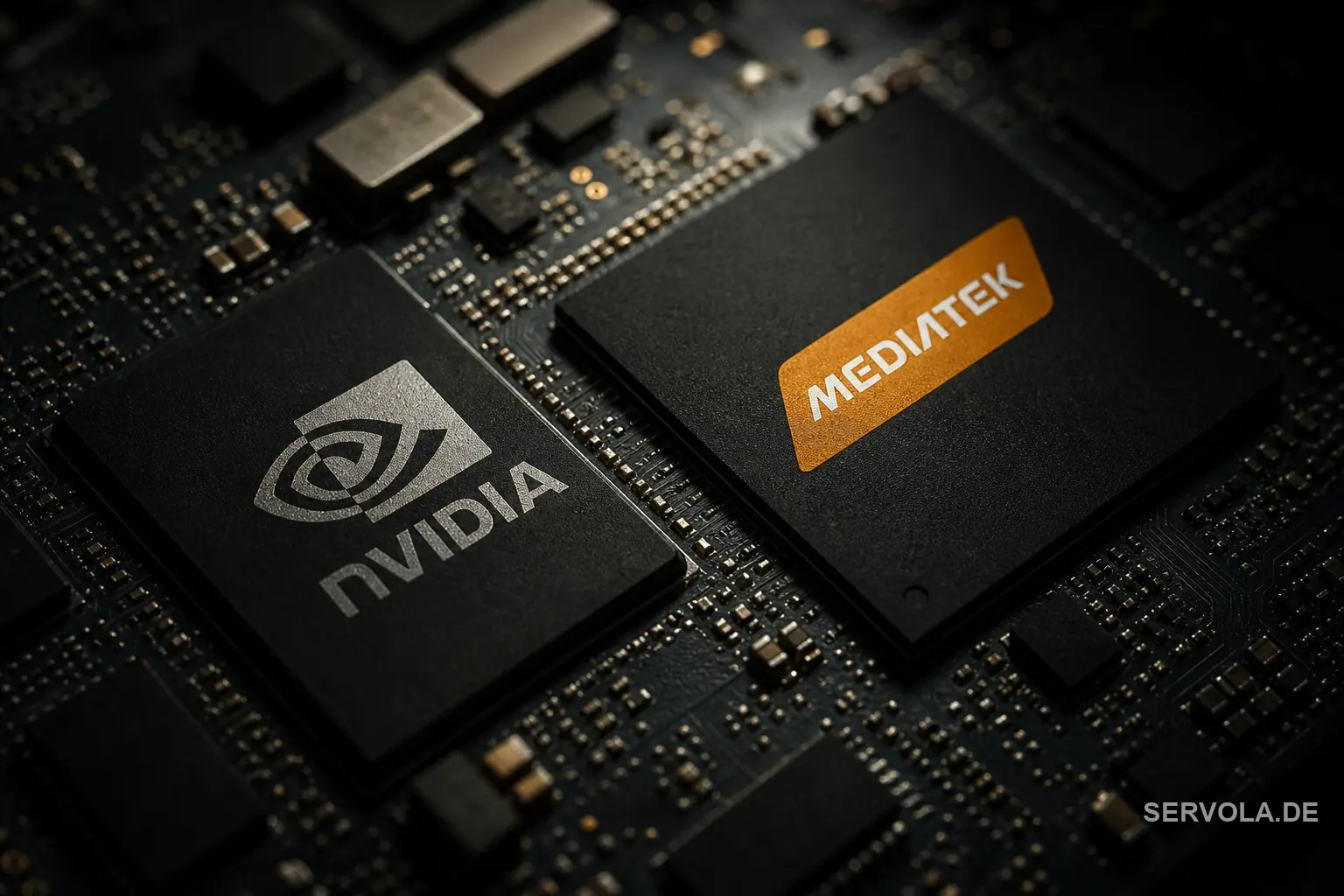
Alibaba gave away the software, not the chip
The part of the Nvidia machine that is hardest to copy is not the silicon, and Alibaba just handed a rival version of it out for free. At the World AI Conference in Shanghai on Saturday, 18 July, T-Head, Alibaba's chip design unit, opened the full technical stack of SAIL, the foundational software that runs its Zhenwu series of AI chips, to developers anywhere in the world from the same day. T-Head says a team can adapt SAIL to mainstream AI frameworks in under seven days, a claim aimed squarely at lowering the effort of leaving Nvidia's tools behind.
This is not a small vendor waving a flag. T-Head has shipped more than 560,000 Zhenwu units to over 400 external customers across 20 industries, from carmakers to financial firms, and its latest M890 part carries more than 96 gigabytes of HBM3 memory and a CUDA-compatible layer for PyTorch. A roadmap runs to a V900 in late 2027 and a J900 in late 2028. The chips already exist; what T-Head chose to give away is the software, because that is the harder barrier.
The moat was never the silicon
Nvidia's pricing power rests on CUDA, the software layer developers build on, not on any single chip. A graphics processor is a component you can, in principle, second-source. The libraries, compilers, and hand-tuned kernels that your models actually run on are not. Once a team has years of work sitting on CUDA, moving it means rewriting and retesting code that already works, and most teams quietly decide the switch is not worth it.
That switching cost is the moat, and the moat is what lets Nvidia hold its margin. Every credible open alternative to CUDA chips away at it. The point is not that Alibaba's stack is as good today; it is that the barrier which kept the price high is no longer something only Nvidia controls.
Open source here means come to us, not go anywhere
Read what this openness actually offers before you cheer for it: SAIL frees your code onto Zhenwu chips, not off proprietary hardware in general. It is a bridge onto Alibaba's own silicon, not a write-once-run-anywhere layer that a buyer can use to stay neutral. Huawei did the same in 2025 when it open-sourced CANN for its Ascend processors, and Moore Threads is pushing a similar line. The pattern is consistent: a chipmaker opens its stack to lower the cost of adopting its hardware, not the cost of leaving hardware behind.
For a buyer, that distinction is the whole story. Portability that only points at one vendor is a marketing surface, not an exit. The useful version of this idea is a neutral layer that runs across chips; a captive one still leaves you locked in, just to a different owner.
Why a European buyer cannot use it, and why it still matters
In practice a European operator will not deploy Zhenwu chips this year, and the story still changes your costs. Export controls, trust questions, and supply access make Chinese accelerators hard to bring into an EU data centre, so the direct utility of SAIL here is close to zero. Treating it as a product you might buy would be a mistake.
The effect that does cross the border is competitive. When the software moat around Nvidia becomes contestable, the premium Nvidia can charge comes under pressure worldwide, and that pressure shows up in the euro figure on your cloud invoice long before any Chinese chip does. The signal worth tracking is competition on the moat, not the specific badge on the board.
What to actually do about your own lock-in
The lever you control is not which chip you buy; it is how much of your stack is welded to one vendor's kernels. Keep your workloads on portable frameworks and standard operations, and hold vendor-specific CUDA code to the minimum you genuinely need. Do that, and a switch to any future supplier stays possible; skip it, and you inherit the same trap Nvidia's rivals are now trying to pry open.
The practical audit is simple to ask for and revealing to run: what share of our production models is bound to CUDA-only code, and what would it cost to move? Owners who can answer that hold real optionality. Those who cannot are price-takers, whoever wins the chip race.
Read next: OpenAI's Efficiency Claim Has No Independent Check Yet | The Merger Filing Nvidia Never Made