What Mistral shipped on 8 July
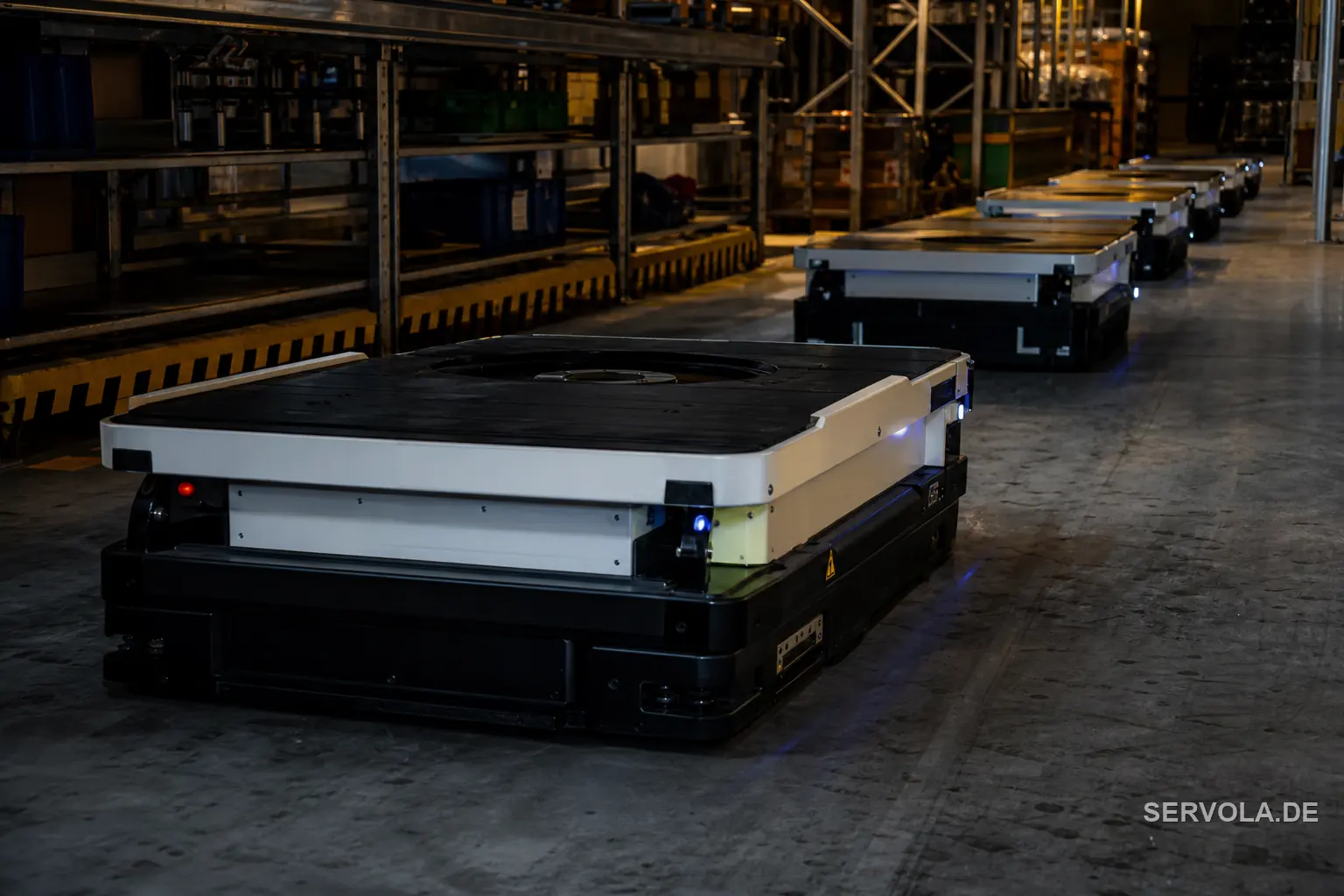
On 8 July 2026 Mistral released Robostral Navigate, its first model for embodied navigation and its opening move into physical AI. The model is 8 billion parameters, it takes natural-language instructions such as go to the loading bay and turn left at the second aisle, and it drives the robot using a single RGB camera, the same kind of sensor in any phone, with no lidar and no depth camera. On the standard R2R-CE benchmark for continuous navigation it reports a 76.6 percent success rate on unseen routes, beating the best single-camera approach by 9.7 points and, more striking, beating the best system that uses depth or several cameras by 4.5 points. It was trained entirely in simulation, it is hardware agnostic, and Mistral says it runs on wheeled, legged and flying robots and generalises across robot sizes. The claimed uses are manufacturing, delivery, logistics and hospitality.
Why one camera changes the cost of automation
The reason robot navigation stayed expensive was the sensor stack. Reliable movement through a changing space usually meant a lidar unit, depth cameras and the compute to fuse them, which pushed the bill of materials into the thousands per machine and made a pilot hard to justify. A model that gets state-of-the-art results from one ordinary camera removes that line. A camera good enough for this sits in the tens of euros, and it is a part you can source and replace without a specialist supplier. For an operator weighing whether to automate a stock room in Rotterdam or a back-of-house corridor in a Munich hotel, the calculation moves from a five-figure sensor rig per robot to a commodity camera and a model. That does not make every task ready to automate, but it lowers the wall that kept most sites from trying.
Why a European, self-hostable brain matters
The second thing that matters is where the intelligence lives. Much of today's robotics AI is delivered as a service from American platforms, which ties the machine on your floor to a foreign cloud, a foreign contract and a foreign export regime. Robostral Navigate comes from a French lab, and a model you can run on your own hardware is a model you can keep inside your own building and your own jurisdiction. For a logistics firm in Poland or a manufacturer in Baden-Wuerttemberg, that is the difference between renting the brain of your automation and owning it. The honest caveat is that a benchmark score is not a shop floor, and real sites bring dust, glare and people that a simulator does not. But the direction is set: navigation that once needed an expensive sensor rig and a US robotics cloud can now run on a cheap camera and a European model you host yourself.
Read next: Robots Just Got a $1.6 Billion Bet on How They See | Generalist's $3B Is the Third Robot Bet This Month