What The $445 Million Pays For
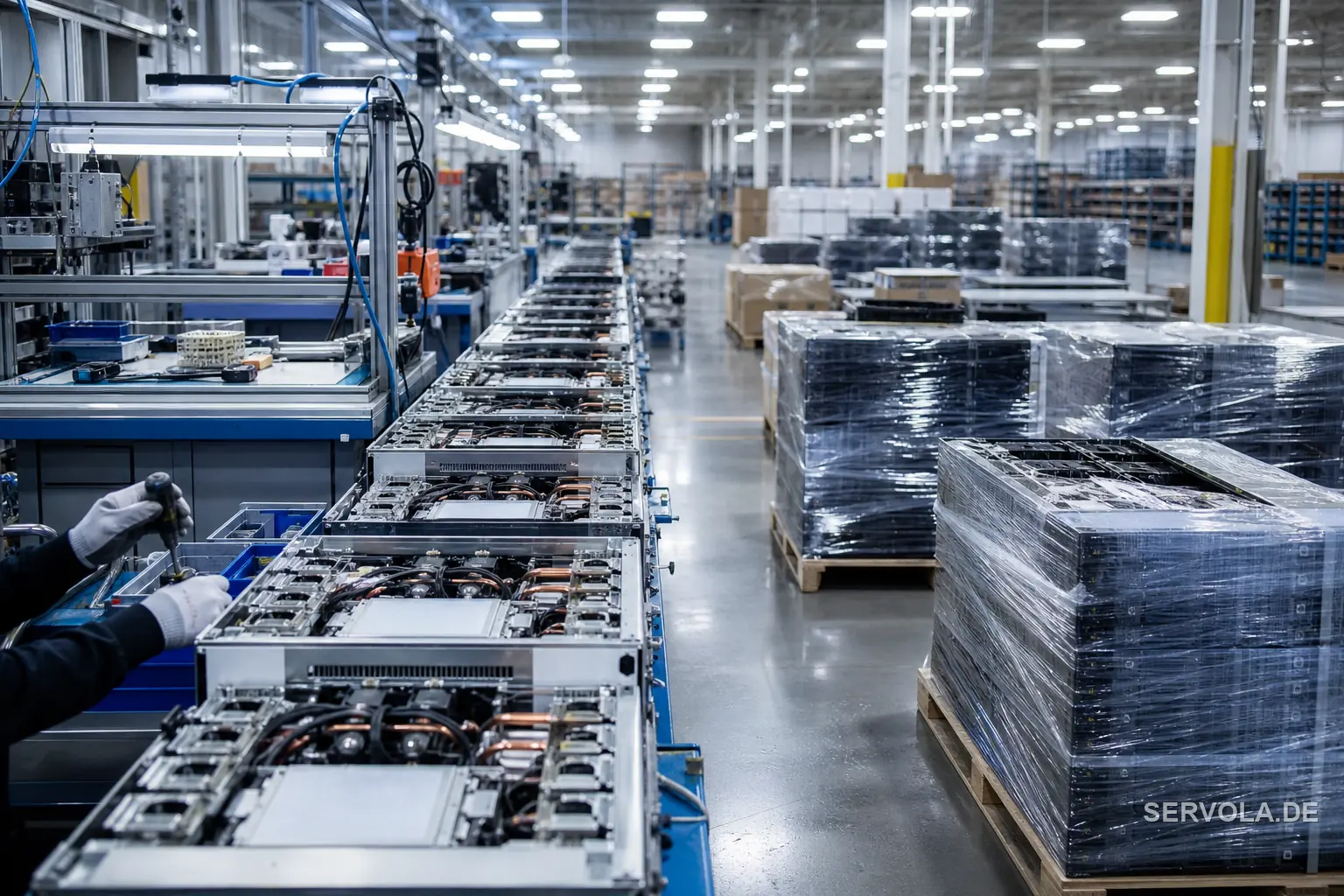
Oxide's Series D pays for inventory and manufacturing, because the company says it must commit substantial cash to components and manufacturing well before the resulting systems reach customers.
In a post dated 9 October, Oxide says it became profitable enough in the spring to pay income tax, a rare milestone for a startup, and that it carries a very large order backlog with demand far exceeding supply. Money from its Series B and C rounds, its debt facilities and cash from the business would have covered the current backlog, it writes, but the sums were large enough that it would have had to be careful about accepting more orders. The Series D lets it satisfy the backlog while continuing to accept new demand and expanding manufacturing capacity.
Chief executive Steve Tuck told SiliconANGLE that the accelerating pace of on-premises cloud projects required Oxide to scale manufacturing capacity by 20 times over the past 12 months, and that demand still exceeds supply.
Three Rounds In Fourteen Months
Oxide raised $89 million in its first nearly six years and $745 million in the 14 months since, a sum Servola adds up from the company's own funding posts.
| Round | Date | Amount | Led or joined by |
|---|---|---|---|
| Everything before Series B | First nearly six years | $89M in total | Not itemised |
| Series B | 30 July 2025 | $100M | Led by USIT with all existing investors |
| Series C | 5 February 2026 | $200M | Existing investors; led by USIT per SiliconANGLE |
| Series D | 9 October 2026 | $445M | Led by Eclipse Capital; AMD Ventures, Riot Ventures, Jane Street, Atreides Management and USIT |
The tone changed between rounds. In February Oxide wrote that it did not need to raise capital to support the business and that the Series C was meant to remove capital risk and secure its independence, which it tied to buyers asking whether a startup like it would be bought. In October the stated reason is supply: inventory has to be paid for before it ships.
AMD's entry as a strategic investor is the detail to watch. Oxide says it bet early on AMD EPYC processors and that AMD's support let it build its own platform enablement software, and every sled carries an AMD CPU. SiliconANGLE adds that Oxide plans a sled that can host a graphics card and hinted it will seek to partner with AMD on it. That sled is a plan, not a product.
What One Rack Contains
Oxide sells a data centre rack that combines computing, storage and networking in one pre-integrated package, and the figures below come from SiliconANGLE's description.
| Part | Specification |
|---|---|
| Compute | 24 sleds per rack, each with an AMD processor of up to 144 cores |
| Memory | About 1.64 TB per sled |
| Flash storage | Up to 300 TB per sled |
| Data protection | Three copies of each record on different flash modules, plus background checksum checks |
| Networking | Two switches that map the rack's internal network and route around faults |
| Power | Two power shelves with six rectifiers each |
Customers can split the hardware into several virtual networks, for example one environment per engineering team, with a built-in firewall regulating traffic between them.
Questions For A Private Or Sovereign Cloud Buyer
A team planning a private or sovereign cloud on rack-scale hardware should treat delivery lead time as the first line of its plan, because Oxide itself says demand exceeds supply.
Ask for a committed delivery date in the contract, a named capacity allocation and the remedy if the date slips. Ask how much of the existing backlog is ahead of your order.
Check availability where you operate. Oxide's sovereign cloud page promises a one-time purchase, no subscriptions to foreign vendors and fully air-gapped operation, but neither its funding post nor SiliconANGLE's report says where the racks ship, so a European buyer should ask before building a plan around them.
If AI workloads are part of your case, ask separately about the graphics-card sled, since today it is a plan with no date in either source.
Read next: Mistral Raised 3 Billion, Samsung Got a Chip Model | Mistral's Own Chip Suppliers Just Became Its Owners