What PLD Space announced this week
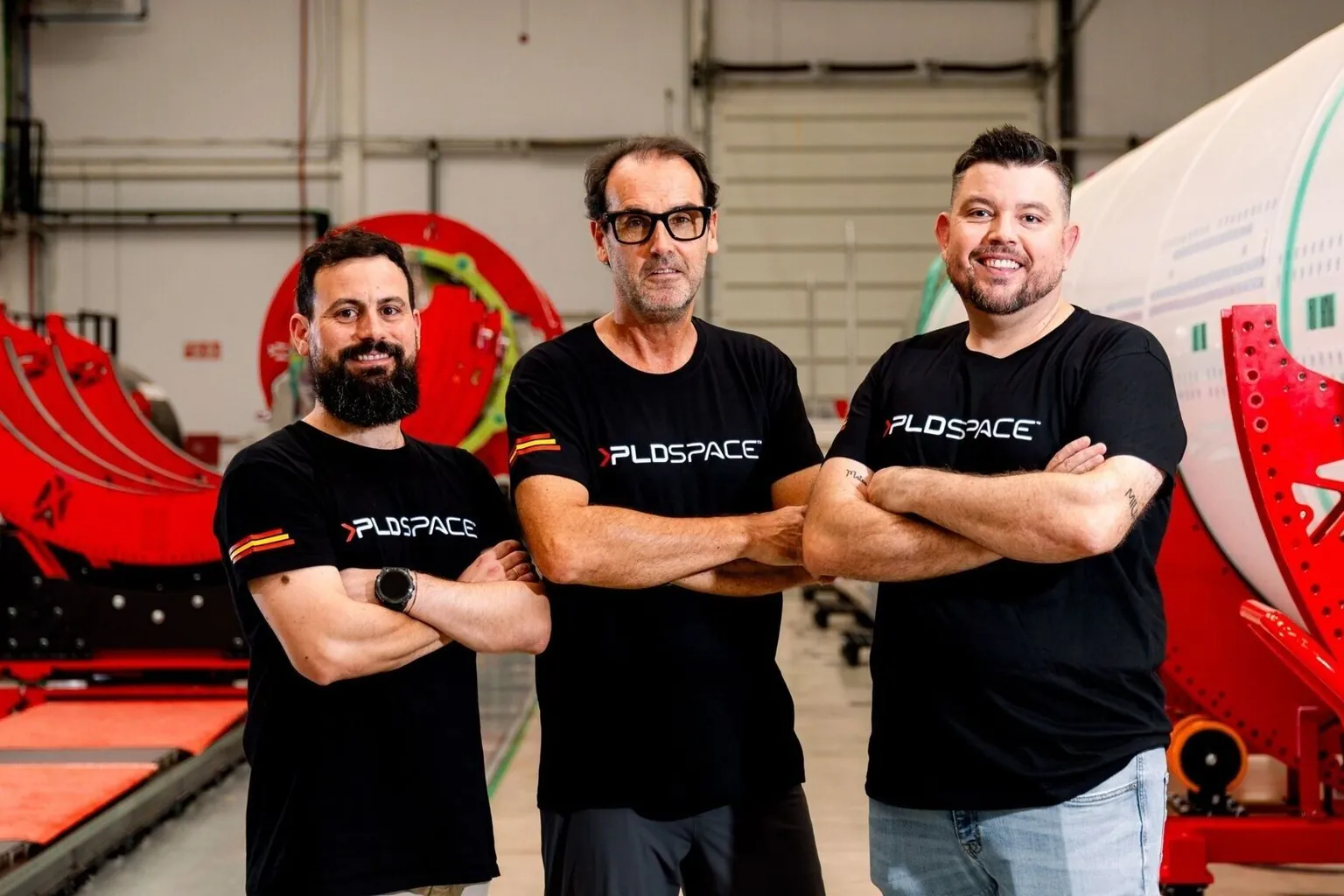
PLD Space added EUR 108 million to its Series C funding round, the Spanish rocket company said, bringing that single round to EUR 288 million and the company's aggregate funding since its founding to EUR 488 million. The announcement landed on September 2 and 3, 2026, reported first by European Spaceflight and independently confirmed by EU-Startups with matching figures.
The timing is the story as much as the amount. PLD Space closed this top-up only days after winning a EUR 158.9 million contract from the European Space Agency under its European Launcher Challenge, meaning two separate pools of European money, one contractual and one equity, landed on the same company inside a single week.
Mitsubishi Electric's double bet
Mitsubishi Electric led both tranches, the ESA-linked contract and the fresh Series C top-up, a pairing that is unusual enough to be worth noting on its own. COFIDES, the Spanish state-backed development finance institution, joined alongside Endeavor Catalyst and SOPEF, giving the round a mix of industrial, sovereign, and venture money rather than a single type of backer.
A strategic industrial investor choosing to sit on both the contract-adjacent tranche and the equity top-up signals more than a passive financial bet. Mitsubishi Electric builds satellite and space hardware of its own, so its willingness to back PLD Space twice in one cycle reads as a supply-chain judgment, not just a portfolio allocation.
Four numbers, one company, one week
Laid side by side, the figures show how fast PLD Space's capital position moved in a matter of days.
| ESA European Launcher Challenge contract | EUR 158.9 million |
|---|---|
| Series C top-up (this announcement) | EUR 108 million |
| Series C round total | EUR 288 million |
| PLD Space aggregate funding to date | EUR 488 million |
None of those four figures overlaps with another; the contract money and the equity money are separate pools, which is why the aggregate figure of EUR 488 million is additive rather than a restatement of the same funding under a different label.
Miura 5 is still industrializing, not yet flying
Miura 5 is PLD Space's orbital rocket, and the company has said the new capital is earmarked specifically to industrialize it, the unglamorous work of moving from a tested design to a repeatable production line and a proven launch cadence. That distinction matters, because industrializing is not the same claim as operating.
PLD Space has not disclosed a fully hardened date for Miura 5's maiden orbital flight, and rocket programs at this stage have a long, well-documented history of slipping their own announced timelines by a year or more. A buyer reading this funding news as proof that operational capacity is close should weigh PLD Space's own schedule claims against that industry pattern before committing anything on the strength of it.
What this means for EU satellite operators, insurers, and buyers
European satellite operators, Earth-observation companies, and insurers underwriting launch risk currently have functionally one reliable Western launch provider for many mission profiles, and that concentration is the real subject of this funding story, not the round size on its own. A second credible EU launcher edging toward operational status changes contracting leverage and schedule risk long before it flies its first commercial payload, simply because it changes what a buyer can credibly threaten to walk toward.
The practical question for a European buyer is not whether to root for PLD Space, it is whether ESA and national space agencies backing both the contract and the equity round is a genuine derisking signal or a concentrated bet-hedging move by the same institutional buyers who will eventually need Miura 5 to work. Buyers with 2027-2028 mission manifests should treat Miura 5 as a program to track closely and qualify early, not as an operational alternative to book against today.
Read next: A German Rocket Reached Orbit. The Real Story Was the Funding. | A Valencia Startup Raises $125M to Lift GPU Use