The filing Monica Howard Douglas signed
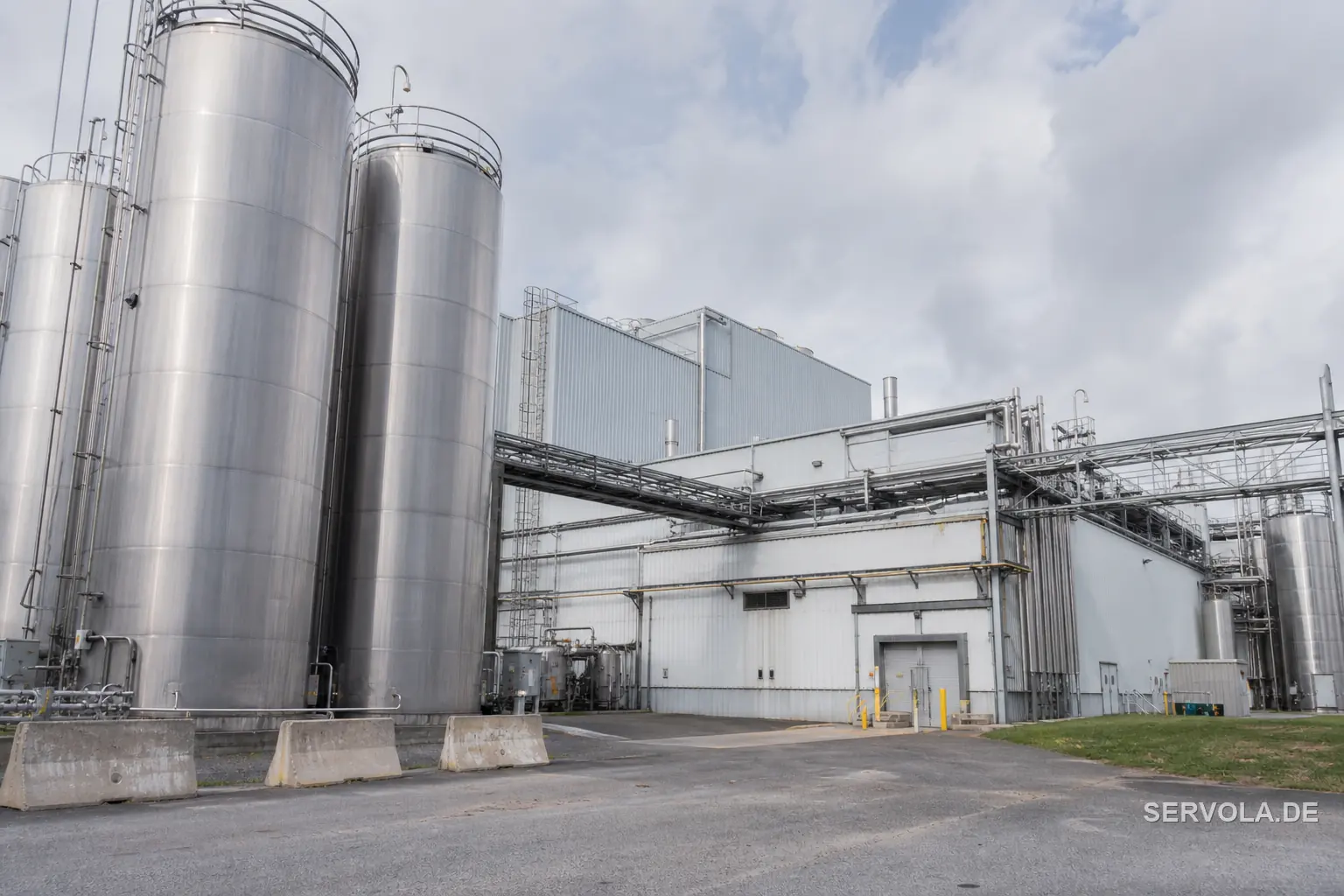
At 4:15pm EDT on 16 July 2026, The Coca-Cola Company put out a press release, and an 8-K went to the Securities and Exchange Commission the same day. It was signed by Monica Howard Douglas, the company's EVP and Global General Counsel. The substance ran to a handful of sentences. fairlife, Coca-Cola's US dairy brand, had "identified unauthorized access by a third party to a portion of its systems, including its production-related systems, in connection with a ransomware event." Then came the line that matters to anyone who runs a plant: "production operations at fairlife in the United States are temporarily suspended."
The rest of the filing did what a well-run incident response does. Canada was carved out explicitly, because "fairlife's Canada production operations are not currently impacted." Product quality and safety, the company said, "have not been impacted." Incident response and business continuity protocols were activated. The company "has also notified law enforcement." Read it cold and it is a competent, unpanicked disclosure from an organisation that had clearly rehearsed the day. Nothing in it is evasive. The speed matters as much as the content. The disclosure landed on the same day the brand's US output went to zero, which is more than most organisations manage.
Then there is the part that repays a second look. The 8-K was filed under Item 8.01, "Other Events." It was not filed under Item 1.05, "Material Cybersecurity Incident." The document says so plainly: "the Company has not yet determined whether the incident is reasonably likely to materially affect the Company." Production across the United States is at zero, and the same filing, on the same day, records the materiality question as still open.
Zero output and open materiality, in one document
Both statements are true at the same time. The physical fact is that fairlife is not making product in the United States right now. The disclosure fact is that Coca-Cola has not concluded whether that is material to Coca-Cola. An owner reading those two lines back to back can be forgiven for assuming one of them has to be wrong. Neither is, and understanding why is the whole value of this filing.
Materiality is a legal and financial judgement about the enterprise as a whole, and the enterprise here is one of the largest beverage companies in the world. fairlife is one US brand inside it. A stopped production line is something you can photograph. Materiality is a conclusion that people have to reach, using assumptions about duration, recovery and cost that, on day one, nobody actually has. That is how the filing can say what it says without anyone being dishonest about anything. Duration is the variable that decides almost everything about the answer, and duration is precisely what nobody has on the first afternoon.
What the filing withholds is as instructive as what it states. No ransomware group has been named. No leak-site claim has appeared. There is no outage duration, no cost figure, no plant count and no recovery date. A Coca-Cola spokesperson had "nothing additional to share beyond its public statement." BleepingComputer reported independently that the attack had halted US dairy production. Everything beyond that, at the time of writing, is somebody's guess.
Item 8.01 was the correct move
Coca-Cola followed the rule as written, and it deserves no criticism for it. Item 1.05 requires a registrant to disclose a cybersecurity incident that it has determined to be material, generally within four business days of that determination. The trigger is the determination itself. Item 8.01, "Other Events," is a voluntary catch-all with no such trigger and no such clock. If you have not determined materiality, 8.01 is where the disclosure belongs.
This is not a loophole found by a clever legal department. The SEC has itself cautioned against using Item 1.05 for incidents that have not been determined to be material, on the sensible ground that labelling everything material tells investors nothing at all. Filing under 8.01 while the analysis runs is legitimate, and it has become the common practice among large registrants. Coca-Cola did the ordinary, defensible thing on a day when its US dairy output went to zero. An investor is better served by a company that states what it knows and marks the rest as open.
Our read: the choice is not the story. Who gets to make it is. The determination that starts the four business day clock is made by the company, about itself, in its own commercial interest, at a moment when it holds every relevant fact and nobody outside the building holds any of them. That discretion is deliberate in the American design. And on 16 July the pen belonged to the Global General Counsel, on the same day the machines stopped.
In Europe the clock starts when you find out
A European operator does not get to hold that pen. Under NIS2, the EU's Directive 2022/2555, an essential or important entity owes its national CSIRT or competent authority an early warning within 24 hours of becoming aware of a significant incident. An incident notification follows within 72 hours. A final report is due within one month. The trigger at the front of that chain is awareness of a significant incident, and nothing else.
That one word does most of the work. In the American frame, the legal analysis comes first and the clock starts when the analysis lands. In the European frame, the clock is already running while the analysis is still being scoped. Your general counsel's materiality memo is not a precondition for the 24-hour early warning, and it will not pause the clock while it is being drafted. For a business that discovers a ransomware event at 11pm on a Friday, that is a very different Saturday. The 72-hour notification and the one-month final report both hang off that same first moment of awareness.
To be precise about what we are and are not saying: this is our comparison, drawn for European readers about their own obligations. It is not a legal finding about Coca-Cola. We are not claiming that Coca-Cola or fairlife is regulated under NIS2, and no EU authority has been reported as looking at this. What is worth knowing generally is that food production, processing and distribution sits inside NIS2's scope as an important entity sector. If that describes any part of what you run, the 24-hour trigger is yours.
Decide who holds the pen while nothing is on fire
Write it down before you need it. Which regime starts your clock, and on what trigger. For a US-listed group, that is a materiality determination and four business days from it. For an essential or important entity under NIS2, it is awareness and 24 hours from that. Plenty of European groups sit under both regimes at once, on different parts of the same incident, and the two answers will not arrive at the same time or point in the same direction.
Then name the person. Coca-Cola's classification decision was made and signed the same day the production lines stopped, by an executive whose name is on the document and who owns the consequences of it. That is what a rehearsed organisation looks like from the outside. Most companies have never decided who is authorised to classify an incident at 2am, which means the call defaults to whoever happens to be awake, under the worst conditions available, with the clock already running against them. Rehearsal is what turns a classification call into a procedure that someone already owns.
Run this check across the whole group rather than the parent company alone. Subsidiaries, a single plant, a logistics arm, a processing site: any one of them can pull an obligation up into the group. If any part of your group is an essential or important entity under NIS2, the 24-hour early warning runs from the moment someone in your organisation becomes aware. The materiality question can be answered later, at leisure, with better facts. The notification cannot.
Read next: Claude Built the Exploit OpenAI Never Patched | Cisco ISE: A Perfect 10 Flaw, No Workaround