NVIDIA's Vera CPU Goes to Work for Grok
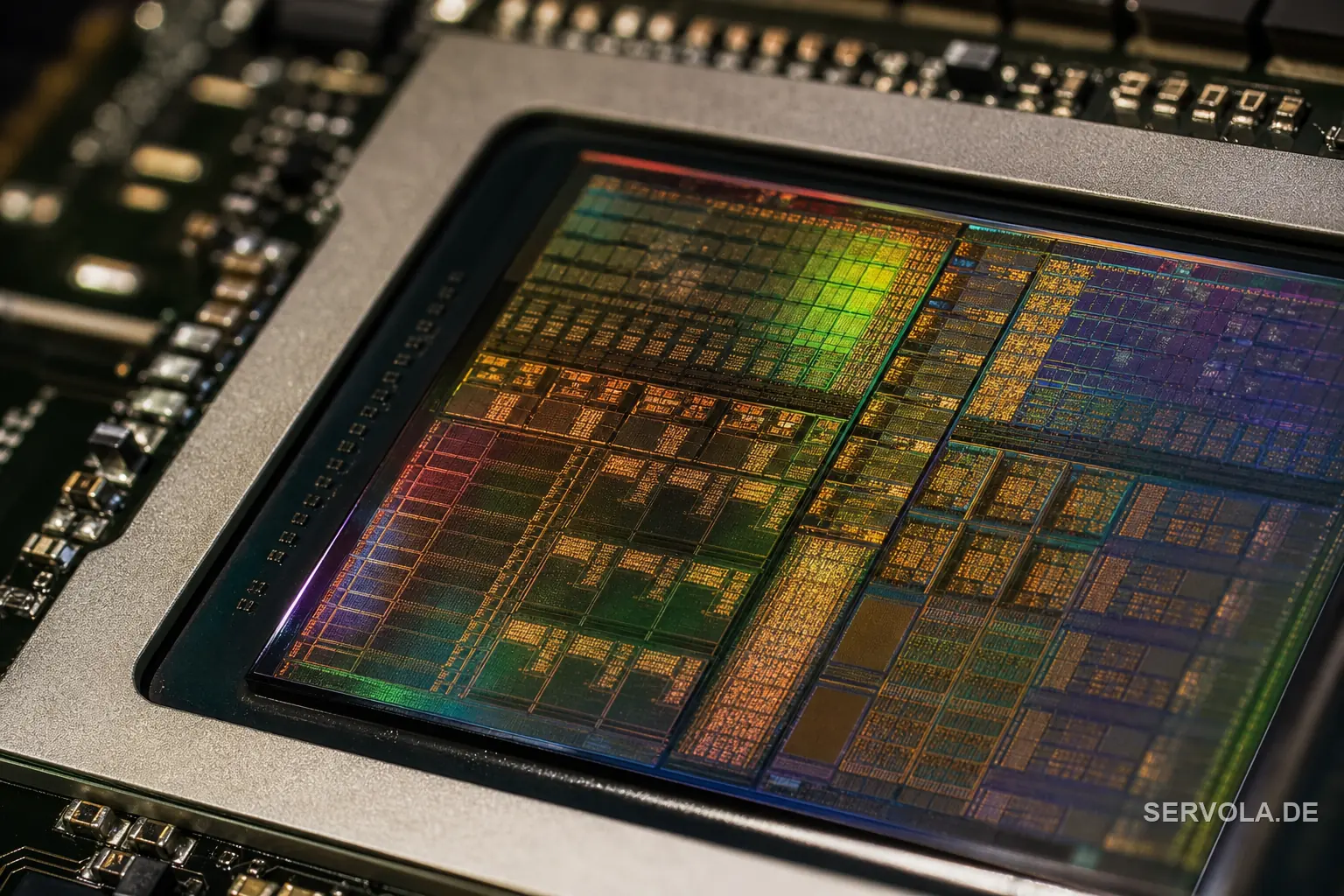
NVIDIA announced on August 24, 2026, that SpaceXAI is adopting the company's new Vera CPU. SpaceXAI is the merged SpaceX/xAI banner under which Elon Musk now operates AI infrastructure, and the chip itself carries 88 NVIDIA-designed Olympus cores alongside 1.2TB/s of LPDDR5X memory bandwidth. NVIDIA says Vera completes agentic and reinforcement-learning workloads 1.8 times faster than a comparable x86 setup, a gap that widens as an AI agent chains together more tool calls per task.
| Vera CPU spec | Figure |
|---|---|
| Cores (NVIDIA-designed Olympus) | 88 |
| Memory bandwidth (LPDDR5X) | 1.2 TB/s |
| Speed vs. x86 (agentic/RL, NVIDIA claim) | 1.8x |
The job Vera does is orchestration, not inference. Grok's models still handle the reasoning; Vera decides which tool an agent calls next, tracks the state of a multi-step task, and keeps code execution moving around the GPUs doing the actual inference. NVIDIA frames this as CPU compute purpose-built for agentic AI, a workload pattern that rewards fast single-task completion over raw parallel throughput, exactly where Vera's 88-core design and memory bandwidth are aimed.
Starmind: The First AI Satellite of Its Kind
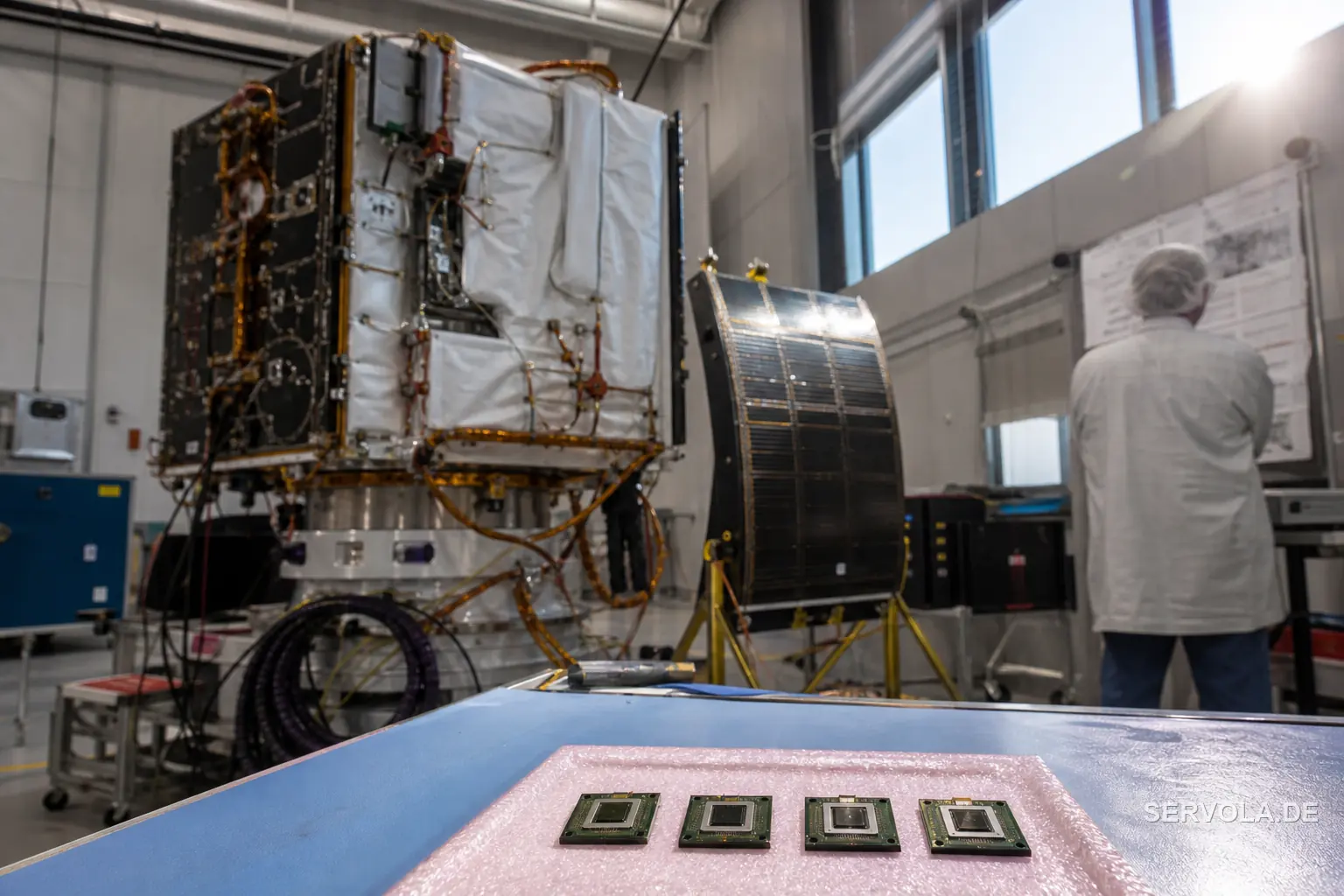
The same announcement introduced Starmind, SpaceXAI's first-generation AI satellite. Starmind is built on an NVIDIA Vera Rubin NVL72 rack-scale system, the same class of hardware NVIDIA sells to ground-based data centers, re-engineered for the power, thermal, and bandwidth constraints of orbit rather than a server room.
Trade press treated the reveal as more than a routine chip-adoption story. GlobeNewswire and HPCwire, both independent of NVIDIA and SpaceXAI, corroborated the announcement's substance and date, and neither framed Starmind as an incremental update to existing satellite hardware. It is, on the public record so far, the first orbital AI-compute hardware of its kind: a rack-scale AI system flown rather than racked.
The Terrestrial Levers That Don't Reach Orbit
Every lever a government or grid operator currently holds over AI's footprint assumes the compute stays on the ground. Denmark's new tiered grid-priority law ranks which data centers get power first. The EU AI Act imposes obligations on providers operating within its jurisdiction. National siting rules decide where a facility may be built, and carbon reporting requirements track emissions tied to a physical location.
An AI satellite has none of those chokepoints. There is no grid connection for Denmark to deprioritize, no water permit for a local authority to deny, no entry on any national data-center registry. This is a structural observation about the tools regulators currently have, not a claim that SpaceXAI built Starmind to avoid them; SpaceXAI's own announcement makes no mention of regulation at all.
The Physics Outruns the Rulebook
The industry's most aggressive AI operator has now built the one form factor that sits by physics outside every terrestrial lever currently being drafted to govern AI infrastructure. That is true regardless of why Starmind was built, whether the reason was launch economics, power density, latency to a satellite constellation SpaceXAI already operates, or something else NVIDIA has not detailed.
Regulators writing grid-priority tiers, siting rules, and AI Act obligations are, for now, writing rules for compute that stays on a national grid. Nothing in the current regulatory toolkit anticipates compute that operates outside any single jurisdiction's ground infrastructure, and Starmind is the first concrete piece of hardware to make that gap visible rather than theoretical.
What Comes Next for Orbital AI Governance
NVIDIA's announcement does not say how many Vera Rubin NVL72 racks SpaceXAI plans to fly, how Starmind's compute compares in scale to a single ground-based data center, or when the satellite reaches orbit. Those details will matter for judging how quickly orbital AI compute could move from a single demonstration satellite to a meaningful share of SpaceXAI's total capacity.
The Servola Tech Desk will track whether the EU, Denmark, or any national regulator addresses orbital AI compute directly once Starmind's specifics become public, and whether SpaceXAI or NVIDIA disclose a second satellite before this one completes its first full year in orbit.
Read next: Grok 4.6 Gets Smarter Without Getting Bigger | Skild's Robot Assembles Blackwell From One Video