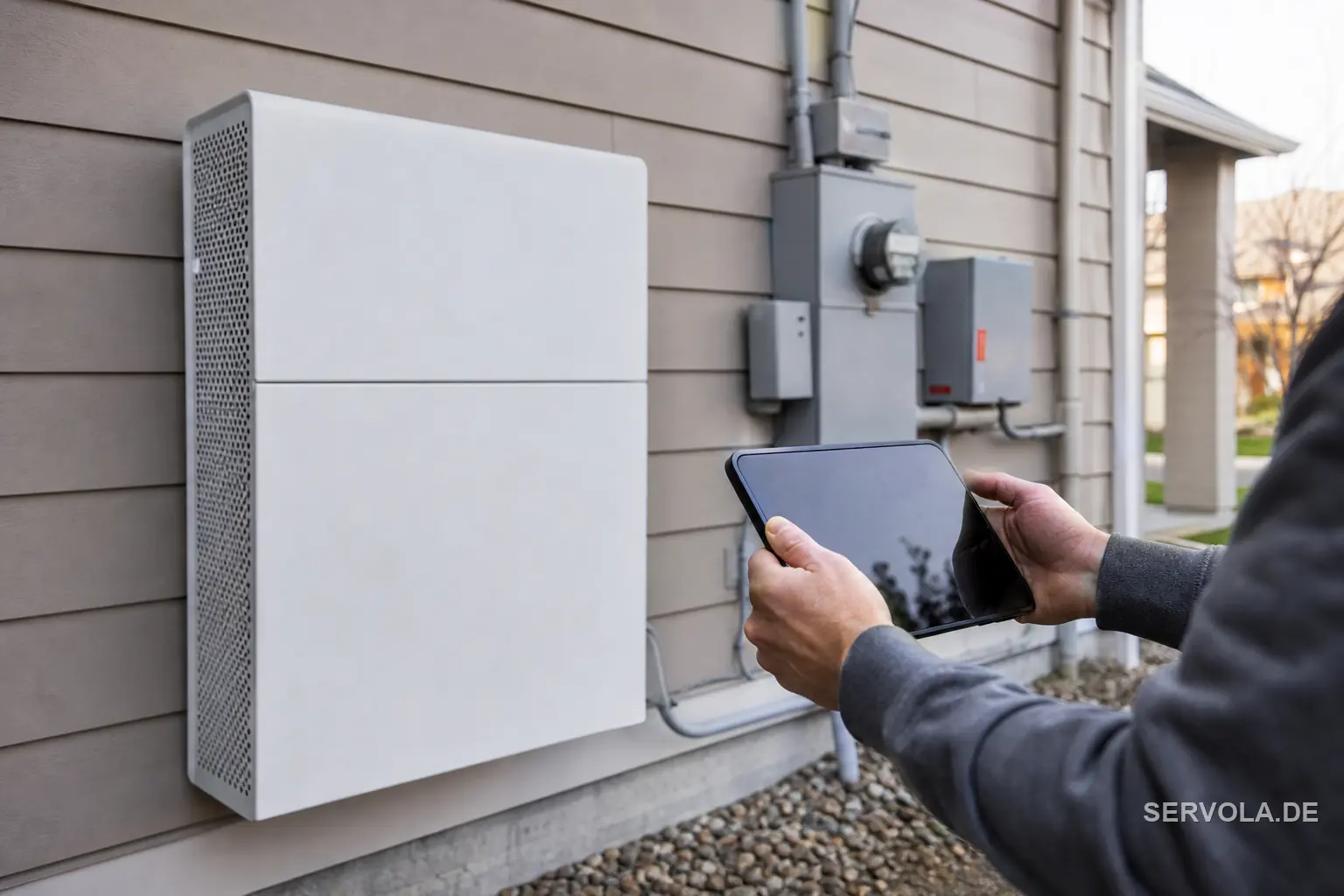
What Base Power announced on 3 August
On 3 August Zach Dell's company announced a 1 billion dollar Series D at a 13 billion dollar post-money valuation, and in the same release launched Base Core, a home battery now in production at Base Factory 1 in Austin. It is the company's second billion-dollar round in ten months and takes total funding past 2.5 billion dollars. Ribbit, Addition, Valor Equity Partners and JPMorganChase's Strategic Investment Group led, with Altimeter, D1 Capital Partners, Sands Capital, Coatue, Layer Global and Energy Impact Partners joining, and existing backers including Thrive Capital, Andreessen Horowitz, Lightspeed, Trust Ventures and CapitalG re-investing.
The hardware is deliberately oversized for a house. Base Core holds 39.2 kilowatt hours in one unit or 78.4 across two, uses lithium iron phosphate cells, claims up to 36 hours of backup from a single unit and up to 72 from a pair at reduced consumption, installs in under an hour, switches over in 50 milliseconds, carries an IP67 rating and is specified from minus 30 to plus 50 degrees Celsius. The company reports more than 500 megawatt hours installed and more than 200 megawatts committed to utility programmes with El Paso Electric, Austin Energy and CoServ, in Texas and Illinois only.
Two American states are installing what a continent is not
Base Power installs roughly 100 batteries a day, about 8 megawatt hours, and says it intends to double that by the end of the year. Annualise the current rate and it is about 2.9 gigawatt hours a year; annualise the stated goal and it is about 5.8. Now set that against SolarPower Europe's EU Battery Storage Market Review 2025, published on 28 January 2026: the residential segment across all 27 member states came to 9.8 gigawatt hours in 2025. One company operating in two American states is running at roughly 30 percent of the European Union's entire annual home-battery volume, and plans to reach about 60 percent.
The direction of travel is the harder part. The EU had a record year overall, 27.1 gigawatt hours installed and up 45 percent, with cumulative capacity reaching 77.3 gigawatt hours, a tenfold rise from 7.8 gigawatt hours in 2021. But utility-scale took 55 percent of the new capacity while residential fell 6 percent, its second consecutive annual decline. The report attributes the fall to lower electricity prices and reduced support schemes. Meanwhile the same report states the EU needs to repeat that tenfold increase to around 750 gigawatt hours by the end of the decade.
The difference is who owns the box
Read those two facts together and the divergence is not about cells, climate or engineering. Base Power does not sell you a battery. It retains ownership, charges 695 dollars to install and 19 dollars a month on the Houston plan it publishes, and bundles the electricity at 13.1 cents per kilowatt hour. The household buys backup power and a fixed rate. The company keeps a fleet asset it can dispatch when wholesale prices spike, and that dispatch revenue is what pays for hardware a household would not buy at cost.
Europe, for the most part, sells the same box to the householder as a capital purchase justified by avoided consumption. That business case is a direct function of the spread between retail power prices and subsidy levels, which is precisely why the segment contracts when both move the wrong way. It is a financing structure that makes the customer carry the asset and collect none of the flexibility value. Nothing in the SolarPower Europe numbers suggests Europeans stopped wanting storage. The numbers suggest the product on offer stopped making arithmetic sense.
Why this matters at your next site review
Here is the part that should change a decision rather than an opinion. Capacity behind your own meter does not enter the transmission interconnection queue. It still needs a distribution connection and it still answers to metering rules, but it does not wait behind gigawatts of grid-scale applications for a connection date. That makes on-site storage one of the few electrical assets an operator can still add on a timescale of weeks, at a moment when large new loads are being told to wait years, and when at least one large grid operator has paused approvals for new data centre connections entirely pending an audit.
So the question to put on the agenda is narrow and answerable. Ask whether storage installed on your own premises can be aggregated into a portfolio and paid for in your national balancing or capacity market, and who is allowed to hold the meter that proves it. Your national regulator sets that answer, whether that is the Bundesnetzagentur, the CNMC, ARERA, the CRE, the ACM, Forsyningstilsynet, Energimarknadsinspektionen, ERSE or URE. In the United States a subscription model turned home batteries into a grid asset. In Europe the same hardware sits idle in the same garages because nobody is permitted to pay it.
Read next: Texas Put 474 Gigawatts Behind an Audit | Three 20 Megawatt Halls Count as One Large Load