Two Commitments, One Machine, and a Seven-Year Gap
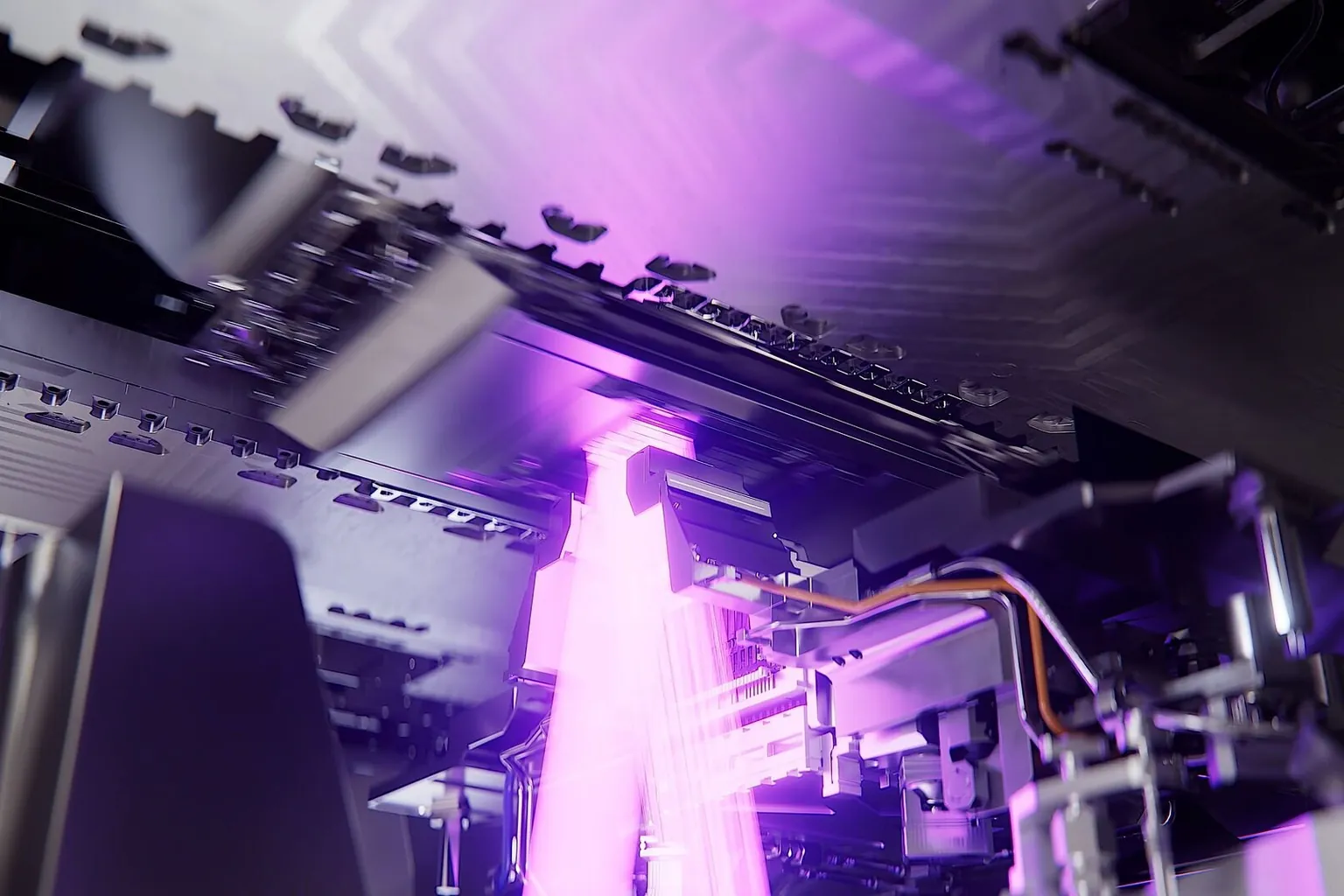
On September 8, 2026, ASML announced an industry initiative with TSMC to move semiconductor manufacturing from today's 6-inch photomasks to a new 12-inch format built for High-NA EUV lithography, the next generation of the machines that etch circuit patterns onto silicon. ASML CEO Christophe Fouquet said the company was "pleased by the strong initial support of semiconductor manufacturers, mask suppliers and partners for this initiative," and TSMC Chairman C.C. Wei said the goal was to keep "providing the benefits of cutting-edge technology" by pooling expertise across the supply chain. Separately, industry reporting this week confirmed Samsung will bring High-NA EUV into DRAM memory production in 2028, while TSMC will bring the same technology into advanced-node logic chip production only in 2030.
| Company | What it committed to | When it reaches production |
|---|---|---|
| Samsung | High-NA EUV for DRAM memory | 2028 |
| TSMC | High-NA EUV for advanced-node logic chips | 2030 |
| ASML + TSMC initiative | 12-inch photomasks, the format that removes High-NA's real bottleneck | Pilot line by 2031, production by 2033 |
Each High-NA EUV machine costs roughly 400 million dollars, and until now only Intel has deployed the technology in production, on its 18A process for select Panther Lake chips. This week's commitments are the first from the industry's two largest chipmakers, and that is genuinely significant. But the 12-inch photomask initiative, the part of the announcement that actually removes High-NA's current limitation, will not reach a pilot line until 2031, and full production capability not until 2033.
Memory Moves First. The Chips That Power AI Do Not.
DRAM and logic are different products with different roadmaps, and Samsung's 2028 DRAM date is not a preview of when TSMC's logic capacity arrives. The chips that actually power AI accelerators, the GPUs and custom silicon behind today's compute shortage, are logic chips, TSMC's business, not memory. TSMC's own commitment is dated 2030, and the photomask format needed to use High-NA EUV without today's stitching constraints and productivity losses does not enter production until 2033. Reading this week's news as a fix for the AI chip supply crunch confuses a real commitment with a near-term outcome; the commitment is real, the relief is not arriving this decade.
Budget For 2030 Pricing, Not 2026 Optimism
For a European business buying AI compute, whether cloud GPU instances or on-premise accelerators, the practical read is to treat leading-edge logic supply as structurally tight through 2030 at the earliest, and the full productivity benefit of High-NA as unavailable before 2033. Vendor contracts, capacity commitments, and internal compute budgets built on an assumption that this week's announcement signals imminent supply relief should be revised against the later of the two dates in the announcement, not the earlier one, since the earlier one applies to memory, not to the accelerators actually driving demand.
Read next: Memory Got This Expensive For Two Separate Reasons | Mistral's Own Chip Suppliers Just Became Its Owners